


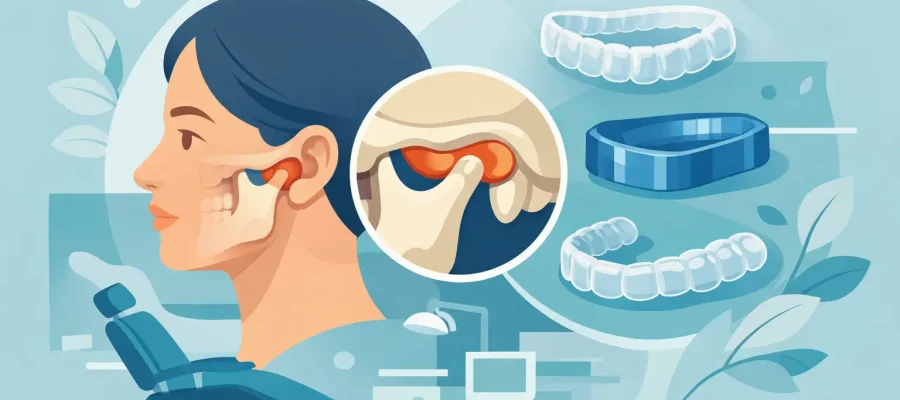
A sore jaw can ruin more than comfort. It can change how you eat, sleep, speak, and even how your smile feels day to day. When patients start researching types of TMJ splints, they usually want one clear answer: which appliance will actually calm pain, protect teeth, and stop the cycle of clenching or joint strain.
The honest answer is that TMJ splints are not one-size-fits-all. The right choice depends on whether the problem is muscle tension, joint inflammation, disc displacement, nighttime grinding, bite instability, or a mix of several issues. A splint can be highly effective, but only when it matches the diagnosis and is adjusted with precision.
What TMJ splints are designed to do
A TMJ splint is a custom oral appliance worn over the teeth to reduce stress on the temporomandibular joint and the muscles that control jaw movement. Some splints are built to relax overworked muscles. Others protect enamel from heavy grinding. Some temporarily guide the jaw into a different position to reduce pressure inside the joint.
That difference matters. Two patients can both say, “My jaw hurts,” yet need completely different appliances. One may benefit from a simple stabilization splint worn at night. Another may need a repositioning device for a short phase of treatment, followed by bite correction or restorative work if the teeth no longer meet properly.
The main types of TMJ splints
Stabilization splints
This is one of the most common types of TMJ splints. It is often called a flat-plane splint or Michigan splint. It usually covers either the upper or lower arch and creates even, controlled contact between the teeth.
Its main job is to reduce overload. By creating a balanced surface, it can decrease muscle hyperactivity, protect the teeth from grinding wear, and help the jaw settle into a less strained position. This option is often recommended for patients with clenching, bruxism, tension headaches, and muscle-related TMJ discomfort.
A stabilization splint is conservative and widely used because it does not try to permanently change the bite. That makes it a strong first-line option in many cases. Still, it must be adjusted properly. A poorly balanced splint can create new pressure points instead of relieving them.
Repositioning splints
A repositioning splint, sometimes called an anterior repositioning splint, guides the lower jaw into a different position. The goal is usually to reduce stress on the joint structures or improve the relationship between the joint disc and the condyle.
This appliance can help some patients with joint clicking, locking, or internal derangement. In the right case, it may reduce pain quickly. But it is not usually meant to be worn forever. If used too long without supervision, it may affect the bite and how the teeth come together.
That is why this splint demands careful case selection. It can be valuable, but it is not the casual answer to every TMJ symptom.
Anterior bite splints
Anterior bite splints cover only the front teeth and keep the back teeth slightly apart. Because the molars cannot fully engage, the jaw muscles often contract with less force. This can reduce intense clenching patterns in some patients.
These appliances are sometimes used short term for acute muscle pain or severe parafunctional habits. They can be effective in the right scenario, but they are not typically a long-term solution. Extended wear may allow unwanted tooth movement or changes in the bite.
In other words, they are strategic tools, not all-purpose night guards.
Posterior bite splints
Posterior bite splints cover the back teeth and leave the front teeth out of contact. They are used less often and with more caution because of the risk of changing the bite if worn improperly or for too long.
There are limited situations where a posterior appliance may help, such as temporary changes in vertical dimension or selected joint cases. But for most patients, this is not the standard starting point. Because the trade-offs can be significant, these splints require close oversight.
Soft splints
Soft splints are made from a flexible material and are often marketed as comfortable, simple solutions for grinding or jaw tension. Some patients do find them easier to tolerate at first, especially if they are new to wearing an oral appliance.
But soft does not always mean better. In certain heavy clenchers, a soft appliance can actually encourage more chewing or grinding against the material, which may increase muscle activity instead of reducing it. For mild cases, they can be useful. For more serious TMJ dysfunction or forceful bruxism, a hard acrylic design is often more precise and more stable.
Hard splints
Hard splints are typically made from acrylic and allow much more accurate adjustment. They are durable, more predictable, and often preferred when the goal is true occlusal control.
For patients who need precise joint unloading, balanced contact, or controlled muscle relaxation, a hard splint is usually the premium option. It may feel less forgiving for the first few nights, but clinically it offers more control and better long-term management.
Types of TMJ splints versus a night guard
Patients often use these terms as if they mean the same thing, but they do not always. A basic night guard is primarily designed to protect teeth from grinding damage. A TMJ splint is designed around diagnosis, joint mechanics, and bite relationships.
Sometimes one appliance can serve both functions. Sometimes it cannot. An over-the-counter night guard may cushion the teeth, but it will not deliver the same precision as a custom splint designed after a full bite and joint evaluation. When jaw pain, clicking, locking, or facial muscle fatigue are part of the picture, the difference becomes more important.
How the right splint is chosen
Selecting among the types of TMJ splints starts with identifying the source of the problem. If the pain is mostly muscular, a stabilization splint may be ideal. If the issue is inside the joint and linked to disc position, a repositioning approach may be considered. If the patient has aggressive grinding with advanced tooth wear, the appliance must protect both the joint and the enamel.
The bite also matters. Missing teeth, worn restorations, uneven contacts, and collapsed vertical dimension can all affect splint design. This is especially relevant for patients planning cosmetic or restorative dentistry. If veneers, crowns, implant restorations, or a full smile redesign are involved, the jaw needs to be stable before finalizing bite-sensitive work.
That is one reason high-level dental planning matters. At DRGO Smile Clinic, for example, comprehensive treatment planning is built around precision, comfort, and predictable function, not aesthetics alone. A beautiful smile lasts better when the bite and jaw are working in harmony.
What wearing a TMJ splint feels like
Most custom splints are worn at night, though some cases need daytime use for a limited period. The first few nights can feel unusual. Saliva may increase, speech may sound different, and the appliance may feel bulky until the mouth adapts.
A well-made splint should not feel random or loose. It should fit securely, contact the opposing teeth in a controlled way, and become more comfortable after adjustment. Follow-up visits are part of the process because even an excellent splint often needs fine-tuning after real-world wear.
Patients should also know what a splint cannot do. It will not fix every TMJ condition on its own. If stress, posture, airway issues, advanced tooth wear, arthritis, or bite collapse are involved, the appliance may be one part of a broader plan.
When a splint is helping and when it is not
Good signs include reduced morning jaw soreness, fewer tension headaches, less tooth sensitivity from grinding, and easier jaw movement. Some patients notice they sleep better because they are not waking up with facial tightness.
Warning signs are just as important. If pain worsens, the bite feels off after removing the appliance, or the jaw starts locking more often, the splint needs review. A custom device should never be treated as “set and forget.” Ongoing adjustment is what turns an appliance into treatment rather than just a piece of plastic.
The biggest mistake patients make
The most common mistake is choosing a generic guard before getting a diagnosis. That feels faster and cheaper upfront, but it can delay the right care. TMJ symptoms are not all driven by the same cause, so the best appliance for one patient may be the wrong one for another.
Precision matters here. The right splint can protect expensive dental work, reduce muscle overload, and create a more stable foundation for future treatment. The wrong one can mask symptoms, aggravate clenching patterns, or change the bite in ways that are hard to reverse.
If your jaw has been clicking, aching, locking, or leaving you with a tired face every morning, the goal is not to buy any appliance. It is to identify which splint fits your bite, your joint condition, and your long-term dental plan so relief feels controlled, not accidental.