


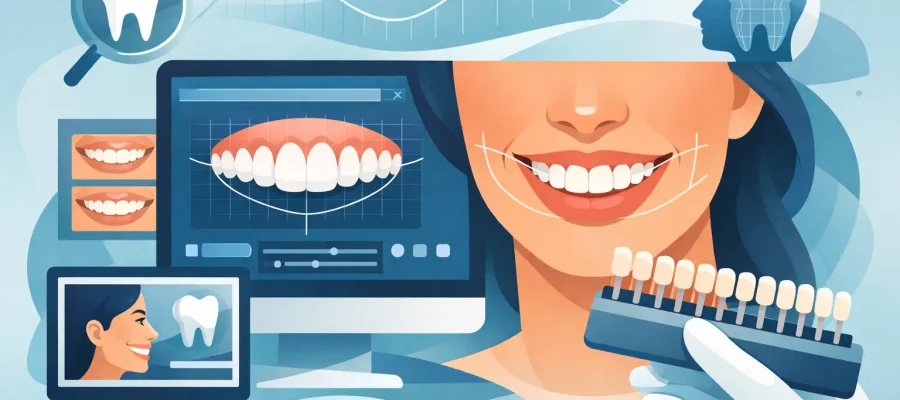
A smile makeover feels very different when you can see the result before anyone touches your teeth. That is the real appeal of Digital Smile Design. For patients investing in veneers, crowns, implants, or a full Hollywood Smile, it replaces guesswork with a clear visual plan.
If you have been asking what is digital smile design used for, the short answer is this: it is used to plan aesthetic and restorative dental treatment with more precision, more predictability, and a better match to your face. It helps both the dentist and the patient make smarter decisions before treatment starts, especially when the goal is a high-impact transformation completed on a tight timeline.
What is digital smile design used for in cosmetic dentistry?
Digital Smile Design, often called DSD, is a planning system that uses photos, videos, facial analysis, and digital measurements to design a future smile in a way that suits the patient’s features. It is not just a pretty rendering. When done properly, it becomes a clinical blueprint for shape, proportion, tooth position, gum balance, and sometimes bite adjustments.
In cosmetic dentistry, it is most often used before treatments like E-Max veneers, zirconium crowns, gum contouring, teeth whitening, and full smile makeovers. The purpose is to map the final look before preparation begins. That matters because cosmetic dentistry is not only about making teeth whiter or straighter. It is about building harmony between the teeth, lips, gums, and face.
A patient may arrive saying they want larger teeth or a brighter smile. The digital design process often shows that the real issue is asymmetry, a narrow smile line, uneven gum display, or worn edges that make the face look older. The software and planning process bring those details into focus so the final result looks intentional rather than generic.
Why patients ask for it before veneers or crowns
For patients choosing veneers or crowns, the biggest concern is usually not the procedure itself. It is whether the final smile will look right. That uncertainty can slow down decision-making, especially for international patients flying in for treatment and wanting a premium outcome on a defined schedule.
Digital Smile Design is used here to preview tooth shape, length, width, and overall smile style before the definitive restorations are made. That means the patient can react early. If they want a softer look, a more youthful edge design, a less bulky appearance, or a brighter but still natural shade, those preferences can be built into the plan before fabrication.
This is where the process adds real value. Changing a design on screen or during a mock-up is simple. Changing multiple finished restorations after placement is not. Better planning usually means fewer surprises and a smoother path to the final result.
What is digital smile design used for beyond aesthetics?
Although it is closely associated with smile makeovers, DSD is not only cosmetic. It is also used to improve function, communication, and treatment sequencing.
For restorative cases, especially where teeth are worn, broken, heavily restored, or missing, digital planning helps the team organize how everything should come together. That can include vertical dimension, bite balance, implant placement planning, and the visual relationship between natural teeth and restorations.
In implant dentistry, for example, the future smile often guides the surgical plan. Instead of placing implants first and adjusting the esthetics later, the team works backward from the desired final result. This approach is especially useful in full-arch treatments like All-on-4 and All-on-6, where tooth position, lip support, and smile line have a major impact on how natural the final restoration looks.
So when someone asks what is digital smile design used for, a more complete answer is this: it is used to design the final destination first, then align the clinical steps to reach it.
How the process works in real life
The process usually starts with high-quality photographs, close-up scans, and short video clips of the patient speaking and smiling. Static photos matter, but movement matters too. A smile that looks perfect in a still image can feel unnatural when the patient talks or laughs.
The dentist analyzes facial proportions, midline, lip movement, gum display, tooth visibility at rest, and the way the smile sits within the face. Then a digital proposal is created. In advanced workflows, this design can be translated into a mock-up or trial smile that the patient can see directly in the mouth.
That step is one of the strongest uses of digital smile design. It turns an abstract promise into something tangible. Patients can judge whether the proposed teeth feel too square, too long, too bright, or exactly right. It also improves communication between the dentist, technician, and patient, which is critical in high-value cosmetic cases.
Where digital smile design helps most
DSD is especially useful in cases where appearance and precision are both non-negotiable. That includes full smile makeovers, complex veneer cases, gummy smile correction, worn teeth rehabilitation, and implant reconstructions where visible teeth need to look highly natural.
It is also valuable for event-driven patients. If someone is planning treatment before a wedding, media shoot, business launch, or major life milestone, predictability matters almost as much as beauty. They want to know what they are committing to, how the final smile will read on camera, and whether the result will suit their face rather than look obviously “done.”
For international patients, there is another advantage. Digital planning supports faster decisions before travel and tighter treatment coordination on arrival. When the design phase is handled carefully, chair time can be more efficient and the treatment journey feels more controlled.
The benefits, and the trade-offs
The biggest benefit of Digital Smile Design is clarity. Patients understand the plan better, dentists work from a more detailed reference, and the final outcome is usually more predictable. It can reduce miscommunication, support same-visit or accelerated workflows, and raise confidence before treatment begins.
It also helps with personalization. Not every patient wants the same smile. Some want a polished Hollywood look with strong symmetry and brightness. Others want discreet refinement that still feels natural in professional settings. A digital design process makes those style choices easier to discuss.
That said, DSD is not magic software that guarantees perfection. The final outcome still depends on the quality of records, the dentist’s aesthetic judgment, the technician’s execution, and the biological limits of the patient’s teeth and gums. A digital preview may show the target, but the mouth has real constraints. Gum thickness, bite pressure, enamel condition, implant position, and healing response all matter.
There is also an important difference between a visual concept and the final result. Good clinics explain that the preview is a guide, not a cartoon promise. The best outcomes happen when digital planning is paired with disciplined clinical execution.
Is digital smile design worth it?
If you are considering premium cosmetic or implant treatment, it usually is. The more visible and high-stakes the case, the more valuable the planning becomes. For a single small correction, it may not be essential. For veneers across the front teeth, a full-arch implant case, or a complete smile transformation, it can make a major difference.
Patients who care about control, aesthetics, and time efficiency tend to appreciate it most. They do not want to arrive, sit in the chair, and hope the clinic understands their taste. They want to align on shape, style, and outcome before treatment moves forward.
At a clinic built around engineered aesthetics and same-visit smile transformations, such as DRGO Smile Clinic, that planning layer is part of what makes speed feel safe rather than rushed. Precision first. Then execution.
What to expect if you choose a clinic that offers it
A quality Digital Smile Design experience should feel collaborative, not confusing. You should be shown how your facial features influence the plan, what can realistically be changed, and where compromise may be necessary. You should also understand whether the design is being used only for visualization or as part of a full CAD/CAM and restorative workflow.
Ask to see how the design translates into the actual treatment steps. Will there be a mock-up? Will your temporary teeth reflect the approved design? How closely will the final restorations follow the preview? Those questions separate superficial marketing from serious treatment planning.
If the answer is thoughtful and specific, that is usually a good sign.
A beautiful smile should not feel like a gamble. The real use of Digital Smile Design is simple: it gives shape to the result before the treatment begins, so your new smile is chosen with intention, not left to chance.