


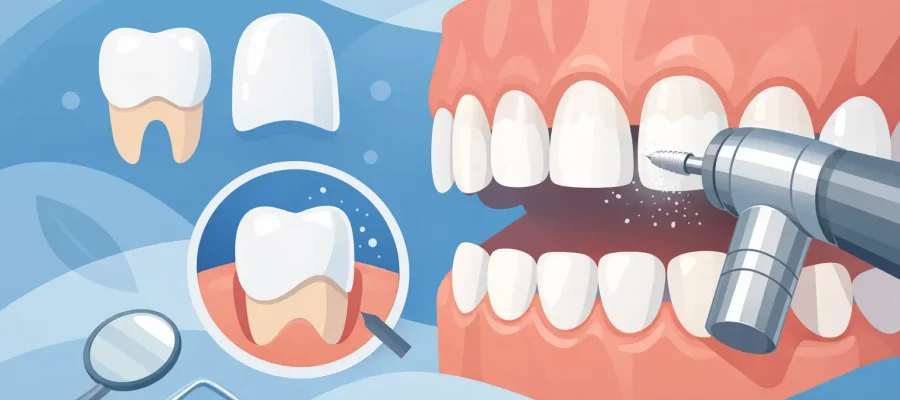
The phrase teeth shaving for veneers explained usually comes up right after a patient sees a dramatic smile makeover and asks the real question behind the photos: how much of the natural tooth was changed to get that result? It is a smart question, because veneer preparation is where aesthetics, biology, and long-term function all meet.
A great veneer case is not about filing teeth down aggressively. It is about controlled enamel reduction, done only where needed, so the final smile looks refined instead of bulky. If you are considering veneers for a wedding, public-facing work, content creation, or simply a cleaner and brighter look, understanding this step helps you judge quality before you commit.
What teeth shaving for veneers actually means
“Teeth shaving” is the informal term. In clinical terms, it means preparing the front surface and sometimes the edge of a tooth so a veneer can sit in the right position. The goal is not to make the tooth tiny. The goal is to create space.
Without that space, veneers can look overbuilt, too thick, or unnatural in profile. Lips may sit differently, speech can feel off, and the smile may have that obvious cosmetic look patients usually want to avoid. Proper preparation lets the ceramic blend with the natural tooth line, gum frame, and bite.
In many cases, only a thin amount of enamel is removed. For ultra-conservative cases, preparation may be minimal. For more advanced smile corrections, slightly more reduction may be necessary to mask deep discoloration, align visually crowded teeth, or correct shape and projection.
Teeth shaving for veneers explained by case type
The amount of enamel reduction depends on what the veneers need to fix. This is where one-size-fits-all dentistry becomes a problem.
Minimal-prep veneer cases
If your teeth are relatively straight, proportionate, and not heavily stained, very little enamel may need to be adjusted. These cases are often ideal for patients who want brightness, edge refinement, or subtle symmetry improvements. The advantage is obvious – more natural tooth structure is preserved.
But minimal-prep is not automatically better in every situation. If the tooth already projects forward or is bulky, adding a veneer with almost no reduction can create an unnatural result.
Standard veneer preparation
This is the most common approach. A thin layer of enamel is reduced across the front of the tooth, and sometimes along the biting edge. It gives the ceramist room to build a veneer that looks natural, polished, and balanced with your face.
This level of preparation works well for smile makeovers that need both beauty and control – especially when multiple teeth are being designed together for a Hollywood Smile effect.
More advanced preparation cases
Some smiles need more than surface-level improvement. If teeth are very dark, rotated, unevenly positioned, worn down, or previously restored, the preparation may need to be more strategic. That does not mean aggressive treatment by default. It means the reduction is guided by the final design, bite dynamics, and material choice.
This is why digital planning matters. The best clinics do not guess how much to remove during the appointment. They engineer the final shape first, then prepare only what that design requires.
How much tooth is usually removed?
For veneers, enamel reduction is often measured in fractions of a millimeter. That surprises many patients, especially those who have seen alarming online videos that show severe tooth reduction. Those videos often reflect crown preparation, not veneer preparation, or they show cases where the teeth were already heavily compromised.
Veneers and crowns are not the same. Veneers cover the front visible surface. Crowns cover the entire tooth. If your goal is cosmetic enhancement with healthy teeth underneath, veneers usually require far less reduction than crowns.
The exact amount depends on tooth position, shade goals, material thickness, and whether the bite allows a conservative design. If someone promises “no shaving” without even examining your smile, that is not precision. It is marketing.
Does teeth shaving for veneers hurt?
In most veneer cases, this step is far easier than patients expect. Preparation is typically done under local anesthesia, so you should not feel pain during the procedure. You may notice pressure, vibration, or water cooling from the instruments, but not sharp pain.
Afterward, some patients feel temporary sensitivity, especially to cold, if the teeth have been prepared and final veneers are not yet bonded. This is one reason temporary restorations and efficient scheduling matter. A tightly managed workflow reduces the time teeth stay in that in-between stage.
For international patients on a short timeline, this matters even more. Speed is not just about convenience. It also improves comfort and keeps the treatment journey controlled.
What happens before any shaving starts?
The most reliable veneer cases begin with the end in mind. Before any enamel is touched, the smile should be planned.
Smile design comes first
The dentist studies tooth proportions, gum line, lip movement, facial symmetry, and bite. In premium cosmetic cases, this is often supported by digital photography, scans, and 3D smile design. Patients can preview the direction of the final result instead of making decisions blindly.
That planning stage is where a lot of trust is built. It also prevents common mistakes like overly white veneers, flat tooth shapes, or a smile that looks disconnected from the face.
Mock-up and evaluation
In many cases, a mock-up or trial smile can show the intended volume and shape before the final restorations are made. This allows adjustments before irreversible preparation happens. For patients who are detail-driven, camera-facing, or simply want certainty, this step changes the whole experience.
Why some veneers need shaving and some do not
The internet often frames this as a simple choice: no-prep veneers are good, shaved teeth are bad. Real dentistry is more selective than that.
No-prep veneers can work beautifully in limited cases, usually when teeth are small, slightly spaced, or recessed enough that added ceramic will not create excess bulk. But if you try to use no-prep veneers on already prominent teeth, the smile can look thick and artificial.
Conservative preparation is often the more elegant option because it allows better contours, more realistic translucency, and a cleaner emergence from the gumline. In other words, a tiny amount of controlled reduction can produce a far more premium result.
Risks and trade-offs to understand
Veneers are a long-term treatment decision. Once enamel is removed, that change is not reversible in the sense of returning the tooth to its untouched state. That is why case selection and execution matter so much.
There are also trade-offs between ultra-thin veneers and stronger material thickness, between maximum brightness and natural translucency, and between speed and lab artistry. Patients often focus only on shade, but shape, edge position, and bite stability are what make veneers feel expensive and believable.
Poorly planned preparation can lead to sensitivity, unnatural contours, gum irritation, or restorations that chip under pressure. Well-planned preparation, by contrast, supports longevity because the veneers are bonded in a way that respects enamel and function.
How to tell if a clinic is conservative and precise
Ask how the final smile is designed before preparation. Ask whether veneers or crowns are truly indicated. Ask what material is being used and why. Ask how many teeth are recommended and whether that number is based on your smile width, not a sales script.
High-level cosmetic dentistry should feel measured, not rushed. Even in fast-turnaround systems, the planning must be disciplined. Clinics that combine digital smile design, guided preparation, and same-visit workflow tend to deliver a more predictable experience because every stage is aligned before the handpiece starts.
For patients traveling for treatment, that predictability is part of the luxury. At DRGO Smile Clinic, for example, the strongest cases begin with visual planning and controlled preparation so the final smile looks intentional from every angle, not just bright in a close-up photo.
What recovery and long-term care look like
Once veneers are bonded, the prepared teeth are protected by the restorations themselves. Most patients adapt quickly. There may be a short adjustment period for speech or bite awareness, but a well-designed case should feel natural fast.
Long-term care is straightforward: good hygiene, regular checkups, and sensible habits. Veneers are durable, but they are not indestructible. If you grind your teeth, clench under stress, or use your teeth as tools, the ceramics will be under more pressure than they should be.
The smartest mindset is this: veneers are not about removing healthy teeth to chase a trend. They are about refining the visible architecture of your smile with precision, restraint, and a clear final design. When that process is done properly, the preparation stage stops sounding scary and starts making sense.
The right smile makeover should never leave you wondering what was done behind the scenes. It should leave you feeling that every step was planned for one reason – a result that looks effortless, fits your face, and holds up long after the trip home.