


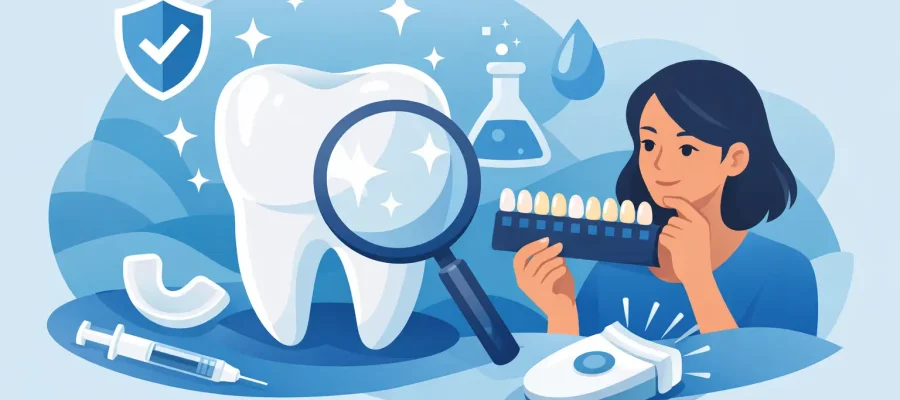
A brighter smile can photograph beautifully, but no one wants whiter teeth at the cost of sensitivity, uneven color, or damaged enamel. So, is teeth whitening safe? In most cases, yes – when the whitening method is chosen correctly, the mouth is healthy first, and the treatment is supervised or at least used exactly as directed.
That last part matters more than most people think. Whitening is not one single treatment. It can mean a professionally controlled in-clinic session, custom trays used over several days, store-bought strips, whitening toothpaste, or social-media DIY formulas that should never be anywhere near your teeth. Safety depends on the product, the concentration, the condition of your enamel and gums, and whether there is already dental work in the smile.
Is teeth whitening safe for everyone?
Not automatically. Teeth whitening is generally considered safe for healthy natural teeth, but it is not a universal green light. If you have untreated cavities, worn enamel, gum recession, cracked teeth, or active gum disease, whitening can become uncomfortable and sometimes counterproductive.
Pregnant or breastfeeding patients are often advised to postpone elective whitening simply because there is limited research in those groups. Younger patients also need extra caution, especially if the teeth are still developing or the source of discoloration has not been properly diagnosed.
There is also a cosmetic reality that matters. Whitening products do not lighten crowns, veneers, fillings, or bonding. If you already have visible dental restorations, the natural teeth may brighten while the restorations stay the same shade, creating a mismatch. For patients planning a smile makeover, whitening is often timed carefully so the final shade is controlled with precision rather than guesswork.
How whitening actually works
Most professional and over-the-counter whitening systems rely on peroxide-based ingredients, usually hydrogen peroxide or carbamide peroxide. These ingredients penetrate the enamel and break down stain molecules inside the tooth structure. That is different from surface stain removal, which is what most whitening toothpastes do.
Used properly, peroxide whitening does not “strip” enamel off the teeth. That is one of the biggest myths in cosmetic dentistry. The real short-term side effect is usually sensitivity, not enamel loss. Some patients also experience temporary gum irritation if the gel touches soft tissue for too long or if trays do not fit properly.
The concentration, contact time, and delivery method all affect safety. A stronger gel is not automatically better. It may work faster, but it can also increase the chance of sensitivity if the case is not managed correctly.
The safest whitening options
Professional whitening remains the most controlled option. In a clinic setting, the teeth and gums are examined first, the cause of discoloration is identified, and the whitening protocol is selected based on the patient rather than on generic packaging claims. Soft tissues are protected, the product is applied precisely, and the result is monitored in real time.
Custom take-home trays from a dentist are also a strong option because they balance convenience with accuracy. The gel is measured, the trays fit the teeth correctly, and wear time can be adjusted if sensitivity appears. For many patients, this is the best mix of safety, flexibility, and gradual shade improvement.
Store-bought strips can work for mild to moderate staining, but they are less precise. They do not fit every smile perfectly, so some areas may whiten more than others. They are usually safe when the instructions are followed, but overuse is where problems start. Using them longer than directed will not magically produce a celebrity smile overnight.
Whitening toothpastes and mouthwashes are the mildest category, but they also produce the most modest results. They are better at maintaining brightness than creating a dramatic color change.
What is not safe
The unsafe category is easy to define: unregulated whitening products, internet hacks, and any method that uses abrasive or acidic ingredients. Lemon juice, charcoal scrubs, baking soda overuse, and hydrogen peroxide mixtures made at home can irritate gums and roughen the tooth surface. A rougher tooth surface can actually attract more stain over time.
Another risk is whitening a problem that should have been diagnosed first. Dark spots, gray discoloration, patchy white marks, or one tooth that is much darker than the others may not respond predictably to standard whitening. In some cases, the issue is trauma, internal discoloration, enamel defects, or an old root canal. That requires a treatment plan, not a trending product.
The most common side effects
Sensitivity is the side effect patients notice most often. Cold drinks may feel sharper for a day or two, especially after stronger in-office whitening. This usually settles quickly, but patients with naturally sensitive teeth may need a gentler protocol.
Gum irritation is the second most common issue. This tends to happen when gel contacts the gums, when strips slide, or when someone tries to stretch treatment time beyond the instructions. The irritation is usually temporary, but it is still a sign that the whitening process needs to be adjusted.
A less discussed issue is disappointment caused by unrealistic expectations. Teeth can become noticeably brighter, but the final result depends on the starting shade, the type of staining, age, diet, smoking habits, and whether there are restorations in the visible smile line. Some smiles whiten easily. Others need a more advanced cosmetic approach to achieve a uniform, high-impact result.
When whitening is a smart choice – and when it is not
Whitening is a strong option for patients with healthy teeth who have yellowing or stain buildup from coffee, tea, red wine, smoking, or natural aging. It is often ideal before events, media appearances, weddings, or professional milestones when patients want a fresher, more polished look without changing the structure of the teeth.
It is less ideal when the smile has extensive bonding, crowns, veneers, or significant shape issues. In those cases, whitening may improve the natural teeth but not deliver the balanced aesthetic result the patient has in mind. If the goal is a perfectly even Hollywood Smile, whitening may be one step in the plan rather than the final destination.
That is why premium cosmetic clinics assess the whole smile, not just the color. At DRGO Smile Clinic, for example, whitening fits into a broader aesthetic strategy when needed – especially for patients comparing whitening with veneers, crowns, or a full smile redesign and wanting a result that looks intentional from every angle.
How to whiten safely and get a better result
Start with an exam, especially if you have not had a recent dental checkup. Whitening over untreated decay, exposed roots, or inflamed gums is where avoidable problems begin.
Choose the method based on your actual goal. If you want a subtle refresh, a lower-intensity take-home system may be enough. If you want fast, event-ready brightness with clinical oversight, in-office whitening is usually the better fit. If you have existing cosmetic work, ask how whitening will affect shade matching before you start.
Be disciplined with timing. More product and longer wear do not equal better dentistry. Follow the schedule exactly. If sensitivity appears, pause and speak to a dental professional rather than pushing through it.
Protect the result afterward. Freshly whitened teeth can be more prone to restaining in the short term, so coffee, red wine, dark sauces, and smoking are worth limiting right after treatment. Maintenance matters almost as much as the whitening itself.
So, is teeth whitening safe in the long term?
For most healthy patients, yes – when done properly and not abused. There is a major difference between periodic, professionally guided whitening and repeatedly using strong products without a diagnosis or plan. The first is standard cosmetic dentistry. The second is where sensitivity, uneven results, and frustration tend to show up.
The smarter question is not only whether whitening is safe. It is whether whitening is the right treatment for the smile you want. If your goal is simply brighter teeth, whitening can be a safe, effective upgrade. If your goal is a camera-ready, precisely engineered smile, whitening may be one part of a larger aesthetic solution.
A bright smile should look effortless, but the best results are never accidental. They come from choosing the right treatment, at the right time, for the right smile.