


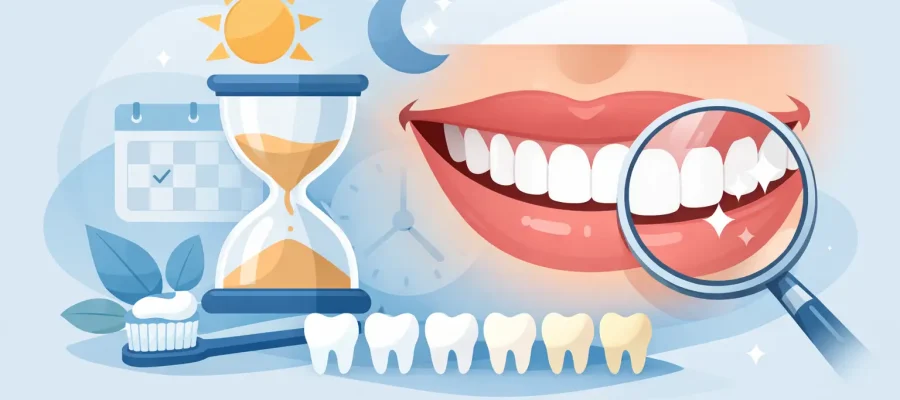
A freshly whitened smile looks incredible on day one. The better question is what it looks like three months later, after coffee, red wine, travel, photos, and real life. If you are asking how long does teeth whitening last, the honest answer is this: it can last anywhere from a few months to up to three years, depending on the whitening method, your enamel, and what you do after treatment.
That range is wide for a reason. Teeth whitening is not a permanent coating or a cosmetic shell. It works by lifting stains from natural tooth structure, which means your results are always affected by your daily habits and the condition of your teeth before treatment. The goal is not just a whiter smile for a week. The goal is a bright result that still looks clean, polished, and camera-ready long after the appointment.
How long does teeth whitening last with each treatment type?
The biggest factor is the type of whitening you choose. Not all whitening systems deliver the same depth of stain removal or the same staying power.
In-office professional whitening usually lasts the longest while giving the fastest visible result. For many patients, the brightness lasts around 12 to 24 months, and in some cases even longer with strong maintenance. This is because professional systems use higher-grade whitening agents, controlled application, and precise isolation to protect the gums while maximizing the result.
Take-home professional trays from a dentist tend to last around 6 to 12 months. They can produce excellent whitening, especially if used consistently, but the result builds more gradually and depends more on patient compliance.
Over-the-counter strips, pens, and whitening toothpastes usually fade faster. You may see improvement for a few weeks or a few months, but the effect is often more limited because these products are weaker and better at addressing surface stains than deeper discoloration.
If you want a noticeable upgrade before a wedding, public event, business shoot, or vacation, professional whitening is usually the better fit because it offers stronger immediate impact and more predictable longevity.
What affects how long teeth whitening lasts?
Two people can have the same treatment on the same day and see very different timelines. That is normal.
Your diet matters first. Coffee, tea, red wine, cola, curry, tomato sauce, soy sauce, and berries are common stain drivers. If you consume them daily, your whitening will usually fade faster than someone who drinks mostly water and avoids dark pigments.
Smoking and nicotine are even more aggressive. Tobacco stains are persistent, and they can quickly dull a newly whitened smile. Patients who smoke often need touch-ups much sooner.
Your enamel also plays a role. Natural enamel has microscopic pores. Some teeth are more prone to absorbing pigments, especially if enamel is worn, thin, or roughened by acidic food, grinding, or age. When the tooth surface is smoother and healthier, the result often holds better.
Oral hygiene changes the equation too. If plaque builds up, teeth look dull faster. Even when the underlying whitening is still there, surface buildup can make the smile appear darker than it really is.
Then there is the starting point. Yellow-toned teeth often respond better to whitening than gray or blue-toned discoloration. Stains caused by aging, food, and drinks usually improve well. Discoloration from trauma, certain medications, old dental work, or fluorosis may not respond the same way, which affects both the final shade and how stable it appears over time.
The first 48 hours matter more than most people think
Right after whitening, teeth are more vulnerable to re-staining. Think of this as the high-risk window.
For the first 24 to 48 hours, many dentists recommend a white diet. That means keeping foods and drinks simple and light in color – water, milk, plain chicken, rice, pasta without dark sauces, yogurt, bananas, and similar options. It is not glamorous, but it protects the investment you just made.
This short period matters because enamel is temporarily more receptive after bleaching. If you spend those first two days drinking espresso and red wine, you can shorten the life of your result before it has fully stabilized.
How to make teeth whitening last longer
Maintenance is where good whitening becomes lasting whitening. You do not need a complicated routine, but you do need consistency.
Brush twice a day with a non-abrasive toothpaste and floss daily. If you use a whitening toothpaste, choose one that focuses on stain control rather than harsh scrubbing. Overly abrasive formulas can wear enamel and make teeth more likely to pick up discoloration over time.
Rinse with water after coffee, tea, or wine. That simple habit helps reduce how long pigments sit on the tooth surface. Using a straw for iced coffee or dark beverages can also help, though it will not eliminate staining completely.
Schedule regular professional cleanings. Whitening removes color from the tooth, but cleanings remove plaque and tartar that make teeth look dull. The combination is what keeps a smile looking refined.
For patients who want a consistently bright aesthetic, occasional touch-ups are the smart move. That may mean a take-home tray session every few months or a quick booster treatment before a major event. Touch-ups are usually easier and more conservative than starting over from scratch.
When whitening fades faster than expected
Sometimes the issue is not that whitening failed. It is that the discoloration was never a simple whitening case.
If you have fillings, crowns, veneers, or bonding on front teeth, those materials do not whiten like natural enamel. Your natural teeth may get brighter while restorations stay the same shade, which can make the result feel uneven. In that case, whitening alone may not deliver the polished, balanced look you want.
The same is true for deep internal discoloration. Teeth darkened by trauma, root canal treatment, or certain medications may not respond fully to bleach-based whitening. For those patients, veneers, bonding, or crowns can create a cleaner and more stable cosmetic result.
This is where treatment planning matters. A premium cosmetic result is not about making teeth lighter at any cost. It is about choosing the right method for your natural tooth color, enamel quality, existing restorations, and smile design goals.
Is professional whitening worth it if it is not permanent?
For most image-conscious patients, yes. The value is not permanence. The value is speed, control, and visible payoff.
Professional whitening can shift a smile quickly enough to matter before a milestone. That could be a wedding, brand shoot, media appearance, job interview, or luxury vacation. It gives natural teeth a fresher, healthier, more expensive look without changing tooth shape.
It also works well as part of a bigger cosmetic plan. Some patients whiten before bonding or veneers so the final shade can be matched to a brighter baseline. Others use whitening as a lower-commitment way to refresh their look before deciding whether they want a full smile makeover.
At a clinic focused on engineered smile aesthetics, whitening is not treated like a generic add-on. It is positioned within the bigger result: how your smile reads in daylight, on camera, in close conversation, and alongside your skin tone and facial features.
How long does teeth whitening last if you drink coffee every day?
Daily coffee drinkers usually see faster fade than patients who avoid dark beverages, but that does not mean whitening is pointless. It means your maintenance strategy needs to be realistic.
If you drink coffee every morning, expect the result to soften gradually over several months rather than staying at peak brightness for a full year without support. Rinsing afterward, avoiding slow sipping all day, and using periodic touch-ups can make a major difference. Many patients keep an excellent shade with this kind of routine.
The mistake is expecting one whitening session to beat years of staining habits forever. The better mindset is performance maintenance. You preserve the result instead of waiting for it to disappear.
Who gets the longest-lasting whitening results?
Patients with healthy enamel, good hygiene, low tobacco exposure, and moderate staining habits generally keep their results the longest. They also tend to be the happiest with whitening because the shade change stays crisp and natural.
Patients preparing for aesthetic dentistry often do especially well because they are already motivated to protect the result. They are more likely to follow aftercare, return for cleaning, and invest in touch-ups before the smile slips backward.
If you want a smile that looks bright, not artificial, whitening can be a smart starting point or a powerful finishing touch. At DRGO Smile Clinic, the right plan always starts with how your smile needs to perform in real life, not just how white it looks in the chair.
The best whitening result is not the one that looks extreme for a week. It is the one that still looks polished when the photos, meetings, and celebrations actually happen.