


A crown can change the entire look of a tooth in one move. If you are comparing smile makeover options, the different types of dental crowns matter because the right material affects not just appearance, but strength, longevity, and how fast your final smile can be delivered.
For many international patients, the question is not simply, “Do I need a crown?” It is, “Which crown will look expensive, feel natural, and hold up under real life?” That is the right question. Crowns are not one-size-fits-all, especially when aesthetics, bite force, treatment speed, and budget all need to align.
What are the main types of dental crowns?
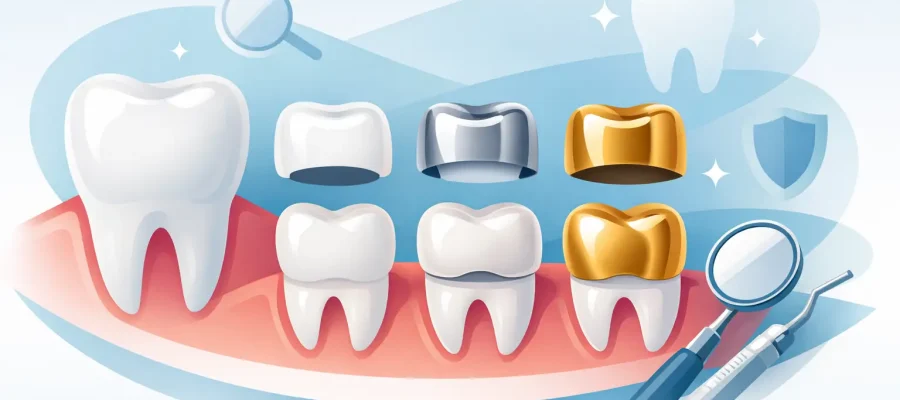
The main types of dental crowns are zirconia, E-Max, porcelain-fused-to-metal, full metal, and composite or resin-based crowns. Each one solves a different problem.
Some materials are chosen because they look exceptionally lifelike under light. Others are selected because they handle heavy chewing pressure better. In cosmetic dentistry, the best choice usually comes down to where the tooth sits in the mouth, how much natural tooth remains, whether you grind your teeth, and how ambitious your smile goals are.
Zirconia crowns
Zirconia crowns are one of the most requested options for patients who want durability without giving up a clean, polished aesthetic. Zirconia is a high-strength ceramic that performs especially well on back teeth, full-mouth rehabilitations, and cases where long-term resistance matters.
The appeal is obvious. Zirconia is strong, fracture-resistant, and suitable for patients with stronger bites or clenching habits. It also works well in larger restorative cases, including implant-supported crowns and full-arch designs.
Aesthetic quality has improved dramatically over the years. Earlier zirconia could look slightly more opaque than premium glass ceramics, but newer generations are far more refined. Even so, if the goal is the highest level of translucency for very visible front teeth, zirconia is not always the first choice. It depends on the case.
Zirconia is often favored when patients want a predictable blend of beauty, durability, and efficient treatment planning. In clinics using advanced digital workflows, it can also support faster turnaround.
E-Max crowns
E-Max crowns are the premium cosmetic favorite for many front-to-smile-zone restorations. Made from lithium disilicate ceramic, they are known for their translucency, light reflection, and highly natural finish.
If you have ever seen a smile that looks bright but not fake, polished but not flat, there is a good chance E-Max played a role. This material is especially popular for upper front teeth because it mimics the depth and vitality of natural enamel better than many alternatives.
The trade-off is strength versus zirconia. E-Max is strong enough for many cases, but it is usually selected more for beauty than maximum toughness. For patients with heavy grinding, deep bite pressure, or extensive posterior work, another material may be more practical.
For smile design cases, E-Max is often the answer when the priority is elite aesthetics. It is particularly effective when shade, edge detail, and translucency need to be carefully controlled.
Porcelain-fused-to-metal crowns
Porcelain-fused-to-metal crowns, often called PFM crowns, combine a metal inner structure with a porcelain exterior. For years, they were a standard option because they offered dependable function and a more tooth-colored appearance than full metal crowns.
They still have a place in some restorative situations, but they are no longer the top aesthetic choice for patients seeking a luxury smile makeover. The reason is simple. Over time, the metal underneath can affect the final look. In some cases, a dark line may appear near the gumline, especially if the gums recede.
PFM crowns can be durable and cost-effective, but they usually do not deliver the same clean, bright, modern finish as zirconia or E-Max. If your priority is a camera-ready result, especially in the front of the mouth, PFM may feel like an older-generation solution.
Full metal crowns
Full metal crowns are made from metal alloys or, less commonly today, gold-colored materials. Their biggest advantage is function. They are extremely strong, conservative in terms of tooth reduction, and long-lasting.
But aesthetics are the obvious limitation. Very few patients choosing cosmetic dentistry want a visible metal restoration, particularly in a smile makeover setting. Full metal crowns are more likely to be considered for molars that are rarely seen and need maximum durability.
For international patients focused on appearance, these are usually not the lead option. They are practical, not glamorous.
Composite or resin crowns
Composite crowns are generally more affordable and can be useful as temporary or short-term restorations. They can also work in selective cases where cost is the main driver.
The issue is performance over time. Composite does not typically match ceramic materials for longevity, stain resistance, or refined esthetics. It can wear faster, chip more easily, and lose surface polish sooner.
If you are investing in a premium smile outcome, composite is rarely the finish line. It is more often a stepping stone.
How to choose between the types of dental crowns
Choosing between the types of dental crowns starts with one question: is this primarily an aesthetic case, a structural case, or both?
For front teeth, E-Max often leads because it creates the most natural-looking result under close view and strong lighting. For back teeth or high-pressure bite cases, zirconia usually makes more sense because it offers more resilience. For patients needing multiple crowns across the smile line, the decision can become more strategic. Sometimes a dentist will recommend combining materials based on the role of each tooth.
Your bite matters as much as your photo goals. A patient who clenches, grinds, or has a history of fractured restorations may need a stronger material even if translucency is a top concern. Likewise, gum position, tooth preparation, and implant versus natural tooth support can all affect the recommendation.
This is where digital planning changes the experience. When a case is designed in advance with 3D smile analysis and precise imaging, the crown material is selected as part of the final aesthetic blueprint, not as an afterthought.
Which crown material looks the most natural?
For pure esthetics, E-Max is often considered the most natural-looking option. It reflects light in a way that closely resembles real enamel, which makes it highly desirable for visible front teeth.
That said, natural-looking does not always mean best overall choice. A beautifully translucent crown on a tooth that absorbs extreme bite pressure may not be the smartest long-term move. In many premium treatment plans, the best result comes from balancing lifelike beauty with structural discipline.
Modern zirconia can also look excellent, especially when designed and finished carefully. In the right hands, the difference is not always obvious to a non-dentist. What matters most is matching the material to the role of the tooth and the patient’s expectations.
Which crown lasts the longest?
In many cases, zirconia crowns are among the longest-lasting ceramic options because of their strength and resistance to fracture. Full metal crowns also last very well, but they are rarely selected for cosmetic reasons.
Longevity depends on more than material alone. The quality of tooth preparation, bite design, lab precision, oral hygiene, and habits like grinding all affect how long a crown performs. Even the most premium crown can fail early if the bite is off or the case is rushed without proper planning.
That is why speed only matters when it is paired with precision. Same-visit or short-stay treatment can be an advantage, but only when the workflow includes proper imaging, design, and quality control.
What international patients should ask before choosing a crown
If you are traveling for treatment, ask what material is being recommended and why. Ask whether the crown is being placed on a front tooth, a molar, or an implant. Ask whether your case is being designed for maximum aesthetics, maximum durability, or a blend of both.
You should also ask how the clinic plans the smile before treatment begins. A premium crown result should not be based on guesswork. It should be engineered around your face, bite, gum line, and final shade goals.
At DRGO Smile Clinic, that planning mindset is central to how high-aesthetic crown cases are approached, especially for patients flying in on a limited schedule. The material choice is part of the signature smile design, not a generic upsell.
The best crown is not the most expensive one on a chart. It is the one that fits your smile, your bite, your timeline, and the standard you want every time you speak, laugh, or step in front of a camera. If you start there, the right choice becomes much clearer.