


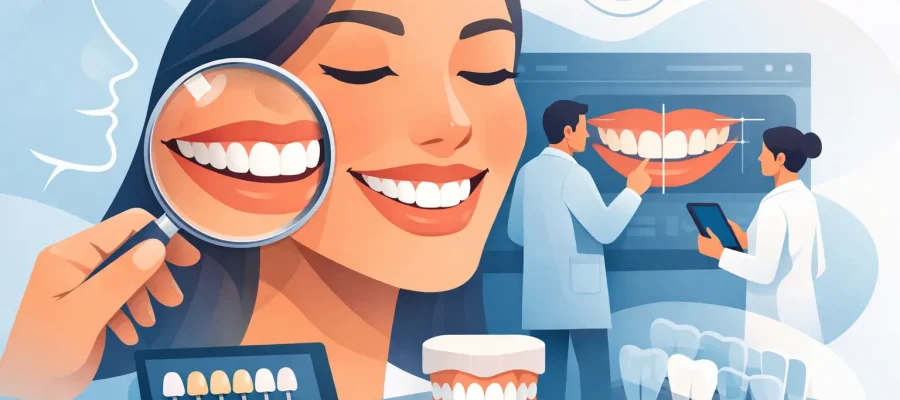
A bright, straight smile is not automatically a beautiful smile. Veneers that look perfect in a close-up can still feel too long, too white, too flat, or simply unlike the person wearing them. That is why personalized smile design delivers better results: it begins with your face, expression, bite, and expectations, not a standard set of teeth.
For patients traveling to Istanbul for a premium smile makeover, this level of planning matters even more. You have a defined timeline, a clear investment, and a visible result in mind. The right treatment should make your smile look naturally exceptional in photos, conversation, and everyday life – not generic or overdone.
Why personalized smile design delivers better results
A personalized smile is engineered around the features that make you recognizable. Your lip line, facial proportions, gum display, tooth shape, skin tone, and even the way your mouth moves when you speak all influence the final design.
A one-size-fits-all approach may use the same ultra-white shade, squared shape, or oversized proportions for every patient. It can create a dramatic before-and-after image, but dramatic is not always refined. The best cosmetic dentistry creates harmony. People notice that you look fresher, more confident, and more polished before they can identify exactly why.
Personalized smile design also connects aesthetics to function. Veneers, zirconium crowns, E-Max restorations, and implant-supported teeth must work with your bite. If the design ignores grinding patterns, jaw movement, spacing, or existing tooth structure, even an attractive result may be vulnerable to chipping, discomfort, or premature wear.
The goal is not to give every patient the same Hollywood Smile. The goal is to create your signature smile: a result with the level of brightness, symmetry, and presence you want, built to belong to your face.
The design starts before any tooth is prepared
A high-quality makeover should never begin with irreversible treatment decisions made from a single photograph. It starts with a consultation that identifies what you want to change and what must be protected.
Some patients want a bold, camera-ready transformation for a wedding, public-facing career, or major life moment. Others want to correct worn edges, uneven color, old bonding, or gaps while keeping the result understated. Both goals are valid, but they require different decisions about tooth color, translucency, length, texture, and contour.
The clinical team also evaluates your oral health. Gum inflammation, untreated decay, bite imbalance, or missing teeth can change the recommended pathway. A patient who asks for veneers may benefit from gum contouring first. Someone with extensive tooth loss may need All-on-4 or All-on-6 implants rather than cosmetic crowns alone. Personalization means selecting the right treatment, not forcing every concern into one procedure.
Facial analysis creates proportion, not uniformity
Natural-looking teeth are not identical blocks of white. The central incisors usually lead the smile, while the teeth beside them step down in length and character. The curve of the lower lip, the width of your smile, and the amount of tooth visible at rest all affect how those proportions should be set.
Facial analysis helps determine whether softer rounded edges, sharper contours, wider teeth, or more delicate shapes will look most balanced. A design that gives a strong, masculine appearance may not suit a patient seeking softer elegance. Likewise, very short teeth can make a mature face look more tired, while excessive length can feel unnatural on someone with a low smile line.
This is where cosmetic dentistry becomes more than selecting a shade chart. Small details create the difference between teeth that look manufactured and a smile that looks like your best natural feature.
Digital previews reduce uncertainty
Digital Smile Design brings the plan into view before treatment is finalized. High-resolution photos, scans, and 3D planning tools allow the dentist to map the proposed tooth positions and assess how the new smile relates to your lips and face.
For international patients, a preview is especially valuable. It creates a clearer conversation before travel and reduces the guesswork often associated with elective cosmetic treatment. You can discuss whether you prefer a natural ivory shade or a brighter, more visible finish, whether the teeth should look youthful and textured or highly polished, and how much change feels right.
A digital preview is a planning tool, not a promise that every clinical detail will be identical to a screen image. Gum health, tooth structure, bite requirements, and material behavior still guide the final treatment. But it gives both patient and dentist a shared visual target, which is far more precise than asking for “nice veneers.”
Material choice should follow the smile plan
The material matters, but there is no universal winner. E-Max veneers are valued for their lifelike translucency and can be an excellent option when the underlying teeth are healthy and minimally invasive enhancement is appropriate. Zirconium crowns may be recommended when greater strength and coverage are needed, particularly for heavily restored or weakened teeth.
Teeth whitening can be enough for patients with good shape and alignment who mainly want a brighter smile. Gum aesthetics may transform a smile with uneven gum levels or excess gum display. For patients replacing missing teeth, implant planning must account for bone quality, facial support, gum contours, and the final tooth design from the beginning.
The trade-off is straightforward: the fastest or least invasive option is not always the one that delivers the most stable result. A careful treatment plan explains why a particular material or procedure fits your clinical needs and your visual goal. That is a sign of discipline, not a sales obstacle.
A personalized workflow protects both speed and precision
Modern technology can make treatment remarkably efficient. CAD/CAM workflows may allow certain crowns to be designed and completed in one visit. Immediate implant protocols can provide fixed teeth quickly for qualified patients. A well-coordinated smile makeover can often fit within a planned travel schedule.
Speed works best when it follows thorough preparation. Digital scans, diagnostic planning, shade selection, and try-in stages keep the process controlled. Rather than rushing to a final result, the team confirms the shape, bite, and appearance before final placement.
At DRGO Smile Clinic, this coordinated approach is designed for patients who want premium cosmetic dentistry without turning treatment travel into a complicated project. Clinical planning, multilingual support, transfers, accommodations, and appointment timing can be organized around one focused treatment journey. The luxury is not only the hotel or VIP transfer. It is arriving with a plan and leaving with clarity.
The try-in is where confidence becomes real
A smile should be evaluated in motion, not only under clinic lighting. During a try-in, you can see how the proposed teeth look when you smile broadly, speak, and relax your lips. Your dentist can assess the bite and make refinements before the final restorations are bonded or fixed.
This step is particularly important for patients who have spent years hiding their teeth. A small adjustment to length or contour can make the result feel more familiar and comfortable. The best outcome is not just a dramatic reveal. It is the moment you stop checking whether your smile looks natural because it already feels like yours.
Personalization also means honest expectations
A premium smile makeover can create a major transformation, but excellent dentistry does not ignore biology. Existing enamel, gum position, bone volume, jaw habits, and healing response affect what can be achieved safely.
For example, very bright shades may require more maintenance, particularly if you drink coffee, red wine, or smoke. Patients who clench or grind may need a protective night guard to preserve veneers, crowns, or implant restorations. Gum procedures and implants may require healing time, so not every treatment can be compressed into a single visit.
These details should not diminish excitement. They protect the investment. A clinic focused on your long-term result will explain the benefits, limits, maintenance needs, and timeline before treatment begins.
Your smile is visible before you say a word. Give it the same level of planning you would expect from any high-value transformation: clear goals, precise design, clinically sound treatment, and enough time to make the final result feel unmistakably your own.