


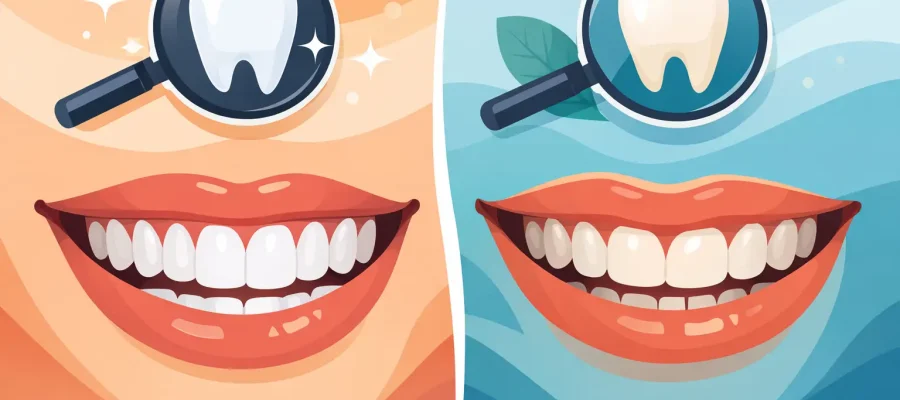
A bright, straight smile is not automatically a natural-looking smile. The difference is usually visible in the details: teeth that appear too flat, too opaque, too white, or too identical can look manufactured from across the room. That is why some veneers look fake and others look natural – and why a premium smile makeover should start with design, not with a single shade card.
Natural veneers do not try to make every tooth look like a perfect copy of the next. They are engineered around your facial proportions, lip movement, gumline, complexion, and the character already present in your smile. The goal is a refined version of your own teeth: brighter, more balanced, and camera-ready without looking disconnected from you.
Why Some Veneers Look Fake and Others Look Natural
A veneer can look artificial even when it is technically well bonded. A natural result depends on several choices working together, from diagnosis to final placement. If one element is rushed or generalized, the smile may look heavy, flat, or overly uniform.
The biggest mistake is treating veneers as identical white shells. Real teeth reflect light differently at the edge, have subtle texture on the surface, and show slight variations in translucency and color. They also sit within a unique frame created by your lips and gums. A smile design that ignores those details can look like it was selected from a catalog rather than created for a person.
Natural-looking results are not about making teeth imperfect. They are about controlling the right amount of realism while still delivering a polished Hollywood Smile.
The Material Changes How Light Moves Through the Tooth
Material is one reason two smiles with a similar color can look completely different. High-quality porcelain, particularly E-Max in the right clinical case, can reproduce the translucency and light behavior of natural enamel. Light enters the ceramic, reflects beneath the surface, and creates depth instead of a solid, chalky appearance.
Zirconium is exceptionally strong and can be an excellent choice for crowns, bridges, or cases that require more coverage and support. Modern multilayer zirconium can also achieve very attractive cosmetic results. Still, the best material is not a universal decision. It depends on how much tooth structure is present, the underlying tooth color, bite forces, the position of the tooth, and the desired level of translucency.
A very thin veneer may look beautifully lifelike over a healthy, light-colored tooth, but it may not adequately mask deep discoloration. In that situation, a clinician may recommend a different ceramic, slightly more preparation, or a staged approach. Choosing the material purely because it is popular can compromise either appearance or durability.
Shade Is More Than Choosing White
The whitest possible shade is not always the most luxurious one. A shade that is too bright for your skin tone, eyes, age, or surrounding teeth can draw attention to the dental work instead of your face.
Professional smile design considers brightness, warmth, and translucency. Natural enamel is rarely one solid white. It is often more translucent near the incisal edge, with subtle warmth closer to the gumline. A skilled ceramist can build these transitions into the veneer so it has visual depth in daylight, office lighting, photos, and video.
This does not mean a bold white smile cannot look natural. Many patients want a high-impact, ultra-bright Hollywood Smile for media, weddings, and public-facing careers. The key is creating a bright result that still has dimension. A cool, opaque block of white may photograph strongly in one setting but look artificial during conversation. The right design lets you choose a statement shade without losing life in the teeth.
Shape Must Follow Your Face, Not a Trend
Square teeth, rounded teeth, elongated teeth, and more youthful tooth proportions each create a different impression. A shape that looks striking on an influencer may not flatter every face.
The length and width of the front teeth should be planned in relation to the lips, facial midline, smile line, and how much tooth shows when you speak. Overly long veneers can make a smile look bulky. Teeth that are too wide can remove the natural negative spaces that give a smile rhythm. When every tooth is made with the same size and geometry, the result can feel overly uniform.
Small asymmetries are sometimes worth preserving. The objective is not to recreate every natural irregularity, but to avoid erasing the subtle features that make a smile believable. A strong cosmetic plan knows the difference.
The Edges Are Where Realism Shows
The incisal edges of natural teeth are not all perfectly straight. They have gentle contours, slight translucency, and controlled variation between the central incisors, lateral incisors, and canines. These small differences affect how a smile catches light and how it looks when you laugh.
A natural veneer design can include delicate surface texture and layered internal effects without making the teeth appear stained or worn. These are precision details, not flaws. They are especially noticeable in close-up photography and high-definition video.
Gumline Design Can Make or Break the Result
Even beautifully made veneers can look unnatural if the gumline is uneven, inflamed, or disproportionate. Gums are the frame of the smile. If the frame is not healthy and balanced, the final result may look unfinished.
For some patients, gum contouring or gum aesthetics is part of the smile makeover plan. It can create more symmetry, reduce a gummy appearance, or expose the ideal amount of tooth structure before veneers are placed. This must be planned conservatively and clinically. Removing gum tissue simply to make teeth look longer is not the answer for every patient.
Healthy gums also support the long-term appearance of veneers. Redness, recession, or bleeding can make even premium ceramic look less convincing. A proper assessment should identify gum health concerns before cosmetic work begins.
Preparation and Fit Determine Whether Veneers Look Bulky
Veneers need space. When a tooth is not prepared appropriately, the ceramic may add too much volume and create a thick, over-contoured look. Teeth can appear large, lips may be pushed forward, and the transition near the gumline can become visible.
At the same time, aggressive tooth reduction is not a mark of quality. The ideal approach is conservative preparation based on the existing tooth position, enamel condition, bite, and the planned change in color or shape. Sometimes minimal-prep veneers are possible. Sometimes they are not the safest route, particularly when teeth are protruding, dark, heavily restored, or misaligned.
The margins also need exceptional precision. Well-fitted veneers blend cleanly at the edges and support easy hygiene. Poorly finished margins may catch stain, retain plaque, or create a visible line over time.
Digital Planning Makes “Natural” More Predictable
Natural-looking veneers should never be a surprise reveal. Digital Smile Design allows the clinical team to assess facial photos, tooth proportions, lip movement, and bite before finalizing the direction. A 3D preview and smile mock-up give you a chance to see the proposed length, shape, and overall personality of the smile before ceramic is made.
This step is valuable for international patients because it creates alignment before treatment begins. Instead of relying on vague descriptions such as “not too big” or “very natural,” the team can translate your preferences into visible design decisions.
At DRGO Smile Clinic, this planning-first approach combines digital smile analysis with clinical assessment, so esthetics do not come at the expense of function. The final veneers must look exceptional, but they also need to work comfortably when you speak, chew, and close your bite.
A Great Lab and a Great Dentist Need Each Other
The dentist controls preparation, impressions or scans, bite, temporary veneers, and final bonding. The dental ceramist builds the artistic realism into the porcelain. One cannot fully compensate for the other.
High-end veneer work benefits from clear communication between the clinical and laboratory teams. Reference photos, shade mapping, facial images, and a detailed prescription help the ceramist understand whether the goal is soft and understated, glamorous and bright, or somewhere between. The try-in stage then allows for final checks in real lighting before placement.
Do not judge veneer quality only by before-and-after photos taken under studio lights. Ask whether you will see a digital plan or mock-up, how bite and gum health will be evaluated, which material fits your case, and how refinements are handled before final bonding.
A natural smile should feel like an upgrade, not a disguise. The best veneers make people notice that you look rested, confident, and polished – then leave them wondering what changed.