


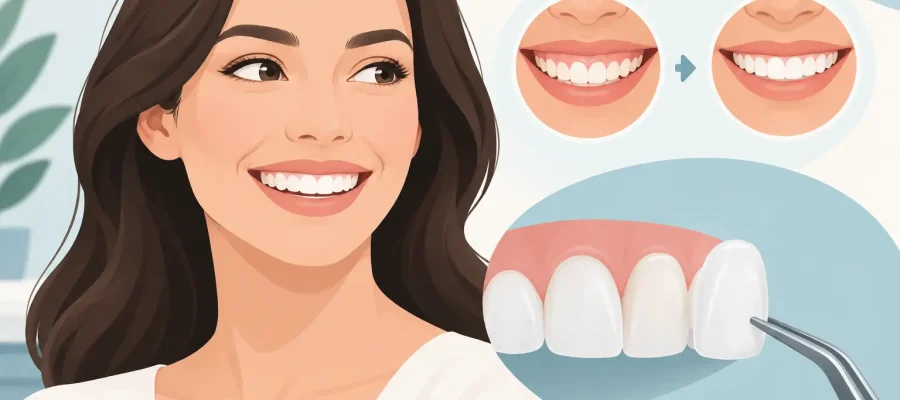
A smile can look “gummy” for very different reasons. Sometimes the teeth are naturally short. Sometimes excess gum tissue covers healthy enamel. In other cases, the upper lip rises high when you smile. So, can veneers fix a gummy smile? They can be part of the answer, but veneers alone are not the right solution for every smile.
The best result comes from identifying what is creating the imbalance between teeth, gums, and lips before a single tooth is prepared. For patients seeking a polished Hollywood Smile, that distinction is what separates a smile that merely looks whiter from one that looks naturally balanced, confident, and designed for their face.
Can veneers fix a gummy smile on their own?
Veneers do not physically remove gum tissue or lower a high upper lip. They are ultra-thin porcelain shells bonded to the front surface of teeth, designed to improve shape, color, length, symmetry, and proportion. If your gummy smile is mainly caused by teeth that appear short, carefully designed veneers may create the visual impression of less gum by making the visible teeth longer and more proportionate.
This can be especially effective when teeth have been worn down through grinding, are naturally small, or have uneven edges. Adding controlled length to the front teeth can shift the entire smile line. The gums may stay in the same position, yet the smile looks less gum-dominant because the teeth now occupy the right amount of visual space.
However, there is a limit. Making veneers too long just to hide excessive gum can create an artificial result, affect speech, or interfere with the bite. Premium smile design is never about placing the largest possible veneers. It is about creating the right relationship between the teeth, gumline, lips, and facial proportions.
What causes a gummy smile?
A gummy smile is usually described as showing more than a few millimeters of gum above the upper front teeth while smiling. That definition is only a starting point. Some patients show more gum and still look harmonious because their lip shape, tooth proportions, and facial features work together beautifully.
For others, even a modest amount of visible gum can feel distracting because the upper teeth look short or uneven. Common causes include excess gum tissue, altered passive eruption, tooth wear, a hyperactive upper lip, naturally short teeth, vertical maxillary excess, or a combination of these factors.
Altered passive eruption is a frequent cosmetic concern. It means the gum tissue has not receded to its ideal position after the teeth erupted, leaving more enamel covered than expected. In this situation, gum contouring or crown lengthening may reveal the natural tooth structure. Veneers can then refine the final shape and color if needed.
A hyperactive upper lip is different. Here, the lip lifts higher than average when you smile, exposing more gum. Veneers may improve tooth proportions, but they do not change muscle activity. In selected cases, a carefully placed lip-relaxing Botox treatment can reduce upper-lip elevation temporarily. This is a non-surgical option that must be planned conservatively and repeated over time.
When the upper jaw itself is positioned vertically lower than ideal, the treatment conversation becomes more complex. Orthodontics, jaw surgery, or a combination approach may be more appropriate than veneers alone. A trustworthy cosmetic dentist should be willing to say when a veneer-only plan will not deliver the result you expect.
When gum contouring and veneers work best together
For many patients, the most elegant solution is not veneers versus gum treatment. It is a staged plan that uses both.
Gum contouring reshapes excess soft tissue to establish a more even, balanced gumline. Depending on the amount of tissue involved and the position of the underlying bone, a more advanced crown-lengthening procedure may be necessary. Once the gums heal and stabilize, veneers can be designed to complement the newly revealed tooth structure.
This combination is often ideal when the front teeth look square, short, or uneven because of excess gum coverage. The gum procedure creates the frame. The veneers create the final color, texture, length, and symmetry within that frame.
Timing matters. In minor soft-tissue cases, the cosmetic process can move quickly. When crown lengthening is required, healing time is essential before final porcelain is placed. Rushing that stage risks changes at the gumline after the veneers are completed, which can compromise the precision of the final smile.
How digital smile planning avoids guesswork
A gummy-smile treatment should not begin with a generic veneer package or a photo-based guess. The smile has to be planned in motion, not only in a still image. Your dentist should evaluate your full smile, resting lip position, speech, bite, tooth display, gum levels, and facial midline.
At DRGO Smile Clinic, Digital Smile Design and 3D previews are used to turn these measurements into a visible treatment plan before final treatment begins. This allows the team and patient to assess whether longer teeth alone will create sufficient balance, or whether gum aesthetics should be addressed first.
A digital plan also helps prevent a common cosmetic mistake: creating perfectly symmetrical teeth in a smile that does not suit perfectly symmetrical teeth. Natural-looking luxury dentistry accounts for facial character, lip movement, and the subtle differences that make a smile look real rather than manufactured.
For international patients, this planning stage is particularly valuable. It creates clarity before travel and helps organize the right treatment sequence, whether that involves gum contouring, E-Max veneers, zirconium crowns, whitening, or restorative work.
What treatment feels like and how long it takes
The experience depends on the diagnosis. Veneers generally require minimal preparation when teeth are healthy and correctly positioned, though some cases require more adjustment to create a durable and natural result. Local anesthesia keeps the procedure comfortable, and temporary veneers may be used while final restorations are crafted.
Simple gum contouring is typically performed under local anesthesia and may be completed in a single visit. You can expect short-term tenderness and should follow aftercare instructions while the tissue settles. Crown lengthening involves a deeper level of treatment and requires more healing before final restorations.
A veneer-focused smile makeover can often fit a short treatment trip when no extensive gum healing is needed. A combined plan may require two phases or a planned return visit. That is not an inconvenience to be hidden – it is the clinical discipline that protects the outcome.
Who may not be a good candidate for veneers?
Veneers should only be placed on stable, healthy teeth and gums. Active gum disease, untreated decay, uncontrolled grinding, or poor bite support need attention first. Porcelain can be highly durable, but it cannot compensate for inflammation, a failing tooth, or a bite that places excessive force on the front teeth.
Patients with significant enamel loss, large existing fillings, or structurally weakened teeth may be better served by crowns rather than veneers. For a gummy smile caused primarily by jaw position or a highly active lip, veneers may be an enhancement within a larger plan, not the main correction.
The right consultation should include clear photographs, X-rays or 3D imaging when indicated, gum measurements, and a detailed bite assessment. Be cautious of promises that every gummy smile can be fixed with the same set of veneers in the same number of days.
Choosing a result that still looks like you
The goal is not to erase every millimeter of visible gum or create a smile that looks identical to someone else’s. It is to give your teeth the presence they deserve while preserving healthy tissue and a believable expression.
If you are considering veneers for a gummy smile, ask for a smile design that shows the proposed tooth length, gumline, and lip relationship before treatment begins. The most convincing transformation is the one that looks effortless in photos, conversations, and every real smile you make after you leave the chair.