


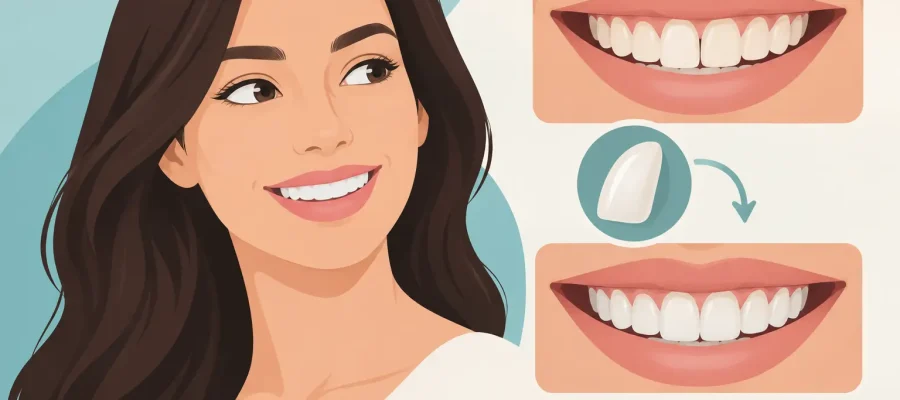
A front tooth that sits slightly higher, a visibly shorter side tooth, or a smile line that looks uneven in photos can change the whole impression of your smile. So, can veneers fix uneven teeth? In many cases, yes. Carefully designed veneers can create a more balanced, symmetrical appearance without moving every tooth. The right answer depends on why your teeth look uneven in the first place.
For patients planning a major event, building a public-facing career, or simply ready to stop editing their smile out of photos, veneers can be a fast, high-impact option. But premium results are not created by placing identical white shells on every tooth. They come from diagnosing the bite, gumline, tooth position, and facial proportions before treatment begins.
Can Veneers Fix Uneven Teeth?
Veneers can correct the appearance of uneven teeth by reshaping the visible front surfaces of the teeth. Ultra-thin porcelain, often E-Max ceramic, is bonded to the front of selected teeth to adjust length, width, contour, color, and perceived alignment.
This makes veneers especially effective when unevenness is mild to moderate. A skilled cosmetic dentist may use them to make a short tooth look longer, soften a pointed canine, close small gaps, disguise minor rotations, or create a more even smile line. The goal is not to make every tooth look copied and pasted. It is to create proportion – a smile that looks naturally balanced with your lips, gums, and face.
Veneers do not physically straighten teeth in the orthodontic sense. They can mask certain alignment concerns, but they cannot safely solve every crowding or bite problem. If a tooth is severely turned, pushed far forward, or positioned behind the dental arch, trying to cover it with a veneer alone may require too much tooth reduction or create an overbuilt result.
The Real Reason Teeth Look Uneven Matters
“Uneven teeth” can describe several different concerns, and each one calls for a different level of treatment planning. Sometimes the teeth are uneven in length because of wear, chipping, or old bonding. Other times, the teeth themselves are aligned, but the gums sit at different heights and make the smile appear asymmetrical.
In other cases, the issue is spacing, mild crowding, tooth rotation, or a bite that has changed over time. A cosmetic consultation should identify whether the imbalance is coming from enamel, gums, tooth position, or jaw function. Treating only what is visible without understanding the cause can compromise both the appearance and longevity of the result.
For example, a single short front tooth may be corrected beautifully with one veneer or a small amount of bonding. But if both front teeth look short because of years of grinding, the treatment plan may need to restore several teeth and protect them with a nightguard. If the gumline is uneven, gum contouring may be considered before veneers are designed.
When Veneers Are a Strong Option
Veneers tend to be an excellent option when teeth are healthy and the concerns are primarily cosmetic. They can be particularly effective for minor misalignment, uneven edges, chips, worn enamel, small gaps, irregular tooth shapes, and discoloration that whitening cannot fully improve.
They are also valuable when several small concerns appear together. A patient may have one slightly rotated tooth, two worn edges, uneven color, and a narrow gap. Orthodontics could improve alignment, but veneers may deliver the broader aesthetic transformation the patient wants by addressing shape, shade, and symmetry in one plan.
For international patients with limited travel time, the appeal is clear: a well-coordinated veneer treatment can transform the visible smile efficiently. However, speed should follow planning, never replace it. The best timeline is the one that gives the teeth, gums, bite, and ceramic work the attention they require.
When Orthodontics May Be the Better First Step
Clear aligners or braces may be the more conservative choice when teeth are significantly crowded, heavily rotated, or positioned in a way that would demand extensive reshaping for veneers. Orthodontic treatment moves the natural teeth into healthier positions. Once aligned, some patients find they need only whitening or minimal bonding rather than veneers.
Orthodontics may also be recommended when the bite is unstable. If upper and lower teeth strike each other incorrectly, veneers can chip, debond, or wear prematurely. Moving the teeth first can create better space and reduce the amount of enamel that needs to be adjusted later.
This does not always mean choosing one treatment or the other. A combined approach can be ideal. Short-term aligner treatment may create a better foundation, followed by a small number of veneers to perfect proportions and color. That approach often preserves more natural tooth structure while delivering a more refined final smile.
How a Precision Veneer Plan Is Created
A high-end smile makeover begins long before ceramic touches a tooth. At DRGO Smile Clinic, planning is designed around the individual rather than a one-size-fits-all template. Digital Smile Design can assess tooth proportions, facial midline, lip movement, and the amount of tooth shown when you speak and smile.
The process typically starts with photographs, digital scans, X-rays when needed, and an evaluation of gum health and bite. From there, the dentist maps out which teeth should be treated and why. Some patients need four veneers; others benefit from eight or 10 for a balanced result across the visible smile zone.
A 3D preview or mock-up is especially valuable for uneven teeth because it lets you see proposed changes before final placement. You can evaluate tooth length, edge shape, brightness, and symmetry while the clinical team checks whether the design functions correctly. A beautiful preview is useful, but a beautiful result also needs to respect how you bite, chew, and speak.
Preparation, Try-In, and Final Placement
Once the plan is approved, the teeth are prepared conservatively where appropriate. For some cases, only minimal enamel adjustment is needed; for others, more preparation is necessary to correct significant shape or position differences. The amount should be determined by the tooth, not by a preset formula.
Temporary veneers may be used while the final restorations are crafted. This stage gives the patient a real-world sense of the new smile and gives the dentist an opportunity to refine details. The final porcelain veneers are then tried in for color, fit, shape, and bite before bonding.
Modern ceramic veneers can look remarkably lifelike because porcelain reflects light in a way that resembles natural enamel. The finest results avoid an opaque, overly uniform look. They include subtle translucency, appropriate texture, and shapes that suit the patient’s features.
Veneers, Bonding, or Crowns?
Veneers are not the only way to improve uneven teeth. Composite bonding can be a conservative and cost-effective choice for small chips, minor length differences, or slight gaps. It can often be completed quickly, though composite may stain or wear more readily than high-quality porcelain and may need maintenance over time.
Crowns are generally considered when a tooth is substantially weakened, heavily filled, fractured, or has undergone root canal treatment. A crown covers the entire tooth, while a veneer covers the front surface. For a healthy tooth with a cosmetic concern, a veneer is often the more conservative restoration.
The best treatment is not automatically the most extensive one. It is the option that creates the desired aesthetic change while protecting healthy tooth structure and supporting long-term function.
Questions to Ask Before Choosing Veneers
Before committing to veneers for uneven teeth, ask how your bite will be evaluated, whether your gumline affects the final design, and how many teeth truly need treatment. Ask to see a digital plan or mock-up, and discuss what happens if you grind your teeth or have jaw clenching habits.
You should also understand the maintenance commitment. Veneers do not decay, but the natural teeth and gums around them still require excellent hygiene. Brushing, flossing, regular dental exams, and a protective nightguard when indicated all help preserve the investment. Avoiding habits such as biting nails, opening packages with teeth, or chewing ice also matters.
A veneer makeover is a permanent decision because some enamel is usually modified. That is why the consultation should feel precise, not rushed. You should leave knowing what is being changed, what is being preserved, and what result is realistically possible for your smile.
Uneven teeth do not have to dictate how confidently you show up in photographs, meetings, or milestone moments. The right cosmetic plan can make your smile look intentional, balanced, and unmistakably yours – starting with a detailed assessment rather than a generic promise.