


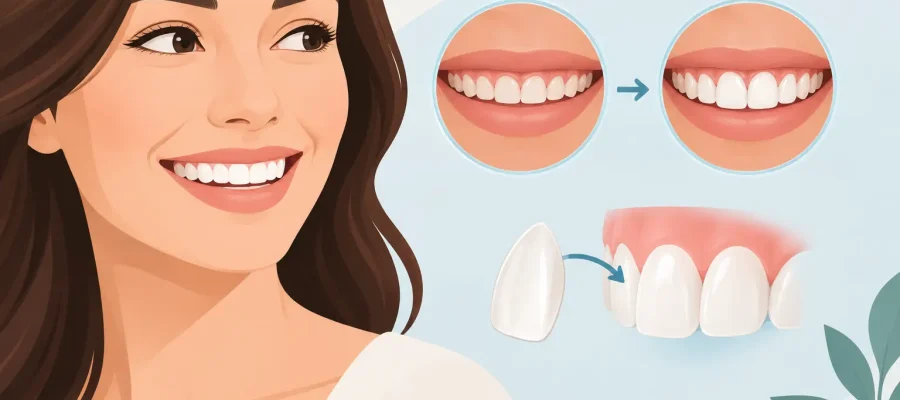
A smile can look “small” even when every tooth is healthy. Short front teeth, narrow tooth shapes, uneven edges, excess gum display, or spaces can make the entire smile feel less visible in photos and conversation. So, can veneers make small teeth look larger? Yes, when they are planned around your facial proportions, bite, gumline, and natural tooth structure rather than simply made bigger.
The objective is not oversized, ultra-white teeth. It is a signature smile with enough length, width, and symmetry to look confident, natural, and intentional.
How Veneers Make Small Teeth Look Larger
Veneers are thin, custom-crafted shells bonded to the front of teeth. With high-quality materials such as E-Max ceramic, a cosmetic dentist can change the visible dimensions of a tooth with exceptional precision. A veneer may extend a short tooth slightly downward, widen a narrow tooth, close small gaps, or create a more balanced edge line across the front teeth.
This can make teeth appear larger in two ways. First, the physical surface of the tooth is increased within safe aesthetic limits. Second, improved proportions make the smile read as fuller. A narrow central incisor next to a wider, more balanced veneer can look dramatically different, even when the change is measured in millimeters.
The most successful cases respect facial harmony. Tooth length is designed in relation to the lips, gumline, face shape, and how much tooth shows when you speak and smile. A strong smile design does not treat each tooth as an isolated unit. It engineers the entire visible smile zone.
Length, Width, and the Right Proportions
Small teeth are not all small for the same reason. Some are naturally short from genetics. Others appear worn after years of grinding. Some have a narrow, peg-like shape, while others are partly covered by gum tissue. The treatment plan changes based on the cause.
For short teeth, veneers can add length to the biting edge and refine the shape. For narrow teeth, the ceramic can add width and remove the appearance of unwanted spacing. If teeth are both short and narrow, veneers can reshape them in both directions, provided there is enough room in the bite.
There is a limit. Making teeth too wide can create a bulky look, while excessive length can interfere with speech, bite function, or natural lip movement. Premium cosmetic dentistry is about controlled enhancement, not maximum size.
When Veneers Are the Best Option for Small Teeth
Veneers are often an excellent choice when the teeth are healthy but look undersized, uneven, worn, chipped, or poorly proportioned. They can also be effective when small teeth are paired with mild spacing, discoloration that does not respond well to whitening, or old bonding that has lost its polish.
They are especially popular for patients who want a complete smile upgrade before a wedding, public-facing career change, media appearance, or milestone event. The transformation can be highly visible because front-tooth proportions have a major effect on how youthful, bright, and confident a smile appears.
E-Max veneers are frequently chosen for this type of refinement because they combine natural translucency with strength. Light can pass through the ceramic in a way that helps the result resemble enamel rather than an opaque cosmetic layer.
That said, veneers are not automatically the right first answer. If the teeth are crowded, severely rotated, or positioned too far forward, orthodontic treatment may be needed before veneers. Placing porcelain over poorly positioned teeth without correcting the foundation can require unnecessary reduction of healthy structure and may compromise the final result.
Can Veneers Make Small Teeth Look Larger if Gums Cover Them?
Sometimes the teeth themselves are a normal size, but the gumline covers too much of the visible enamel. This can create a short-tooth appearance and a gummy smile. In these cases, veneers alone may not be enough to create the clean, balanced result the patient expects.
Gum contouring or gum aesthetics can expose more of the natural tooth before veneers are designed. By refining the gumline first, the dentist gains a more accurate canvas for shaping the final smile. The teeth can then be restored at proportions that look elegant rather than artificially elongated.
This combination requires careful planning. The gumline must be stable, healthy, and designed symmetrically before final ceramic work is placed. It is one reason a smile makeover should involve a full aesthetic assessment rather than selecting a veneer shape from a photo.
The Smile Design Process: From Preview to Final Placement
A predictable veneer transformation begins before any tooth is prepared. At DRGO Smile Clinic, Digital Smile Design can be used to evaluate facial features, lip movement, tooth display, bite, and gum proportions. The goal is to show what a fuller smile could look like before final decisions are made.
1. Digital assessment and 3D planning
Clinical photographs, scans, and bite records create the foundation for the design. The dental team evaluates how the front teeth look at rest, in a full smile, and during speech. This matters because a tooth length that looks ideal in a still image may not look right when the lips move.
A 3D preview helps the patient and dentist agree on key choices: tooth length, shape, brightness, edge texture, and the overall character of the smile. Some patients want a soft, natural finish. Others prefer the clean symmetry associated with a Hollywood Smile. Both can look refined when designed for the individual.
2. Conservative preparation where appropriate
Many veneer cases require minimal preparation, while others need a small amount of enamel reduction to create space for ceramic and prevent a bulky result. The amount depends on the original position, thickness, color, and shape of the teeth.
Preparation should never be treated as a one-size-fits-all step. A patient with small, recessed teeth may require little reduction. A patient with protruding or heavily discolored teeth may require more planning to create a natural contour. Your dentist should explain exactly why preparation is or is not needed in your case.
3. Try-in and final bonding
Before the final veneers are bonded, the dentist checks fit, color, shape, bite, and smile balance. This is the stage for fine-tuning details that make a premium result feel personal, such as whether the central incisors should be slightly more dominant or whether the edges should look more youthful or more mature.
Once approved, the veneers are permanently bonded. A properly planned bite check is essential, particularly for patients who clench or grind their teeth.
Important Limits and Trade-Offs to Know
Veneers can create a major aesthetic change, but they do not replace healthy habits or solve every structural concern. If you have active decay, gum disease, untreated bite problems, or severe grinding, those issues need to be addressed first.
Porcelain veneers are also a long-term commitment. Even when preparation is conservative, a tooth that has been prepared for a veneer will generally need a future veneer or restoration. Ceramic is durable, but it can chip or crack under excessive force. Patients who grind their teeth may need a custom night guard to protect their investment.
It also matters how many teeth are treated. For some people, two veneers can correct small or uneven front teeth. For others, four, six, eight, or more veneers are needed to create a consistent color and proportion across the visible smile. The right number is determined by your smile width, existing tooth color, and the extent of the change you want.
Veneers vs. Bonding vs. Crowns for Small Teeth
Composite bonding can sometimes make small teeth look larger with little or no enamel preparation. It is typically a good option for minor lengthening, small chips, or narrow gaps. However, bonding can stain, lose polish, and require more frequent maintenance than ceramic.
Veneers offer greater color stability, luminosity, and precision for a full cosmetic redesign. They are often the stronger choice when multiple teeth need coordinated changes in shape, size, and shade.
Crowns are different. They cover the entire tooth and are generally reserved for teeth with major damage, large fillings, root canal treatment, severe wear, or structural weakness. If a tooth is healthy and the goal is primarily aesthetic enlargement, a veneer may preserve more natural tooth structure than a crown.
A Larger Smile Should Still Look Like You
The best veneer result does not announce itself as dentistry. It gives your smile more presence while keeping the proportions believable, the bite functional, and the expression natural. Whether your teeth are short from wear, naturally narrow, or visually hidden by the gumline, the right plan begins with a detailed design conversation, not a generic before-and-after image.
A digital preview can help you see the difference between simply making teeth bigger and creating a smile that fits your face, your goals, and the way you want to be seen.