


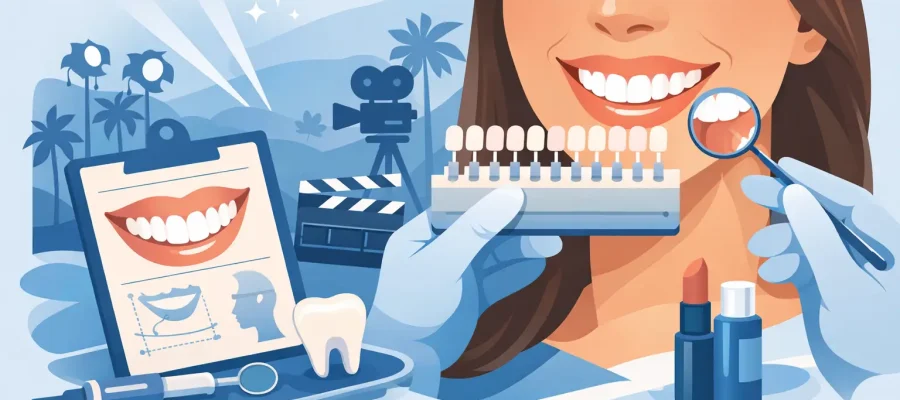
A great smile makeover rarely goes wrong in the treatment room. It usually goes wrong in the planning.
That is why a hollywood smile makeover planning guide matters more than most patients expect. If you are flying in for veneers, crowns, whitening, implants, or a full aesthetic redesign, the real advantage comes from knowing what should be decided before you ever board the plane. The best results are not just beautiful. They are engineered to fit your face, bite, schedule, and expectations.
What a Hollywood smile makeover planning guide should cover
A true smile makeover is not one procedure. It is a treatment strategy built around shape, symmetry, color, function, and timing. For some patients, that means E-Max veneers with whitening and minor gum contouring. For others, zirconium crowns make more sense because there is existing damage, old restorations, or a need for stronger full coverage. If missing teeth or failing dental work are part of the picture, implants may need to be planned first so the cosmetic result has a stable foundation.
This is where many patients get distracted by before-and-after photos alone. Photos are useful, but they do not tell you whether a case was conservative or aggressive, fast or staged, veneer-based or crown-based. Planning should answer the why behind the chosen treatment, not just the look at the end.
For international patients, there is another layer. You are not only choosing a smile. You are choosing a timeline, a destination, and a clinic system that can deliver on schedule without guesswork. That changes how planning should be approached.
Start with the result, not the procedure
Most people begin by saying they want veneers. Sometimes that is correct. Sometimes it is not.
The better starting point is the result you want to see in the mirror and on camera. Do you want a brighter, cleaner version of your natural smile? Do you want a more glamorous, high-impact look with stronger tooth presence? Do you want to correct wear, shorten a gummy smile, close spaces, or rebuild teeth that have been breaking down for years? Each of those goals points toward a different treatment mix.
A strong plan should define tooth shape, smile width, incisal edge length, gum line balance, and shade. It should also account for face shape, lip movement, and speech. A smile that looks striking in a static photo can feel too bulky or too flat in real life if those details are ignored.
Digital Smile Design and 3D previews are especially valuable here because they reduce imagination risk. Instead of committing to a vague promise, you can review a more precise visual direction before treatment begins. That is one of the biggest confidence factors for image-conscious patients who need predictability.
Choose the right materials for your case
Material choice is not a cosmetic detail. It affects longevity, translucency, tooth preparation, and the overall feel of the final result.
E-Max veneers are often chosen when patients want a refined, natural-luxury finish with light reflection that looks close to enamel. They work best when the underlying teeth are suitable for veneer preparation and the bite is favorable. Zirconium crowns are often better for cases involving heavily restored teeth, structural weakness, or larger corrections in shape and alignment.
Some patients assume veneers are always the premium option. That is not necessarily true. The premium choice is the one that matches your biology and the desired outcome with the least compromise. If a case needs full coverage for strength, forcing veneers can create avoidable risk. If a case can stay conservative, full crowns may remove more tooth structure than needed. Good planning respects both aesthetics and engineering.
Build your timeline around biology, not wishful thinking
One of the biggest reasons patients choose Istanbul is speed. Same-day workflows, CAD/CAM systems, immediate provisionalization, and tightly managed appointments can compress treatment dramatically. But fast treatment still has rules.
If your case is purely cosmetic and your teeth are healthy, a short visit may be enough for consultation, design, preparation, try-in, and final placement. If implants, gum treatment, bite rehabilitation, or healing after extractions are involved, the timeline may need to be staged. Some patients can receive immediate implants or fixed temporary teeth quickly, but the final restorations may still require a second phase after healing.
This is where honest planning beats sales language. A short trip is attractive, but it has to match the case. Event-driven patients planning around a wedding, launch, or public appearance should leave margin in the schedule. Even when treatment is smooth, minor adjustments, adaptation to speech, and gum settling can matter.
The best smile design also protects function
A cosmetic result that photographs well but chips, feels awkward, or strains the jaw is not a premium outcome.
Your plan should include bite analysis, not just color and shape selection. Patients with grinding, clenching, worn edges, or masseter tension often need a more protective strategy. In some cases, occlusal adjustment or masseter Botox may support the longevity and comfort of the final work. If old crowns are failing or the bite has collapsed, the aesthetic phase may need restorative rebuilding first.
This is one of the clearest differences between a social-media smile and a clinically disciplined smile makeover. Real quality shows up months later, when the restorations still look elegant and feel natural in daily life.
Costs are clearer when the plan is complete
A vague quote is rarely a real quote. It is an estimate attached to incomplete information.
If you are comparing clinics, ask whether pricing is based on photos alone or on a full review of x-rays, bite, gum condition, and treatment objectives. A smile makeover can look simple from the front and still involve hidden complexity. Existing root canal treatments, old bridgework, uneven gum levels, or missing posterior support can all change the scope.
For international patients, packaged pricing is often a major advantage because it reduces uncertainty. But clarity matters more than a low starting number. You want to know what is included in the treatment phase, how many units are planned, whether temporaries and digital previews are part of the process, and how travel logistics are handled. Premium planning removes friction before it becomes stress.
Travel planning is part of treatment planning
If you are flying abroad for a smile makeover, convenience is not a bonus. It directly affects how calm, rested, and available you are for treatment.
Airport transfers, hotel coordination, local transportation, interpreter support, and a tightly sequenced appointment calendar make the clinical side easier. That matters when your schedule is limited and every visit window counts. A well-run concierge model also helps if treatment needs a scan, a shade review, or a same-day refinement without wasting time across the city.
This is one reason patients choose systems, not just dentists. A premium smile makeover should feel managed from arrival to departure. At DRGO Smile Clinic, that complete pathway is part of the appeal for international patients who want high-end results without piecing together the travel side themselves.
Questions to settle before you book
A strong hollywood smile makeover planning guide should leave you with fewer assumptions and better questions. Before committing, you should know what procedure mix is being recommended and why, how natural or dramatic the design direction will be, whether your case can be completed in one trip, and what follow-up is expected after you return home.
You should also ask how the clinic handles revisions, temporary restorations, and digital previews. If you are replacing existing veneers or crowns, ask what limitations the old dental work creates. If you grind your teeth or want a very white shade, ask how those choices affect durability and realism. Premium treatment is never just yes or no. It is about selecting the right level of change with full awareness of the trade-offs.
Plan for confidence, not just speed
The most successful smile makeovers feel effortless at the end because the hard thinking happened early. The shape, shade, bite, materials, timing, and travel details were aligned before treatment started.
If you are investing in a camera-ready smile, do not shop only for the fastest promise or the cheapest unit price. Shop for planning discipline. The right clinic should make the process feel precise, visual, and controlled, with enough flexibility to fit your goals without forcing a one-size-fits-all formula.
A signature smile should look exciting on day one and still make sense long after the photos are posted.