


A damaged tooth rarely shows up at a convenient time. It happens before a wedding, before a shoot, before a business trip, or right when you finally decided to invest in your smile. That is exactly why same-day treatment matters. If you want a crown without multiple appointments, temporary restorations, and extra travel days, same day dental crowns CAD CAM can be a very smart solution.
For international patients especially, speed only matters when it comes with precision. A crown made in one visit has to do more than save time. It has to fit cleanly, look natural, feel balanced when you bite, and hold up under daily use. That is where digital planning and in-clinic milling change the experience.
What same day dental crowns CAD CAM actually means
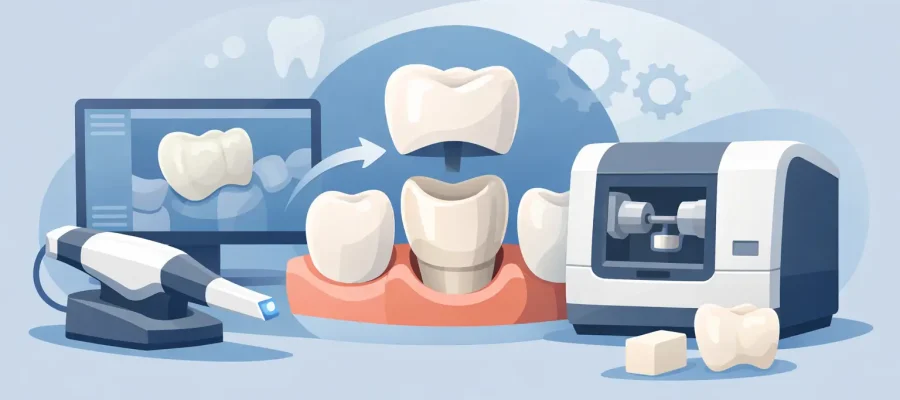
CAD/CAM stands for computer-aided design and computer-aided manufacturing. In dentistry, that means your crown is digitally designed after your tooth is prepared, then milled from a solid ceramic block, often while you remain in the clinic.
Instead of taking old-style physical impressions and sending them to an outside lab, the dentist scans your tooth with an intraoral scanner. The software builds a precise 3D model of the prepared tooth, the surrounding teeth, and your bite. From there, the crown is designed on screen and produced with an in-house milling machine.
The result is a faster workflow with fewer variables. There is no temporary crown falling off at dinner. No waiting a week or two for a lab delivery. No need to return just to have the final restoration cemented, assuming your case is appropriate for same-day treatment.
Why one-visit crowns appeal to aesthetic dental travelers
If you are flying for treatment, time is part of the investment. Every extra appointment can mean more hotel nights, more schedule disruption, and more friction. A one-visit crown compresses the process without making it feel rushed.
That is especially valuable when the crown is part of a larger cosmetic plan. A front tooth crown has to match your smile design, your facial proportions, and the brightness of neighboring teeth. A back tooth crown has to handle bite forces and still feel natural. Same-day systems can do both well, but case selection matters.
Patients often choose this route because they want visible progress now, not later. They want to arrive with a problem and leave with a finished result. In a high-efficiency aesthetic clinic, that speed can be paired with digital smile planning, shade analysis, and bite control so the final crown looks intentional, not merely fast.
How the same-day crown process works
The appointment usually begins with examination and digital imaging. The dentist checks the tooth structure, gum condition, bite, and whether the tooth can support a crown predictably. If decay, cracks, or an old failing restoration are present, those issues are addressed first.
Next comes tooth preparation. A small amount of enamel or existing restorative material is shaped away to create room for the new crown. The goal is conservative preparation with enough space for strength and aesthetics.
Digital scan and design
Once the tooth is prepared, the team captures a digital scan. This replaces messy traditional impression material in many cases and gives a highly detailed 3D model. The crown is then designed using CAD software, where contours, contact points, and bite alignment can be refined with precision.
This step matters more than many patients realize. A beautiful crown that is slightly high in the bite can become irritating very quickly. A crown that looks fine on a screen but does not respect gum shape can also feel artificial. Digital design improves control, but it still depends on clinical judgment.
Milling, finishing, and placement
After approval, the design is sent to the CAM unit, where the crown is milled from a ceramic block. Depending on the material, the restoration may then be sintered, crystallized, stained, glazed, or polished before placement.
The dentist tries the crown in, checks the fit and shade, adjusts if needed, and bonds or cements it into place. When everything is done properly, the result can feel remarkably immediate: one visit, one restoration, one less thing to manage.
Are same-day crowns as good as lab-made crowns?
Often, yes. Sometimes, no. The honest answer is that it depends on the tooth, the material, the complexity of the case, and the standards of the clinic.
For many single-tooth restorations, especially where time efficiency matters, CAD/CAM crowns can be excellent. They offer strong fit accuracy, highly polished ceramic surfaces, and a streamlined process. They are particularly attractive for patients who do not want a temporary crown or repeated appointments.
That said, traditional lab-made crowns can still have an edge in highly complex aesthetic cases, especially when layered artistry is needed for challenging front-tooth shade matching. If a patient has unusual translucency, characterizations in the enamel, or a broader smile makeover where every detail must be harmonized, a master ceramist working outside the same-day workflow may still be the better choice.
A premium clinic should not push one method for every patient. It should choose the method that best serves the final result.
Who is a good candidate for same day dental crowns CAD CAM
This treatment is ideal for patients with a cracked tooth, heavily filled tooth, worn tooth, or cosmetically compromised tooth that needs full coverage. It can also work well for busy professionals and international visitors who want a shorter treatment timeline.
Good candidates usually have enough healthy tooth structure for predictable crown support and a bite that can be managed without major functional correction. Patients who grind heavily, have advanced gum issues, or need broader rehabilitation may still qualify, but the treatment plan may need more layers.
For example, if the tooth requires root canal treatment, gum contouring, or major bite rebalancing, the crown may still be possible in an accelerated timeline, but not always in a simple one-visit format. That is why proper diagnostics come first.
Material choices and what they mean for your result
Not all same-day crowns are the same because not all ceramic materials behave the same way. Some materials are chosen for strength, others for beauty, and some for a balance of both.
Lithium disilicate, often associated with highly aesthetic results, is popular for visible areas because it can offer a natural, light-reflective finish. Zirconia-based options are often selected where extra strength is a priority, especially in high-load areas. The right choice depends on where the tooth sits in the mouth, how you bite, and what level of translucency your smile needs.
If your crown is part of a larger smile transformation, material selection becomes even more strategic. The crown should not just survive. It should belong in the smile.
The biggest advantages – and the real trade-offs
The obvious advantage is time. One visit can replace two or three. That is a major benefit if you are traveling or managing a packed schedule.
Comfort is another. Digital scans are easier for many patients than traditional impressions. You also avoid wearing a temporary crown, which can feel bulky or fragile.
Precision is a major selling point, but it should be understood correctly. Digital systems are precise tools, not automatic guarantees. The quality of the scan, the design decisions, the milling calibration, and the final bite adjustment all matter.
The trade-off is that not every case should be compressed into a same-day workflow. If your tooth needs advanced cosmetic layering or your smile plan is especially complex, a slightly longer process may deliver the stronger long-term result. Premium care is not about doing everything faster. It is about moving as fast as the case safely allows.
What to expect if you are traveling for treatment
If you are considering crown treatment abroad, the best experience starts before you fly. A remote consultation, photos, scans if available, and a clear understanding of your goals can shorten decision-making once you arrive.
At a clinic built for international patients, the process should feel tightly managed from the first message to the final check. That means diagnostics, treatment planning, digital design, and restoration delivery happen in a coordinated way, with minimal waiting and no confusion about timelines.
At DRGO Smile Clinic, this kind of one-visit workflow is part of a broader signature-smile approach: engineered aesthetics, digital planning, and concierge-level support designed for patients who want premium results without wasting days on logistics.
Questions worth asking before you book
Ask whether your specific tooth is a true same-day candidate. Ask which material will be used and why. Ask how shade matching is handled, how bite accuracy is verified, and what happens if your case turns out to need a different path once diagnostics are complete.
Those questions are not signs of skepticism. They are signs that you care about the result. The right clinic will answer them clearly and confidently because speed only feels luxurious when the outcome feels certain.
A crown should do more than fix a tooth. It should restore confidence, protect your function, and fit your life without dragging the process out. If same-day CAD/CAM treatment is right for your case, the best part is not that it is fast. It is that the result can look and feel finished from the moment you stand up from the chair.