


A bright, camera-ready smile should not come at the cost of a compromised tooth. That is why the question, are veneers better than crowns?, cannot be answered by looking at before-and-after photos alone. Veneers and crowns can both create a refined, natural-looking Hollywood Smile, but they solve very different dental problems.
The right choice comes down to one question: does your tooth mainly need an aesthetic upgrade, or does it need structural protection? A precise diagnosis, digital planning, and an honest conversation about your natural teeth are what turn a cosmetic result into a smile built to last.
Are Veneers Better Than Crowns? It Depends on Tooth Health
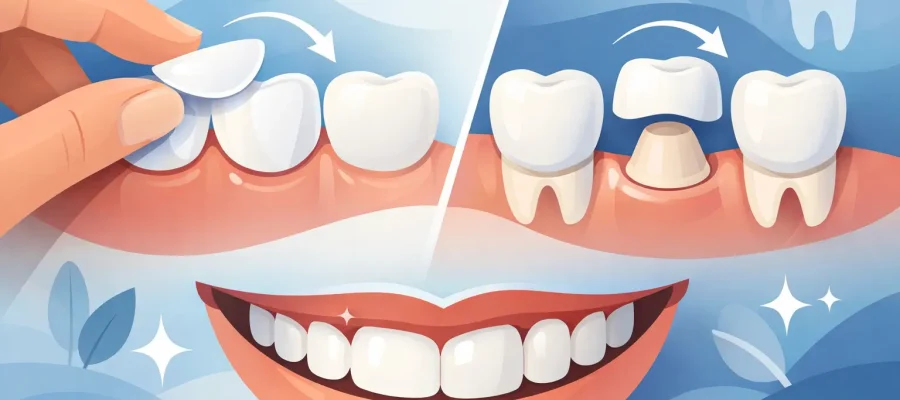
Veneers are thin custom shells, usually made from high-quality porcelain such as E-Max, bonded to the front surface of visible teeth. They are designed to improve color, shape, proportion, minor spacing, and the appearance of small chips or wear. When the underlying tooth is healthy and strong, a veneer is often the more conservative route because it preserves more natural enamel than a full crown.
A crown covers the entire visible portion of a tooth. It is used when a tooth has lost significant structure, has a large old filling, a deep crack, extensive decay, major wear, or has been treated with a root canal. Zirconium crowns are especially valued for their strength, while layered or highly aesthetic ceramic options can create exceptional translucency in the smile zone.
So, veneers are not automatically “better.” They are better when the tooth is fundamentally healthy and the goal is aesthetic refinement. Crowns are better when the tooth needs reinforcement as well as a beautiful new surface.
Choosing a veneer for a weak tooth simply because it requires less preparation can create a short-lived result. On the other hand, crowning a healthy tooth when a veneer would provide the desired change may remove more tooth structure than necessary. High-end smile design is not about applying the same restoration to every tooth. It is about assigning the right restoration to each tooth.
When Veneers Are the Stronger Aesthetic Choice
For patients who want a polished, high-impact smile without signs of heavy dental damage, porcelain veneers can be an exceptional option. They are especially effective when teeth are healthy but visually distracting due to discoloration, uneven edges, small gaps, mild crowding, or inconsistent shape.
E-Max veneers are popular in cosmetic smile makeovers because they reflect light in a way that can closely resemble natural enamel. They can be customized for a soft, natural enhancement or a brighter, more sculpted Hollywood Smile. The final look depends on the shade, surface texture, tooth proportions, gumline, lip movement, and your preferences in photos and real life.
Veneers also allow a clinician to create visual consistency across the front teeth. For a professional who is frequently on camera, a creator preparing for a major appearance, or someone planning a wedding, that consistency matters. A tooth-by-tooth approach may correct imperfections, but a digitally planned veneer case can create a more intentional smile architecture.
Still, veneers are not the answer for every cosmetic concern. Severe crowding, active gum disease, untreated decay, uncontrolled grinding, or a tooth with a large fracture may need orthodontics, gum treatment, protective treatment for clenching, or a crown instead. Cosmetic dentistry performs best when the foundation is stable.
Veneers require healthy enamel and healthy habits
Veneers bond most predictably to enamel. If teeth have already been heavily restored, are very worn, or have limited enamel remaining, a crown may offer a more secure option. Patients who clench or grind their teeth can still be candidates for veneers, but they need an individualized plan and often a protective night guard after treatment.
A veneer is durable, but it is not a tool. Opening packages, biting pens, chewing ice, and using front teeth to cut hard objects can chip porcelain or damage natural teeth. The same rules apply to crowns.
When Crowns Are the Better Clinical Investment
A crown is the better choice when beauty must be paired with strength. Think of it as a protective jacket for a tooth that no longer has enough healthy structure to carry daily biting forces confidently.
Crowns are commonly recommended for teeth with large fillings, substantial decay, fractures, severe erosion, or a history of root canal treatment. They can restore function, stabilize weakened tooth walls, and improve color and shape at the same time. This makes them a powerful option for patients whose smile concerns are both cosmetic and restorative.
Zirconium crowns are widely used for their durability, making them particularly useful for back teeth and for patients with strong bites. In the front of the mouth, modern zirconium and ceramic crown systems can be designed with lifelike shade transitions and natural contours. The material selection should always follow the tooth position, bite forces, desired esthetics, and amount of remaining tooth structure.
Crowns can also be the right choice in a full-mouth transformation where several teeth have existing restorations or visible damage. A uniform smile does not require every tooth to receive the same treatment. It may include veneers on healthy front teeth, crowns on compromised teeth, and implant crowns where teeth are missing. That blended approach often produces the most natural and clinically responsible result.
Veneers vs. Crowns: What Changes During Treatment?
The key practical difference is preparation. A veneer usually requires minimal shaping on the front and edge of the tooth to create room for porcelain. A crown requires more reduction around the tooth because the restoration needs to cover all sides.
Neither treatment should be approached casually. Preparation is permanent, which is why the planning stage matters so much. Before teeth are prepared, a modern clinic should assess X-rays, gum health, bite alignment, existing restorations, facial proportions, and your expectations for color and shape.
At DRGO Smile Clinic, Digital Smile Design can help patients preview the direction of their new smile before final restorations are created. This is especially valuable for international patients who want clarity before committing to a treatment plan. The goal is not to create one generic white smile. It is to engineer a result that fits your face, bite, and lifestyle.
For many smile-makeover cases, the process includes a consultation and digital records, treatment planning, tooth preparation where needed, temporary restorations or a trial smile, and final bonding or cementation. Some crown cases may be suitable for CAD/CAM same-day workflows, while more complex cosmetic cases benefit from a carefully staged laboratory process. Your timeline should be based on clinical requirements, not a rushed travel schedule.
Appearance, Longevity, and Maintenance
Both veneers and crowns can look exceptional for many years with good care. Their lifespan depends on material quality, precision of fit, bite forces, oral hygiene, habits, and regular dental checkups. No restoration is permanent forever, and any clinic that promises otherwise is oversimplifying the reality of dentistry.
Veneers often win on enamel-like translucency and conservative preparation when teeth are healthy. Crowns win on full-coverage strength when teeth are compromised. In either case, the final result depends less on the label of the treatment and more on how accurately it is planned and placed.
Maintenance is straightforward but essential. Brush twice daily with a non-abrasive toothpaste, floss around restoration margins, attend hygiene visits, and use a night guard if recommended. Whitening products will not change the color of porcelain, so shade selection should be considered carefully before final placement. If you plan to whiten surrounding natural teeth, do it before finalizing the restoration shade.
Cost Should Follow the Treatment Plan
It is understandable to compare veneer and crown pricing, especially when planning treatment abroad. But choosing solely by the price per tooth can be expensive in the long run. A lower-cost veneer on a tooth that needs a crown may fail sooner. A crown placed without addressing gum inflammation or bite issues may also face complications.
A clear quote should explain what is included: diagnostics, X-rays or scans, temporary restorations, final materials, follow-up needs, and travel coordination where applicable. For international patients, certainty matters as much as value. A well-planned package can reduce surprises, but the treatment recommendation should remain rooted in what your teeth actually need.
The most valuable smile makeover is not the one with the most veneers or the brightest shade. It is the one that lets you smile freely because it looks right, feels comfortable, and protects the teeth you still have. Start with a digital consultation and ask to see the treatment logic behind every tooth – that is where a signature smile begins.