


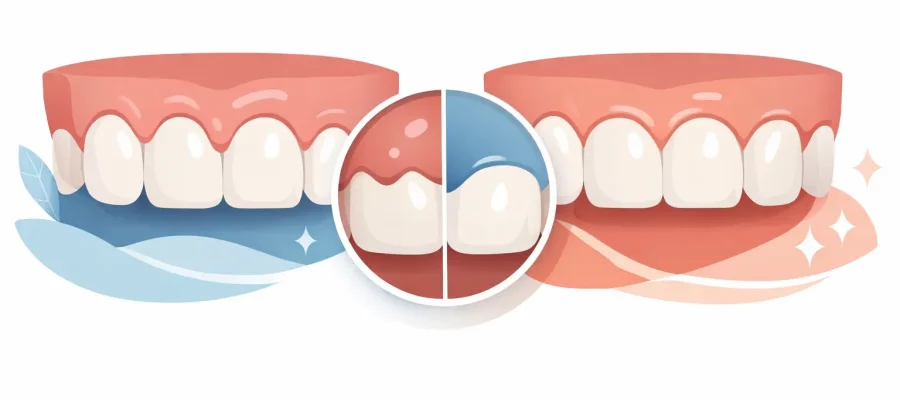
A smile can look healthy, bright, and technically perfect on paper – yet still feel slightly off in photos. Often, the issue is not the teeth. It is the gum line.
That is why gum contouring before and after cases get so much attention. A small change in the shape or height of the gums can make teeth look longer, more balanced, and more refined. For patients planning veneers, whitening, or a full smile makeover, this step can be the difference between a good result and a signature smile that looks intentional from every angle.
What gum contouring before and after really shows
When people search for gum contouring before and after, they usually expect a dramatic transformation. Sometimes that happens. But the most impressive results are often subtle.
The goal is not to make your gums disappear. It is to create proportion. If too much gum shows when you smile, or if the gum line sits unevenly across the front teeth, contouring can improve symmetry and reveal more of each tooth. Teeth that once looked short or bulky may suddenly appear elegant. The smile looks cleaner, but also more expensive and more polished.
Before treatment, common concerns include a gummy smile, uneven gum margins, excess tissue covering part of the enamel, or a smile design that looks incomplete because the pink frame around the teeth is irregular. After treatment, the change usually reads as balance rather than surgery. That is exactly what most aesthetic patients want.
Why gums matter as much as teeth
In high-end cosmetic dentistry, teeth do not work alone. The lips, facial proportions, bite, and gums all shape the final look.
A patient may want veneers because their teeth seem too small. In some cases, the real reason is that the gums cover too much of the tooth surface. Another patient may be planning zirconium crowns or E-Max veneers, but if the gum line is uneven, the restorations can only do part of the job. You can improve color and shape, but the smile may still look imbalanced.
This is why premium treatment planning starts with smile architecture, not just tooth shade. Gum aesthetics create the frame. Once the frame is right, every other enhancement looks better.
Who gets the best gum contouring before and after outcome
The strongest results usually come from patients with one of three issues. The first is excess gum display, where too much tissue shows above the upper teeth when smiling. The second is asymmetry, where one side of the gum line sits higher or lower than the other. The third is altered passive eruption, where the gums simply cover more tooth structure than they should.
That said, not every gummy smile should be treated with contouring alone. It depends on why the gums show so much. If the upper lip lifts very high, or if the jaw position contributes to the issue, reshaping the gums may improve the smile but not fully change it. In some cases, contouring is paired with other treatments such as veneers, crowns, or even masseter and facial aesthetic procedures as part of a broader design plan.
The right candidate is someone whose gums are healthy, whose expectations are realistic, and whose treatment plan is based on proper measurements rather than guesswork.
How the procedure works
Gum contouring is a precise aesthetic treatment that removes or reshapes excess gum tissue to improve the visible outline of the teeth. Depending on the case, this may be done with a laser, traditional instruments, or a combination approach.
The planning stage matters most. A clinician evaluates tooth proportions, smile line, lip movement, and the amount of enamel available beneath the gum tissue. In some patients, contouring only involves soft tissue. In others, a small amount of underlying bone may also need adjustment to create a stable result. That distinction affects healing, final appearance, and long-term predictability.
For cosmetic patients, especially those flying in for treatment, this planning should happen before any irreversible work begins. If veneers or crowns are part of the plan, the gum line is typically designed first so the restorations can be shaped to the new architecture.
At DRGO Smile Clinic, this kind of sequence is part of the appeal for international patients. The process is designed to reduce surprises, using digital planning and smile visualization so the final result feels engineered, not improvised.
What to expect right after treatment
Immediately after gum contouring, the smile may already look more even, but it will not be the final version. The tissue usually appears slightly red, swollen, or glossy in the first days. That is normal.
For minor reshaping, recovery is often straightforward. Many patients return to normal routines quickly, especially if only soft tissue was treated. If bone recontouring is involved, healing takes longer and the area may feel more tender. Either way, the first impression should not be judged too early.
This is where many online gum contouring before and after galleries can be misleading. A same-day after photo can show the new shape, but not the settled result. The best comparison is usually between the pre-treatment smile and the smile several weeks later, once the tissue has matured.
Timeline for final results
Most patients notice the aesthetic shift immediately, but final refinement takes time. Mild cases may look close to finished within one to two weeks. More detailed or deeper contouring can take several weeks to settle fully.
If the treatment is part of a veneer or crown case, timing becomes even more important. Restorations placed too soon without respecting tissue healing can compromise the look at the margins. In a properly managed smile makeover, each stage is timed to protect both aesthetics and biology.
Patients with a wedding, filming schedule, public event, or major social milestone should plan ahead. Fast treatment is possible, but fast should still be controlled.
Does gum contouring hurt?
During the procedure, local anesthesia keeps the area comfortable. Most patients describe the experience as easier than expected. Afterward, soreness is usually mild to moderate, depending on how much tissue was treated.
Soft foods, careful brushing, and following aftercare instructions make a real difference. The first few days are about protecting the area while it begins to heal. Discomfort is usually manageable, but this is still a surgical aesthetic procedure, not a beauty treatment with zero downtime.
That distinction matters. Premium results come from precision and proper healing, not from rushing through a medically significant step.
What can affect your final result
Technique matters, but so does diagnosis. If too much tissue is removed, the smile can look harsh or overexposed. If too little is removed, the change may feel underwhelming. The ideal result sits in a narrow zone where symmetry, proportion, and gum health all work together.
Healing patterns also vary. Some patients heal quickly with minimal inflammation. Others need more time for the tissue to settle. Smoking, poor oral hygiene, and untreated gum disease can reduce result quality.
The biggest factor, though, is integration with the rest of the smile plan. Gum contouring looks best when it is not treated as a standalone cosmetic add-on, but as part of a full design strategy.
Is gum contouring worth it?
For the right patient, yes – especially when the issue is clearly related to the gum line. It is one of the few treatments that can change the apparent size and balance of the teeth without altering the teeth themselves.
It is also high impact in photos. Patients who feel self-conscious about smiling wide often notice that their smile looks more relaxed and confident after treatment. That matters if your work, social life, or personal brand keeps you in front of cameras.
Still, worth depends on context. If your gums are already symmetrical and healthy, contouring may offer little benefit. And if the problem comes from lip movement or skeletal structure, gum reshaping alone may not deliver the dramatic change you expect.
A serious consultation should tell you not just whether you can have the procedure, but whether you should.
Cost, travel, and planning considerations
Pricing varies based on the number of teeth involved, the technique used, and whether contouring is combined with veneers, crowns, or a full smile makeover. For international patients, the bigger question is often efficiency.
If you are traveling for treatment, gum contouring may be simple to include within a wider aesthetic plan, but only if sequencing is handled correctly. Digital previews, a clearly defined treatment calendar, and one-team coordination matter far more than chasing the lowest quote.
That is especially true for patients who want visible change on a short timeline. Precision saves time. Rework does not.
The best before and after results rarely come from doing more. They come from doing the right amount, at the right stage, with a smile design that respects the face as a whole.
If you are considering gum contouring, look beyond dramatic photos and ask a better question: does this plan create a smile that will still look balanced, natural, and camera-ready after healing is complete? That is the standard worth aiming for.