


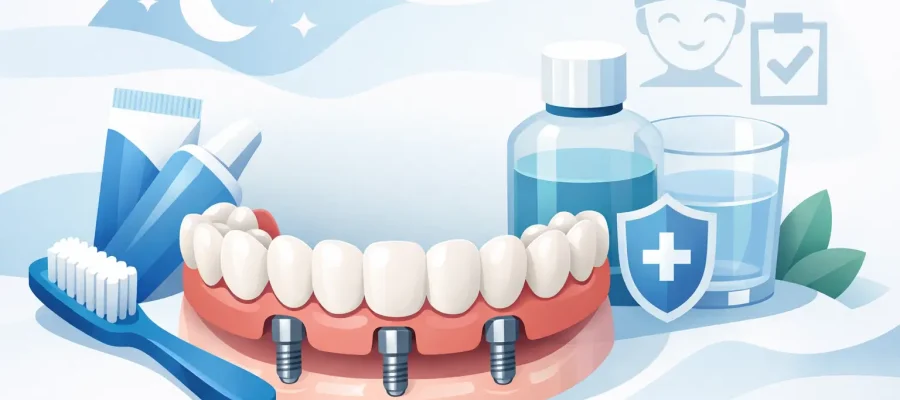
The first 72 hours after surgery can shape how comfortable, confident, and predictable your result feels. A strong full arch implants aftercare guide is not just about avoiding problems – it is about protecting the investment you made in fixed teeth, faster healing, and a cleaner path to your final smile.
If you had All-on-4 or All-on-6 treatment with immediate temporary teeth, the goal is simple: keep the implants stable while your mouth heals around them. That means controlling pressure, reducing inflammation, and following a cleaning routine that is gentle enough for recovery but thorough enough to keep bacteria under control. Patients who do well after full arch treatment usually are not doing anything dramatic. They are doing the basics consistently.
Full arch implants aftercare guide: what matters first
Right after surgery, some swelling, tenderness, and minor oozing are normal. Most patients also notice tightness in the cheeks or jaw, especially if extractions were done at the same time. This can feel more intense on days two and three before it starts improving.
Your first priority is rest. Keep your head elevated when lying down, use cold packs as directed, and take prescribed medications exactly on schedule. Waiting until pain becomes strong usually makes recovery feel harder than it needs to. If your clinic recommended antibiotics, anti-inflammatory medication, or a medicated mouth rinse, consistency matters more than guesswork.
For the first day, avoid spitting forcefully, using straws, smoking, or drinking alcohol. All of these can disrupt early healing and irritate surgical sites. If you traveled for treatment, this is also the time to slow down. Even if you feel good enough to go out, your body is still allocating energy to healing.
Bleeding should gradually taper off. Small pink traces in saliva can be normal at first, but heavy bleeding that does not settle with gentle pressure needs immediate clinical guidance. The same goes for severe swelling on one side, fever, or pain that escalates instead of easing.
Eating after full arch implants
Food is where many patients accidentally create problems. Immediate fixed teeth may look strong, but your implants still need a protected healing phase. Think of the temporary bridge as functional and aesthetic support, not a green light to chew anything you want.
For the first weeks, stay with a soft diet. Good choices include yogurt, eggs, soft fish, mashed vegetables, soups that are warm rather than hot, oatmeal, smoothies eaten with a spoon, pasta, rice, cottage cheese, and tender shredded proteins. The safest rule is this: if food needs strong biting pressure or heavy chewing, it can wait.
Avoid crusty bread, steak, nuts, popcorn, chips, raw vegetables, chewing gum, hard fruits, and anything sticky. These foods can overload fresh implants or put torque on the temporary prosthesis. Even small repeated pressure matters during integration.
Temperature also matters in the beginning. Extremely hot foods and drinks can aggravate tenderness. Lukewarm or cool meals are usually more comfortable during the first 24 to 48 hours.
Hydration helps recovery, but choose wisely. Water is best. Minimize sugary drinks and acidic beverages, especially if your mouth feels dry or irritated. If you drink coffee, let it cool and ask your clinic when it is appropriate to resume it.
Cleaning without disturbing healing
A clean surgical site heals better, but aggressive brushing is not the answer. During the first phase, your hygiene routine should protect tissue while reducing plaque around the bridge and gumline.
On day one, many patients are advised to avoid brushing directly over surgical areas. After that, a very soft toothbrush can usually be used on visible tooth surfaces, while the gumline is approached with care. If a chlorhexidine rinse or other antiseptic rinse was prescribed, use it exactly as instructed. More is not better. Overuse can irritate tissue or stain the temporary teeth.
As healing progresses, cleaning under the prosthesis becomes essential. Depending on your design, you may be instructed to use a water flosser on a gentle setting, super floss, implant floss threaders, or small interdental brushes. Technique matters more than force. The aim is to remove trapped debris and plaque from under the bridge, not blast the area.
If you are unsure whether you are cleaning enough, that is normal. Full arch restorations require a different routine than natural teeth. A well-planned follow-up visit should include hands-on hygiene coaching so you know how to keep the bridge clean without irritating the tissue.
Managing swelling, speech, and daily comfort
Swelling peaks before it resolves. That timing surprises many international patients because they expect to feel better immediately after the procedure, then worry when day two looks puffier than day one. In most cases, that pattern is completely expected.
Ice packs are usually recommended in short intervals during the first 24 hours. After that, some clinics move patients to gentle warmth depending on the stage of recovery. Stay within your doctor’s instructions rather than mixing advice from online forums.
Speech changes are also common, especially with a new full arch shape, altered bite position, or increased tooth display. Words with s, f, and th sounds may feel different at first. This usually improves as your tongue adapts. Reading out loud for a few minutes a day can help, but do not clench or overwork your jaw trying to sound perfect immediately.
Sleep with your head elevated for several nights. This can reduce throbbing and morning swelling. If you tend to grind or clench, tell your clinic. In some cases, protective planning is needed because excess pressure can strain temporaries and sore muscles.
Travel considerations for international patients
If you flew in for treatment, aftercare starts before you board your return flight. Build recovery days into your trip instead of treating surgery like a quick errand. Even same-day teeth protocols are efficient, but healing still follows biology, not a travel calendar.
Keep your medications, written instructions, and hygiene tools in your carry-on. Stay hydrated during flights and avoid alcohol if you are still in the early healing window. If swelling increases when you travel, that can happen with long days, limited rest, and dehydration.
Choose soft foods while moving between hotel, clinic, and airport. This is not the moment for celebratory hard meals. A premium experience should feel easy, but easy does not mean careless. It means every step is planned so recovery stays predictable.
Clinics that treat international implant patients well usually make this stage straightforward with clear check-ins, imaging, and a defined timeline for your final prosthesis. If you are healing with temporary teeth before the final bridge, follow the temporary-phase rules all the way through. Feeling stable is not the same as being fully integrated.
When to call your clinic
Some discomfort is expected. Some signs deserve fast attention. Contact your provider if you notice heavy bleeding, worsening pain after the first few days, a bad taste with pus, fever, a prosthesis that feels loose, sudden bite changes, or swelling that becomes sharp and one-sided.
Minor soreness from chewing too soon is common. A bridge that rocks, clicks, or starts feeling uneven is different. So is persistent numbness that does not follow the recovery pattern your surgeon described. Early communication protects outcomes.
Long-term aftercare for full arch implants
Once your implants are integrated and your final bridge is placed, aftercare becomes less restrictive but more important. Full arch implants are not vulnerable to cavities, but the tissue around them can still become inflamed if hygiene slips. That is where long-term complications begin.
Daily cleaning under the bridge is essential for the life of the restoration. Professional maintenance visits are equally important because hardened buildup can collect in areas you cannot fully access at home. Your provider may recommend scheduled removals of the prosthesis for deep professional cleaning and inspection. That is not a sign of a problem. It is part of premium maintenance.
Night guards may also be recommended if you clench. Aesthetic dentistry and implant dentistry both last longer when force is controlled. The best-looking smile is the one that stays precise under real-life use.
At DRGO Smile Clinic, this stage is treated with the same seriousness as surgery itself because the result is not just about placing implants. It is about keeping your fixed smile clean, stable, and camera-ready long after you leave Istanbul.
A great result does not come from the procedure alone. It comes from the partnership between precise treatment and disciplined aftercare – and that is what turns immediate teeth into a lasting signature smile.