


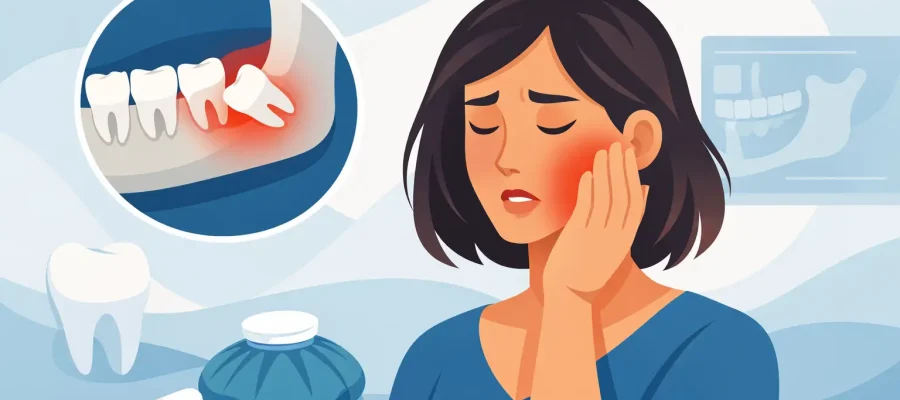
That deep, radiating ache near the back of your mouth can throw off your whole day. If you are searching for how to relieve jaw pain from wisdom teeth, the first priority is simple – calm the pressure, reduce inflammation, and make sure you are not dealing with an infection or an impacted tooth that needs prompt care.
Wisdom tooth pain rarely stays neatly in one spot. It can spread into the jaw joint, ear, cheek, throat, or even trigger headaches. For some patients, it feels like soreness after clenching. For others, it is sharp, throbbing, and impossible to ignore when chewing or trying to sleep. The reason is usually pressure: the tooth is erupting at an angle, pushing against nearby tissue, trapping bacteria under the gum flap, or crowding the molar in front of it.
How to relieve jaw pain from wisdom teeth at home
If the pain is mild to moderate and you do not have major swelling, fever, or trouble opening your mouth, a few short-term measures can make a real difference.
A cold compress is usually the fastest place to start. Apply it to the outside of the jaw for 15 to 20 minutes at a time, then give the area a break. Cold helps constrict blood vessels and reduce the inflammatory swelling that often makes wisdom tooth pain feel bigger than the tooth itself.
Warm salt water rinses can also help, especially when the gum around a partially erupted wisdom tooth is irritated. Mix salt into warm water and swish gently, not aggressively. The goal is to soothe the tissue and help flush food debris and bacteria from the area. If the gum flap around the tooth is tender, forceful rinsing can make it more irritated, so keep it gentle.
Over-the-counter pain relief can be effective, but it depends on your medical history. Ibuprofen often works well because it targets both pain and inflammation. Acetaminophen can help if you cannot take anti-inflammatory medication. Always follow the label directions and avoid doubling up without professional advice.
Soft foods matter more than most people expect. When the jaw is already inflamed, chewing crusty bread, nuts, steak, or anything that requires force can keep the area aggravated. For a day or two, switch to yogurt, soup, eggs, smoothies, mashed vegetables, oatmeal, or pasta. This is not glamorous advice, but it reduces mechanical stress while the tissue calms down.
Oral hygiene also becomes more important, not less. Patients sometimes avoid brushing near the painful area, which can make things worse fast. Brush carefully, keep the back molar area as clean as you can, and rinse after meals so food does not stay packed around the tooth.
Why wisdom teeth cause jaw pain
Jaw pain from wisdom teeth is usually not just about the tooth itself. It is about what the tooth is doing to the surrounding structures.
The most common issue is impaction. That means the wisdom tooth does not have enough space to come in normally. It may stay trapped under the gum, grow sideways, or only partially erupt. When that happens, the surrounding gum and bone take the pressure. The muscles of the jaw can tense up in response, which is why some people feel pain extending toward the ear or notice discomfort when opening wide.
Another common cause is pericoronitis, which is inflammation or infection of the gum tissue around a partially erupted wisdom tooth. This often happens when a small flap of gum covers part of the tooth and traps bacteria and food. The pain can feel raw, swollen, and tender, and the jaw may feel stiff.
Sometimes the problem is crowding against the second molar. Even if the wisdom tooth is not visible, it may be pushing in a way that creates persistent soreness deeper in the jaw. Less commonly, a wisdom tooth can contribute to cyst formation, decay, or damage to the neighboring tooth.
This is why temporary relief and actual resolution are not always the same thing. Ice, rinses, and pain relievers can settle the moment. They do not change the tooth position.
When home care is not enough
There is a difference between manageable eruption discomfort and a problem that is getting more serious. If your pain is escalating instead of improving, it is time for an exam.
Red flags include visible swelling in the face or jaw, a bad taste in the mouth, pus, fever, trouble swallowing, difficulty opening the mouth, or pain that keeps waking you up at night. These signs can point to infection or significant impaction. Waiting too long can make treatment more uncomfortable than it needs to be.
You should also get checked if the pain keeps returning in cycles. Many patients have a pattern where the area flares, calms, then flares again a few weeks later. That usually means the underlying issue has not changed.
For international patients or anyone planning cosmetic work, implants, or a smile makeover, this matters even more. Untreated wisdom tooth problems can interfere with timing, healing, and overall treatment planning. Precision dentistry starts with a stable foundation.
What a dentist may do to relieve wisdom tooth jaw pain
Once the area is evaluated, the right solution becomes much clearer. The first step is usually imaging. An X-ray shows whether the wisdom tooth is impacted, infected, angled into the adjacent tooth, or erupting normally. Without imaging, it is easy to underestimate what is happening below the gumline.
If the issue is localized gum inflammation, cleaning the area and prescribing targeted medication may settle it quickly. In some cases, the dentist may irrigate under the gum flap to remove trapped debris and bacteria. If infection is present, antibiotics may be recommended, but they are not a permanent fix if the tooth keeps causing the same problem.
If the tooth is impacted or repeatedly painful, extraction is often the cleanest solution. For many patients, that word sounds bigger than it is. With modern planning, precise imaging, and controlled surgical technique, wisdom tooth removal is a very routine procedure. The real luxury is predictability – knowing exactly why the pain is happening and removing the cause instead of managing it month after month.
Is removal always necessary?
Not always. Some wisdom teeth erupt fully, stay clean, and never cause meaningful issues. Others are quiet for years and then start creating pressure, decay, or gum problems. The decision depends on angle, space, symptoms, hygiene access, and the condition of the neighboring tooth.
That is the trade-off. Keeping a wisdom tooth is reasonable if it is healthy and functional. Keeping a problematic one because it is tolerable right now can cost more comfort later.
How to sleep with jaw pain from wisdom teeth
Nighttime is often the hardest part. Blood flow increases when you lie flat, and that can make throbbing feel stronger. Try sleeping with your head slightly elevated. Use a cold compress before bed, keep to soft foods in the evening, and avoid chewing on the painful side.
If you grind or clench, the pain may feel worse at night because the jaw muscles are already under pressure. Wisdom tooth pain and muscle tension can overlap, which is why some patients assume the problem is TMJ when the real trigger is further back in the mouth.
Can jaw pain from wisdom teeth go away on its own?
Sometimes, yes. If the pain is caused by short-term eruption pressure and the tooth moves into a better position, symptoms may settle. But if the tooth is impacted, partially erupted, or repeatedly inflamed, the relief is often temporary.
That is the part many people miss. Pain fading does not always mean the issue is gone. It may only mean the pressure or inflammation has eased for the moment.
A smarter next step
If your jaw pain is mild, short-lived, and improving, careful home care may be enough for now. If it is intense, recurring, or paired with swelling, the smartest move is not to keep guessing. Get the tooth assessed properly, with imaging and a plan.
At a clinic built around fast, precise dentistry, even a problem like wisdom tooth pain can be handled with more clarity and comfort than most patients expect. The best relief is not just numbing the pain – it is knowing exactly what is causing it, what needs treatment, and how quickly you can get back to feeling like yourself.