


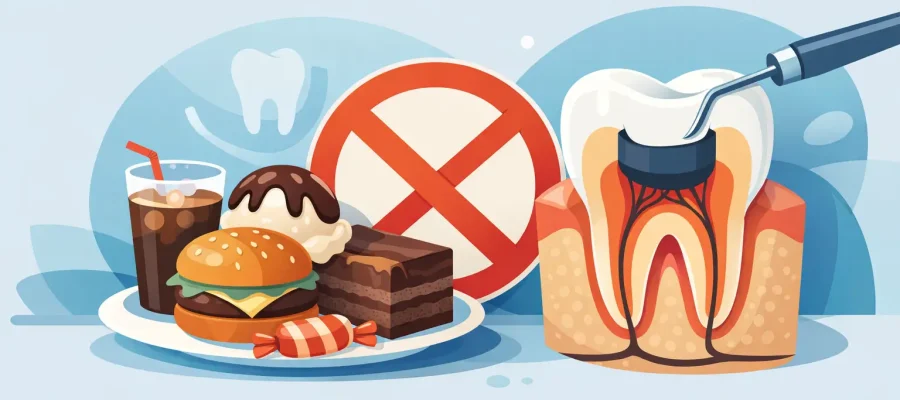
That first meal after a root canal can feel oddly high-stakes. You are hungry, your mouth may still be numb, and the last thing you want is to damage a tooth that has just been treated. If you are wondering what not to eat after root canal treatment, the short answer is this: avoid anything hard, sticky, crunchy, very hot, or difficult to chew until your dentist says the tooth is fully restored and stable.
A root canal removes infected or inflamed tissue from inside the tooth, then seals the space to stop the problem from returning. The procedure solves pain at the source, but the treated tooth can still be tender afterward. In many cases, a temporary filling or temporary crown is placed before the final restoration. That means your food choices matter more than usual for the next few days.
What not to eat after root canal treatment
The biggest mistake patients make is assuming the tooth is instantly back to normal because the nerve has been removed. In reality, the tissues around the root can stay sensitive for a short time, and a temporary restoration is not designed to handle everything your regular bite can deliver.
Hard foods are the first category to avoid. Nuts, ice, hard candy, crusty bread edges, popcorn kernels, and raw carrots can put too much pressure on the treated tooth. If the tooth is already weakened from decay or a large old filling, biting into something firm can lead to cracks or breakage.
Sticky foods are another problem. Caramel, chewing gum, taffy, gummy candy, and even very chewy dried fruit can pull at a temporary filling or crown. That creates a completely avoidable setback, especially if you are in the middle of a treatment plan or traveling for care.
Crunchy foods can be just as irritating. Chips, granola, crackers, and seeded snacks may seem harmless, but sharp fragments can poke the area and increase soreness. Tiny particles also have a way of collecting around a temporary restoration, which can make the tooth feel more sensitive.
Very hot foods and drinks deserve caution too. Coffee, tea, soup, and pizza straight from the oven may trigger discomfort while the area is still healing. If anesthesia has not fully worn off, heat is even riskier because you may not notice if you are burning your lips, cheek, or tongue.
Spicy and acidic foods are not always forbidden, but they can be unpleasant if the tooth and surrounding gum tissue are irritated. Citrus, salsa, hot sauce, and vinegar-heavy foods can make sensitivity feel sharper for some patients. This is one of those it-depends situations – not everyone reacts the same way, but moderation is smart in the first 24 to 48 hours.
Why certain foods can cause problems
A root canal is about infection control and tooth preservation, but the final strength of the tooth often depends on what happens next. If the tooth has only a small filling, recovery may be straightforward. If it needs a crown, the period before final placement is where patients need to be most careful.
The issue is not only pain. It is also protection. A temporary filling can wear down, dislodge, or leak if it is stressed too early. A temporary crown can loosen. And even a properly sealed tooth may feel sore when the ligament around the root has been inflamed.
For image-conscious patients and busy travelers, this matters because a small food mistake can create a much bigger interruption. A cracked temporary or a lost filling can turn a smooth treatment plan into an emergency visit. Precision dentistry works best when aftercare is just as disciplined as the procedure itself.
What you can eat instead
The good news is that eating after a root canal does not have to be restrictive. You simply want foods that are soft, easy to chew, and unlikely to stick to the treated area.
Yogurt, scrambled eggs, oatmeal, mashed potatoes, pasta, rice, soup that has cooled to warm, smoothies eaten with a spoon, soft fish, tofu, bananas, applesauce, and well-cooked vegetables are all sensible choices. If you want protein, shredded chicken or tender meat cut into very small pieces usually works better than anything you need to bite into firmly.
Temperature matters as much as texture. Lukewarm or cool foods are often the most comfortable on day one. As tenderness improves, you can expand your options gradually.
If only one side of your mouth was treated, chew on the opposite side whenever possible. That simple adjustment reduces pressure on the healing tooth and protects any temporary restoration.
The first few hours matter most
Do not eat until the numbness has fully worn off. This is one of the most overlooked parts of aftercare. When your lips, cheeks, or tongue are numb, it is easy to bite yourself without realizing it. That can leave you with a painful soft-tissue injury that has nothing to do with the actual root canal.
Once sensation returns, start with something soft and low-risk. There is no prize for testing your tooth with a steak, crusty sandwich, or handful of nuts on the same day. A controlled return to normal eating is the faster route, not the slower one.
If your dentist prescribed medication or recommended over-the-counter pain relief, follow that schedule as directed. Keeping post-treatment soreness under control often makes eating easier and helps you avoid clenching or chewing awkwardly.
If you have a temporary crown or filling
This changes the conversation slightly. A temporary restoration is functional, but it is not your final result. Think of it as a carefully engineered placeholder designed to protect the tooth until the definitive crown or filling is placed.
With a temporary, be extra cautious about sticky foods and anything that requires a strong front-to-back pull when chewing. Bagels, tough bread, candy, and gum are common offenders. Even if the tooth feels fine, the temporary material may not tolerate that kind of force.
Patients in high-efficiency treatment programs, including international visitors who value speed and predictability, benefit from taking this seriously. A smooth restorative timeline depends on protecting the work between appointments.
How long should you avoid certain foods?
For most patients, the strictest food caution is during the first 24 to 48 hours. That is when soreness, numbness-related accidents, and temporary restoration issues are most likely.
But if the tooth has not yet received its final crown, you should continue avoiding hard and sticky foods on that side until treatment is fully completed. This can be several days or longer, depending on the plan. The tooth may be out of pain, but it is not always at full strength.
Once the final restoration is placed and your dentist confirms the bite is balanced, you can usually return to a more normal diet. Even then, chewing ice or using your teeth like tools is a bad deal for any restored tooth.
Signs a food choice may have caused a problem
Mild tenderness when chewing is common for a few days. Sharp pain, a sudden change in your bite, a loose temporary, or a feeling that part of the tooth has chipped is different.
Call your dentist if the temporary filling or crown comes out, if pain is getting worse instead of better, if swelling develops, or if you cannot bite comfortably after the initial recovery window. If you are traveling for treatment, this is exactly why choosing a clinic with structured aftercare and responsive coordination matters.
A smarter approach to recovery
The best aftercare is not extreme. It is strategic. Choose soft foods, avoid pressure on the treated side, skip anything hard or sticky, and give the tooth time to settle. If your dentist has planned a final crown, treat that appointment as part of the root canal process, not an optional extra.
At a precision-focused clinic such as DRGO Smile Clinic, the goal is never just to remove pain. It is to protect the tooth, restore strength, and keep the result predictable from first treatment to final bite. Your food choices after the procedure play a quiet but important role in that outcome.
For the next meal, think comfort over challenge. A soft, simple plate today gives your tooth the best chance to feel normal again, fast.