


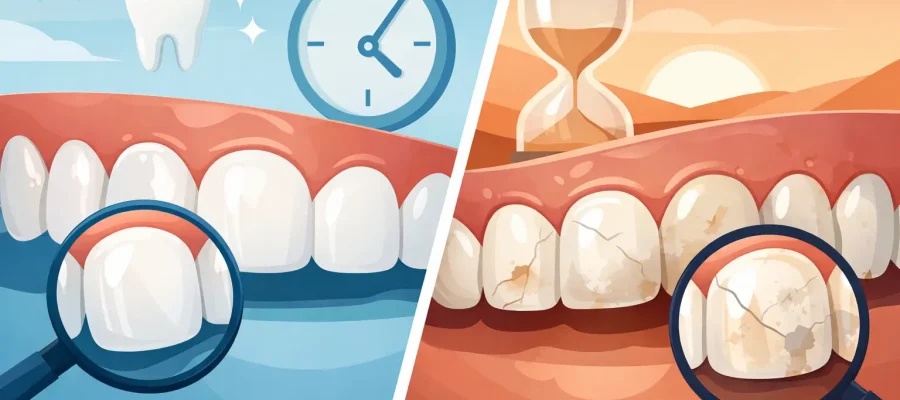
A veneer can still look striking a decade after placement, but a 10-year result is not simply about whether the porcelain has survived. When patients ask, “what happens to veneers after 10 years?” the honest answer is that the veneer, the bonding layer, the natural tooth beneath it, and the gumline all age differently. The best smiles remain polished, balanced, and believable because they were designed for long-term stability from day one.
For image-conscious patients, this matters. A signature smile should still look refined in close-up photos, video calls, and real life years after the transformation – not just during the first reveal.
What Happens to Veneers After 10 Years?
High-quality porcelain veneers commonly last 10 to 15 years and can last longer with excellent planning, skilled placement, and consistent maintenance. The porcelain itself is highly durable and stain-resistant. Coffee, red wine, and everyday foods are far less likely to discolor porcelain than natural enamel or composite bonding.
After 10 years, many veneers remain intact with only routine professional polishing and hygiene care. Others may need attention because of changes around the veneer rather than damage to the porcelain itself. Gum recession can expose the veneer edge, natural teeth can darken around older restorations, and heavy bite forces can create tiny chips or cracks.
This is why veneers should never be approached as a cosmetic shortcut. They are a precision restoration that must work with your facial proportions, bite, gum architecture, and long-term oral health.
The Four Changes That Matter Most Over Time
1. The porcelain usually stays bright
Premium ceramic materials such as E-Max are designed to preserve their color and surface gloss. Unlike natural enamel, porcelain does not absorb pigments easily. A well-maintained veneer may look remarkably close to its original shade after 10 years.
That said, veneers do not whiten with bleaching treatments. If surrounding natural teeth darken over time, the contrast can become more noticeable. This is especially relevant when veneers cover only the front few teeth. A dentist may recommend whitening the adjacent natural teeth before replacing a veneer, or may advise a more comprehensive smile design from the start to maintain color harmony.
2. The gumline can change
Gums are living tissue, and they can recede with age, inflammation, aggressive brushing, periodontal disease, or thin gum tissue. When recession occurs, a small line near the veneer margin may become visible. Depending on the original tooth color and veneer design, this can appear as a darker shadow or an uneven edge.
This does not automatically mean every veneer needs replacement. In some cases, improved hygiene, periodontal treatment, or gum contouring can restore a more balanced appearance. In other cases, replacing one or more veneers is the cleanest way to rebuild a seamless smile line.
3. The bond and veneer edges face daily pressure
Veneers are bonded securely to enamel, but they are not indestructible. Biting fingernails, opening packages with teeth, chewing ice, and using front teeth to bite very hard foods can chip porcelain or stress the bonding margin. Nighttime grinding is another major factor.
A small chip may sometimes be polished or repaired with composite. A fracture across the visible surface, a loose veneer, or recurrent decay at the margin usually calls for replacement. Patients who clench or grind should wear a custom night guard. It is a simple protective step that can significantly extend veneer life.
4. The natural tooth beneath the veneer still needs care
A veneer covers the front surface of a tooth. It does not make the tooth immune to decay, gum disease, or trauma. Cavities can form where the veneer meets the tooth if plaque accumulates around the margins, particularly when daily flossing is inconsistent.
This is one reason meticulous preparation and fit matter. A precisely designed veneer margin is easier to clean, looks more natural at the gumline, and reduces places where bacteria can collect. Regular checkups allow a dentist to identify small issues before they become a reason to replace the restoration.
Will Veneers Need to Be Replaced at 10 Years?
Not necessarily. Ten years is a useful checkpoint, not an expiration date. Some patients need replacement earlier because of grinding, a bite issue, gum recession, or an accident. Others keep their veneers for 15 to 20 years when their oral health and bite remain stable.
Replacement becomes more likely when there is visible chipping, persistent sensitivity, a loose veneer, decay around the edge, a dark margin that affects the smile, or a color mismatch with neighboring teeth. A cosmetic dentist evaluates more than appearance before recommending treatment. The key questions are whether the tooth is healthy, whether the bite is placing excess force on the veneer, and whether a repair can deliver a result that still meets a high aesthetic standard.
When replacement is needed, the process is controlled. The existing veneer is carefully removed, the tooth is assessed, and a new restoration is designed to match the surrounding smile. With modern digital planning, patients can preview proportion, color, and smile balance before the final ceramic is placed.
Why Original Planning Determines the 10-Year Result
The most natural-looking veneers are not the brightest or largest. They are the ones that respect the patient’s face, lip movement, gum display, and natural tooth structure. Overly thick veneers can look bulky, while poorly planned edges may become visible as gums change.
A long-lasting result begins with a complete assessment: bite analysis, gum health evaluation, photographs, scans, and a clear understanding of the patient’s cosmetic goals. Digital Smile Design helps translate that information into a previewable plan, allowing adjustments before the final veneers are created.
At DRGO Smile Clinic, this planning-led approach is central to creating a Hollywood Smile that looks engineered rather than artificial. The goal is not simply to place porcelain quickly. It is to build a smile that photographs beautifully now and remains easy to maintain in the years ahead.
How to Help Veneers Look Their Best for Longer
Daily care is straightforward, but it must be consistent. Brush twice daily with a soft toothbrush and non-abrasive toothpaste, then floss around every tooth and veneer margin. Abrasive whitening pastes are unnecessary for porcelain and may scratch or dull the surrounding natural enamel over time.
Professional hygiene appointments are equally valuable. Your hygienist can remove plaque and surface buildup without damaging the porcelain, while your dentist checks the gumline, bite, and restoration margins. If you notice a rough edge, sensitivity, a new dark line, or a change in how your teeth meet, schedule an examination rather than waiting for a chip to become a larger problem.
Patients who drink coffee, tea, or red wine do not need to give them up. Porcelain is highly stain-resistant. The practical focus is maintaining the color of natural teeth around the veneers and keeping the gums healthy enough to frame the smile beautifully.
A Decade Later, Your Smile Should Still Feel Like You
Veneers can be a long-term investment in confidence, but they are not a set-it-and-forget-it treatment. The strongest 10-year outcomes come from excellent ceramic, conservative preparation, precise bonding, a stable bite, and routine care after you return home.
If you are considering veneers, ask to see how your future smile will be planned – not just what it will look like on placement day. A beautiful result should be designed to age with confidence, protecting your natural teeth while keeping your smile polished, personal, and unmistakably yours.