


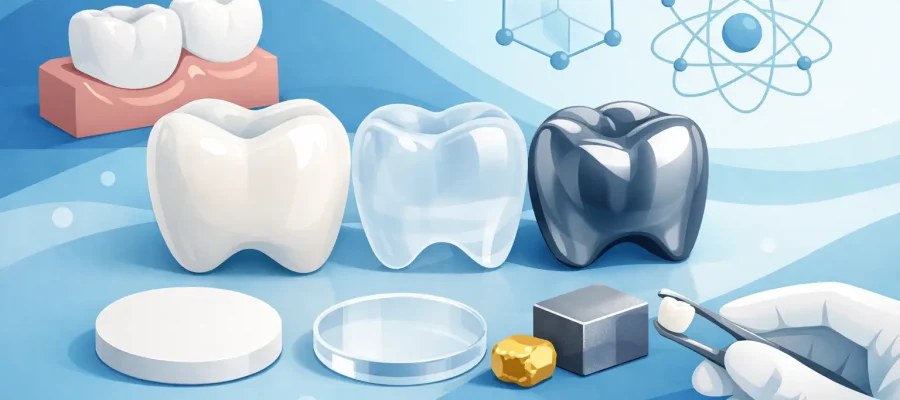
A front tooth has to look like it belongs in every close-up. A back tooth has to survive years of coffee, steak, grinding, and bite pressure. That is why the answer to what’s the strongest material for dental restorations? is not simply the material with the highest strength number. The right restoration must match your bite, the tooth’s location, the amount of remaining tooth structure, and the smile you want to see in the mirror.
For pure fracture resistance, modern zirconia is generally the strongest tooth-colored option used in contemporary restorative dentistry. But strength alone does not make it the best choice for every crown, veneer, bridge, or implant restoration. E-Max lithium disilicate, layered zirconia, porcelain, and metal-based options all have specific roles in a treatment plan designed for both durability and a high-end result.
The strongest material for dental restorations: Zirconia
Zirconia is a high-strength ceramic engineered to handle serious chewing forces. It is especially valuable for molars, long-span bridges, implant crowns, full-arch restorations, and patients who clench or grind their teeth. Unlike older metal crowns, zirconia can deliver strength without the dark metallic appearance at the gumline.
Monolithic zirconia – made from one solid block of zirconia – is the durability leader. It is highly resistant to cracking and chipping, which makes it a smart choice where the bite is strongest. For a patient rebuilding heavily worn back teeth or receiving fixed implant teeth, this material can offer the confidence of a restoration built for daily pressure.
The trade-off is appearance. The most durable solid zirconia can be less translucent than natural enamel, particularly in the front of the smile. Modern multilayer zirconia has improved dramatically, with gradients of color and translucency that create a more lifelike result. Even so, when the priority is exceptional front-tooth brightness, depth, and light reflection, a different ceramic may be more appropriate.
Where zirconia performs best
Zirconia is often the first choice for posterior crowns, bridges, implant-supported restorations, and full-mouth rehabilitation. It can also be used for front teeth when a patient has a heavy bite, extensive tooth damage, or needs added strength. The material is compatible with digital dentistry, allowing precise CAD/CAM design and milling for predictable fit.
For a full-arch implant restoration, the material decision is more complex. A strong zirconia bridge may be ideal for the final fixed teeth, while the temporary bridge used immediately after implant surgery is usually made from a lighter provisional material. Your dentist must account for healing, implant position, bone support, lip movement, and bite forces before selecting the final material.
Why E-Max is often the premium choice for visible teeth
E-Max is a lithium disilicate glass ceramic known for its natural translucency. It is not as strong as monolithic zirconia, but it is still a durable, high-quality material for properly selected cases. Its major advantage is aesthetics: it captures light in a way that closely resembles healthy enamel.
For veneers, front crowns, and smile-makeover cases where the patient wants a refined, luminous finish, E-Max is often the preferred material. It can be color-matched and customized to create soft translucency at the edges, natural texture, and the bright but believable shade associated with a signature smile.
E-Max also allows conservative treatment in many veneer cases. Because the ceramic can be bonded strongly to enamel, it may require less tooth preparation than a full-coverage crown. That said, it is not the automatic choice for every front tooth. A patient with severe grinding, a deep overbite, or very limited enamel may need zirconia or a different approach for long-term security.
Strength versus beauty is not an either-or decision
The best cosmetic dentistry does not force every tooth into one material. A carefully planned smile can use E-Max where light reflection matters most and zirconia where force management matters most. For example, upper front veneers may be E-Max, while posterior crowns are zirconia. The result is a smile that photographs beautifully and functions with confidence.
This is why a one-size-fits-all quote can be misleading. Two patients may both ask for a Hollywood Smile, yet one needs 10 minimal-prep E-Max veneers while another needs crowns, gum contouring, bite correction, and zirconia support in the back teeth. The material is part of the engineering, not just a cosmetic upgrade.
How porcelain and metal compare
Traditional porcelain-fused-to-metal crowns have a long clinical history. Their metal framework provides strength, while porcelain creates a tooth-colored outer surface. They remain useful in certain restorative situations, but they are less popular for premium cosmetic cases because porcelain can chip and a dark margin may become visible if the gums recede.
Full-gold crowns are exceptionally durable and gentle on opposing teeth, but their appearance does not suit most patients seeking a natural or camera-ready smile. Base-metal alloys can also be strong, yet they do not provide the metal-free, light-transmitting look that modern ceramic options offer.
Feldspathic porcelain is highly artistic and can create stunning veneer aesthetics in expert hands. It is usually not selected when maximum structural strength is the main concern. Its role is more about ultra-natural surface character and subtle beauty than rebuilding a heavy-bite molar.
What actually determines whether a restoration lasts
Even the strongest dental material can fail if the treatment design is wrong. A crown can crack because the bite was not balanced. A veneer can debond because it was bonded to too little enamel. An implant crown can loosen because its forces were not properly distributed. Material selection matters, but clinical planning matters just as much.
A reliable plan evaluates the following factors together:
- Tooth position: Molars take greater force than incisors and often require a stronger material.
- Bite pattern: Clenching, grinding, crossbites, and deep bites can change the safest material choice.
- Tooth condition: A small cosmetic correction needs a different solution than a root canal-treated or severely damaged tooth.
- Aesthetic goal: High-translucency front teeth may call for E-Max or layered ceramics rather than solid zirconia.
- Opposing teeth: The restoration must be designed to work safely against natural enamel, crowns, or implant teeth.
Digital Smile Design and 3D previews make this decision more visual and more precise. Before treatment begins, the dentist can assess proportions, gum display, tooth length, facial balance, and the amount of room available for each restoration. CAD/CAM planning then helps create restorations with controlled thickness, fit, and bite contact.
The best material by restoration type
For a single back-tooth crown, zirconia is frequently the strongest and most practical choice. For a front-tooth crown, the decision usually sits between E-Max and aesthetic zirconia, depending on bite pressure and how much natural tooth remains. For veneers, E-Max or high-quality porcelain often delivers the most natural cosmetic finish when enamel and bite conditions are favorable.
For bridges, zirconia is commonly selected because bridges experience greater flexing and force than individual crowns. For implant crowns, zirconia can be an excellent choice, particularly in posterior areas or full-arch work, though the design of the implant connection and the opposing bite must be considered. For immediate temporary teeth after implants, durable provisional materials are used first while your gums and bone heal.
There is no benefit in placing the hardest material everywhere if it compromises the look of your smile or requires unnecessary tooth reduction. Equally, choosing a delicate material solely for its appearance can create avoidable risk in a heavy bite. The goal is not the strongest crown on paper. It is the strongest appropriate restoration for your mouth.
A material plan should be designed around you
At DRGO Smile Clinic, a premium restoration plan begins with more than selecting a shade. It begins with diagnostics, smile design, bite analysis, and a clear view of the final outcome. For international patients, that planning is especially valuable because it creates confidence before travel and supports an efficient treatment schedule once you arrive in Istanbul.
Ask your dentist to explain why a specific material is being recommended for each tooth, not just for the smile as a whole. You should understand where strength is needed, where translucency is worth prioritizing, and how your bite will be protected after treatment. A well-designed night guard may also be recommended for patients who grind their teeth, even after the most durable zirconia restorations.
The strongest material can protect a tooth. The right combination of materials, precision planning, and skilled placement can protect your investment while giving you a smile that looks unmistakably yours.