


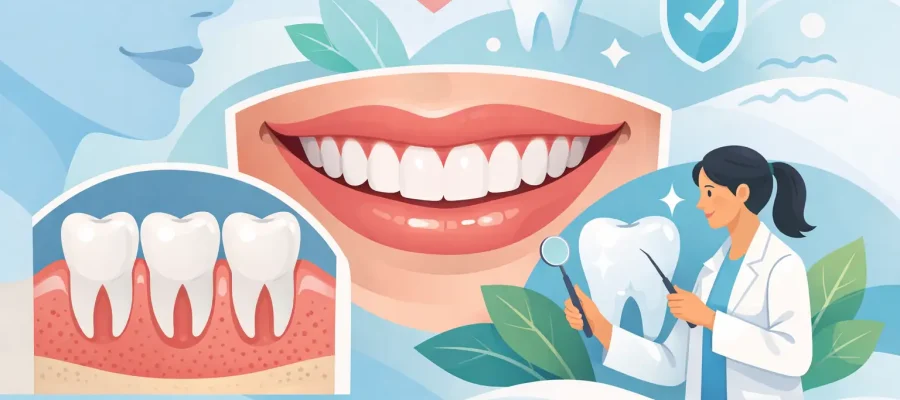
A bright shade and perfectly shaped veneers can transform a smile, but they cannot compensate for red, swollen, receding, or uneven gums. That is why healthy gums are the foundation of a beautiful smile: they frame every tooth, protect the structures beneath it, and determine whether aesthetic dental work looks naturally refined or visibly compromised.
For patients planning a Hollywood Smile, E-Max veneers, zirconium crowns, whitening, or dental implants, gum health is not a small preliminary detail. It is part of the treatment design. A premium result begins with an assessment of the entire smile – teeth, gums, bite, bone support, facial proportions, and long-term stability.
Why Healthy Gums Are the Foundation of a Beautiful Smile
Your gums are the visible border around each tooth. When they are firm, even in color, and shaped in harmony with your lips and teeth, they create the clean, balanced frame associated with a youthful, high-end smile. When gum tissue is inflamed or uneven, even exceptionally crafted restorations can appear too long, too short, bulky, or disconnected from the face.
The visual effect is immediate. A healthy gumline gives teeth definition, much like a precise frame gives an image more impact. It also influences how much tooth surface shows when you smile. Some patients have a “gummy smile,” where excess gum display becomes the dominant feature. Others have recession, where gums have pulled back and exposed root surfaces, making teeth look longer and sometimes more sensitive.
There is also a clinical reason to start here. Gums seal around natural teeth, crowns, and implants. If active gum disease is left untreated before cosmetic treatment, bleeding, swelling, recession, and bone loss can continue after the new smile is placed. That can affect both comfort and the lifespan of restorations.
A beautiful smile should photograph well on day one and remain healthy when the excitement of the transformation has passed. That requires a stable biological foundation, not only a beautiful surface.
The Gumline Shapes the Final Look
Smile design is not simply about choosing the whitest shade or the most symmetrical veneer shape. The gumline is one of the key design lines in the face. Ideally, it follows the natural contours of the upper teeth and supports an attractive balance between the central incisors, canines, and lips.
Small differences can change the entire result. If one gumline sits higher than the other, the teeth may look asymmetrical even if the veneers are identical. If inflammation makes the tissue puffy, teeth can appear shorter and less defined. If recession exposes the roots, a bright veneer may contrast sharply with a darker root surface.
This is where gum aesthetics, sometimes called pink aesthetics, becomes essential. Depending on the diagnosis, treatment may include professional hygiene, periodontal care, contouring excess tissue, reshaping the gumline, or planning restorations that work with the existing tissue rather than fighting it. The right approach depends on the cause. Not every uneven gumline needs the same procedure, and aggressive reshaping is not always the best choice.
For example, excess gum display may come from gum tissue, tooth position, lip movement, or jaw structure. Treating only the gums when the underlying issue is elsewhere can create an unnatural result. Precision means identifying what is actually creating the smile imbalance before any irreversible treatment begins.
Healthy Gums Protect Your Cosmetic Investment
Veneers and crowns are designed to enhance color, shape, alignment, and proportion. They are not a cure for untreated gum disease. If plaque and bacteria are allowed to collect at the gumline, inflammation can develop around the edges of restorations. Over time, this can create bleeding, odor, recession, visible margins, and a less polished appearance.
The same principle applies to implants. An implant crown may look like a natural tooth, but the tissue around it still requires consistent care. Inflammation around an implant can affect the surrounding bone and compromise support. Patients considering All-on-4, All-on-6, or single implants should view gum evaluation as part of the implant plan, alongside bone quality, bite forces, and medical history.
Good planning protects the investment in more than one way. It helps the clinician select the proper restoration edge, create contours that are easier to clean, and avoid designs that trap plaque or place unnecessary pressure on the gums. A result that looks flawless but is difficult to maintain is not a premium result.
At DRGO Smile Clinic, digital planning can be used to assess the relationship between teeth, gumline, lips, and facial features before finalizing a cosmetic treatment plan. A 3D smile preview is valuable not because it replaces clinical judgment, but because it gives patients a clearer view of the proposed direction before treatment begins.
Signs Your Gums Need Attention Before a Smile Makeover
Healthy gums generally look pink to coral, feel firm, and do not bleed during brushing or flossing. A few days of irritation after flossing more consistently can happen, especially if your gums have been neglected. Persistent bleeding, however, is a signal to schedule an examination rather than simply brushing harder.
Pay attention if you notice recurring swelling, tenderness, bad breath that does not improve, gum recession, pus, loose teeth, or changes in the way your bite feels. These symptoms do not always mean advanced disease, but they deserve a professional diagnosis before veneers, crowns, or implants are planned.
Patients traveling for dentistry often want an efficient treatment timeline, especially before a wedding, major event, content shoot, or public-facing milestone. Fast treatment can be appropriate when diagnostics support it. But speed should never mean placing aesthetic restorations over active inflammation. Addressing gum health first can protect the predictability of the final result and reduce the risk of having to redo work later.
How a Gum-First Smile Plan Works
1. Start with a full assessment
A proper smile-makeover consultation looks beyond the visible front teeth. The clinical team evaluates gum condition, periodontal pockets, recession, bone support, existing restorations, tooth structure, bite, and smile display. Digital scans, photographs, and X-rays help reveal concerns that a mirror cannot show.
For international patients, this planning stage also helps determine whether a one-visit crown workflow, immediate implant approach, or staged treatment is appropriate. The best timeline is based on your clinical needs, not a one-size-fits-all package.
2. Stabilize inflammation and improve tissue quality
If gum disease or significant plaque buildup is present, cleaning and periodontal treatment may be recommended before aesthetic work. The goal is to reduce inflammation and create stable tissue. In some cases, the gums need time to heal before final restorations are placed. In others, minor contouring can be integrated into the smile-design process.
This is a trade-off worth understanding. Waiting briefly for gum tissue to stabilize may feel inconvenient, but it can make the final margins more accurate and the long-term result more dependable.
3. Design teeth and gums together
Once the foundation is healthy, the design phase becomes more precise. The clinician can plan tooth length, width, shade, incisal edges, and gum contours as one visual system. This matters especially for the upper front teeth, where even a millimeter of difference can change perceived symmetry.
Temporary restorations or a digital preview may help confirm the direction before final veneers or crowns are crafted. The goal is not a generic “perfect” smile. It is a signature smile that fits your features, personality, and expectations while remaining realistic for your oral health.
4. Maintain the result after treatment
A premium smile needs a maintenance routine. Brush twice daily with a soft toothbrush, clean between teeth every day, and attend professional hygiene visits on the schedule recommended for you. If you wear a night guard because of clenching or grinding, use it consistently. Strong bite forces can affect gums, natural teeth, veneers, crowns, and implants alike.
Smoking, uncontrolled diabetes, dry mouth, and inconsistent home care can increase gum risks. That does not automatically rule out cosmetic dentistry, but it may change the treatment plan and the maintenance needed afterward. Honest planning is what makes results more predictable.
A Better Smile Starts Below the Surface
The most convincing cosmetic dentistry does not look like a layer placed over a problem. It looks healthy, balanced, and effortless because every part of the smile has been considered. Bright teeth attract attention, but healthy gums are what make that brightness look intentional, natural, and well supported.
If you are considering veneers, crowns, whitening, gum contouring, or implants, ask to see the plan for your gums as well as your teeth. A smile makeover should give you more than an immediate before-and-after moment. It should give you a result you can speak, laugh, photograph, and live with confidently.