


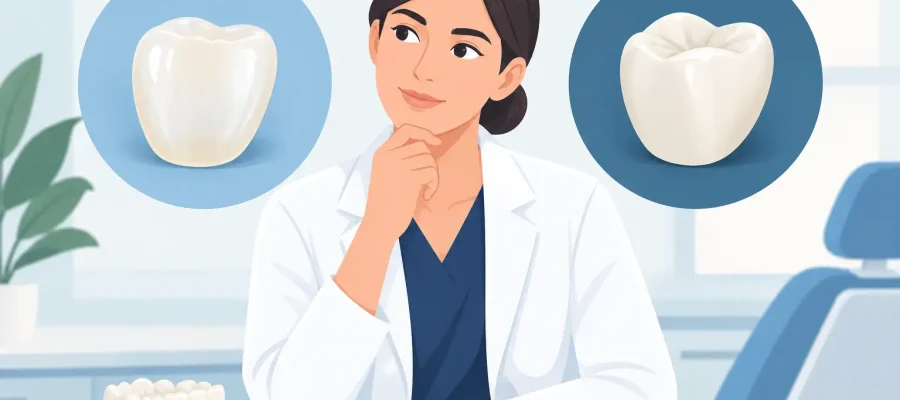
A front tooth that catches the light and a back tooth that absorbs years of chewing do not need the same restoration. That is the real answer to the question, how do dentists choose between E-Max and zirconium? The decision is not about naming one material “better.” It is about selecting the material that delivers the right balance of beauty, strength, fit, and long-term confidence for your individual smile.
For a Hollywood Smile, every restoration has a job to do. Some teeth must look exceptionally natural under a camera flash. Others need to withstand powerful bite forces without compromising the final design. At DRGO Smile Clinic, the material choice begins with your facial features, existing teeth, bite, gum line, and the look you want to see in your 3D smile preview.
How Dentists Choose Between E-Max and Zirconium
E-Max and zirconium are both premium ceramic options used for veneers, crowns, and full smile transformations. They are not interchangeable, even when the final smile may look equally polished at first glance.
E-Max is lithium disilicate glass ceramic. It is prized for lifelike translucency, meaning light can pass through it in a way that closely resembles healthy enamel. This quality makes E-Max a leading choice for patients who want a refined, natural-looking front smile with depth, brightness, and delicate color variation.
Zirconium, more accurately called zirconia, is a high-strength ceramic. It is known for durability and is especially valuable where chewing pressure is high, where teeth are heavily restored, or where a patient has a strong bite. Modern multilayer zirconia can also look highly aesthetic, but its primary advantage remains strength and stability.
A skilled dentist does not start by asking, “Which material costs more?” The clinical question is: “What does this tooth need to do, and what must it look like while doing it?”
The First Decision: Veneer, Crown, or Full Coverage
The amount of healthy tooth structure remaining changes the material conversation immediately. A minimally prepared veneer has different demands from a full crown placed over a tooth that has already had extensive treatment.
When a front tooth has healthy enamel and the goal is to improve shape, symmetry, minor spacing, or color, E-Max veneers are often an excellent choice. Their light behavior supports the clean, natural brightness many patients want in a camera-ready smile. Because E-Max can be fabricated in thin layers, it may allow a more conservative preparation in appropriate cases.
A crown is different. It must cover and protect the entire tooth. If the tooth is weakened by a large filling, root canal treatment, fracture, or major wear, zirconia may offer the structural reassurance needed for long-term function. That does not automatically eliminate E-Max. It simply means the dentist must evaluate how much force the tooth will receive and how much internal support remains.
For a full smile makeover, the best plan may use one material consistently or strategically combine materials. The goal is visual harmony without ignoring function. A smile should be flawless at dinner, in photographs, and during everyday chewing.
Front Teeth: When Light and Detail Lead the Plan
The front teeth are the visual center of a smile. They are where translucency, surface texture, incisal edge detail, and shade layering make the difference between a generic white smile and a signature smile that looks made for your face.
E-Max is frequently selected for anterior veneers and crowns because it can recreate enamel-like vitality. It is particularly appealing for patients with naturally translucent teeth or those who want a bright but believable result rather than an opaque, flat white appearance.
Shade matters here. If a patient wants a soft, natural white with visible depth, E-Max gives the dental team significant artistic control. If the underlying tooth is very dark, however, the same translucency that makes E-Max beautiful can become a limitation. Dark tooth structure, metal posts, or severe discoloration may show through a highly translucent ceramic unless the preparation and opacity are carefully managed.
In those situations, zirconia or a more opaque ceramic design may be considered. The dentist may also adjust the preparation, use a masking strategy, or choose a customized material system. The right answer depends on what lies underneath the restoration, not just the desired final shade.
Back Teeth: When Bite Force Takes Priority
Molars do the heaviest work in the mouth. They need to handle repeated chewing forces, sometimes combined with clenching or grinding. This is where zirconia often becomes the more practical choice.
High-strength zirconia crowns are designed for demanding functional zones. They can be especially suitable for patients with worn teeth, large existing restorations, a history of broken crowns, or signs of bruxism. For implant crowns in posterior areas, zirconia is also commonly considered because the restoration must manage force without the shock absorption of a natural tooth root.
This is not a rule that says E-Max cannot be used on a back tooth. E-Max can perform well in properly selected cases with adequate thickness, good bonding conditions, and a balanced bite. But when risk is higher, strength often wins the decision. A beautiful crown is not a successful crown if it repeatedly chips, fractures, or forces you to change your eating habits.
Your Bite Can Change the Material Choice
Two patients can request the same Hollywood Smile and receive different recommendations for a good reason: their bites are different.
During planning, dentists assess how the upper and lower teeth meet while you close, chew, and move your jaw side to side. A deep bite, edge-to-edge bite, crossbite, or heavy grinding pattern can put intense pressure on the front teeth. A restoration that looks ideal in a static photo may be vulnerable if it collides with opposing teeth every time you bite.
If you clench, grind, or have previously damaged dental work, zirconia may be recommended in high-pressure areas. In some cases, the best protection is not material alone. Bite adjustment, a night guard, or treatment for jaw-muscle tension may be part of the long-term plan.
This is why a fast smile makeover should never mean rushed dentistry. Digital planning can accelerate the process while still allowing the team to check aesthetics, function, and material thickness before final placement.
The Role of Tooth Preparation and Existing Color
Material selection is closely tied to how much the tooth must be prepared. E-Max can be a conservative option when the tooth position and shade allow it. Zirconia may require a different reduction pattern depending on the type of crown and the required thickness. The dentist’s priority is to preserve healthy structure while creating enough space for a strong, natural-looking restoration.
Underlying color is equally important. A lightly stained tooth is very different from a tooth with severe discoloration, a large dark filling, or an old metal-based restoration. If the foundation is dark, an ultra-translucent material may not create the clean shade you expect. A more masking ceramic can produce a more predictable result.
Patients often focus on a shade photo from social media. The better question is whether that shade is achievable on your teeth without sacrificing realism, tooth preservation, or durability. A luxury result is not simply the brightest result. It is a shade that looks intentional, flattering, and stable in real life.
Digital Smile Design Makes the Choice More Predictable
A material recommendation should be easy to understand, not a mystery hidden in a treatment quote. Digital Smile Design and 3D planning allow the dental team to analyze proportions, tooth length, lip movement, smile line, and facial balance before work begins.
The plan can show whether your front teeth need more translucency, whether your bite requires stronger ceramics, and whether a combination approach would serve you better. It also helps determine the right shape and volume before final restorations are fabricated.
For international patients, this planning is especially valuable. A tightly organized treatment schedule works best when clinical decisions are made with precision from the start. Digital scans, CAD/CAM technology, and careful try-in stages can reduce uncertainty while keeping the treatment journey efficient and comfortable.
What a Personal Recommendation Should Include
A credible E-Max or zirconia recommendation should account for more than a price list. Your dentist should evaluate the condition of each tooth, whether you need veneers or crowns, your bite and grinding habits, the desired shade, gum health, existing dental work, and your timeline.
Ask to see your smile design before committing. Discuss whether all teeth require the same material and why. If a dentist recommends zirconia for a front tooth or E-Max for a molar, ask what clinical factor guided that choice. A confident clinic should be able to explain the decision in plain language.
The most beautiful smile is not chosen from a menu. It is engineered around you – your face, your bite, your goals, and the life you expect your new teeth to handle. Start with a personalized consultation and 3D smile preview, then let the right material earn its place in your transformation.