


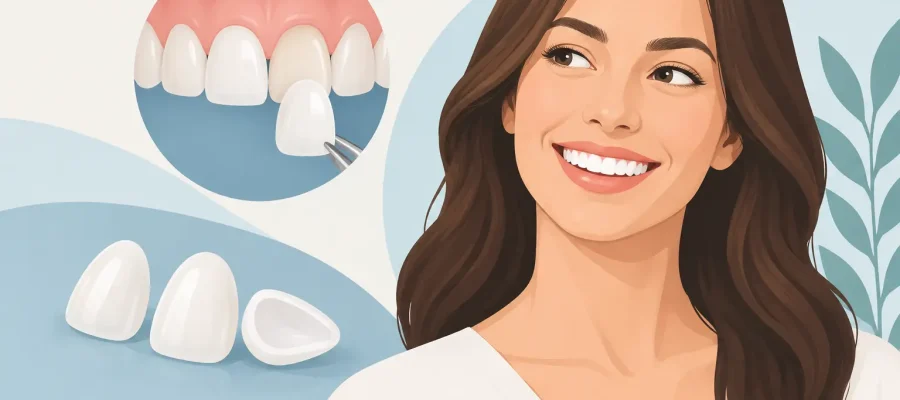
A smile can look expensive without looking natural. That usually happens when every tooth is made too white, too flat, too opaque, or too identical. So, how do e-max veneers create a natural-looking smile? The answer is not simply the material. It is the way high-quality lithium disilicate porcelain, facial analysis, digital planning, and precise hand-finishing work together to preserve the details that make real teeth look alive.
For patients planning a Hollywood Smile makeover, the goal should not be to wear a row of obvious veneers. It should be to look rested, polished, and confident in photos, meetings, and real-life conversation, while still looking like yourself.
How Do E-Max Veneers Create a Natural-Looking Smile?
E-Max veneers are ultra-thin porcelain shells made from lithium disilicate, a strong ceramic valued for its light-reflecting qualities. Unlike more opaque restorations, E-Max can allow light to move through the material in a way that resembles natural enamel. This creates depth rather than a flat, painted-white effect.
Natural teeth are not one solid color. They have a slightly deeper tone near the gumline, more translucency near the edges, and subtle texture across the front surface. A well-designed E-Max veneer can reproduce these variations. The result is a smile that catches light naturally instead of reflecting it like a single uniform surface.
This is why material selection matters, but it is only one part of the result. Even premium porcelain can look artificial when the shape, shade, thickness, or placement is wrong. The most convincing smile transformations are engineered around the individual face, lips, gums, and existing teeth.
The Details That Keep Veneers From Looking Fake
A natural-looking result comes from controlled imperfection. The goal is symmetry without making every tooth look copied and pasted.
Translucency That Mimics Enamel
Natural enamel has a translucent quality, especially at the biting edges of the front teeth. E-Max porcelain is known for reproducing this effect. Depending on the patient’s underlying tooth color and the desired final shade, the dentist can select a level of translucency that creates brightness while maintaining depth.
This requires judgment. If the underlying teeth are very dark, severely stained, or have large old restorations, a more translucent veneer may not mask the color sufficiently. In those cases, the treatment plan may require a different ceramic approach, additional whitening, or more coverage. A natural result is always a balance between hiding what needs to be hidden and preserving the optical qualities of enamel.
Shape Designed for Your Face, Not a Template
The length, width, and contour of veneers influence the entire appearance of the face. Longer teeth can create a more youthful, glamorous look. Softer corners can appear more feminine, while squarer shapes can create a stronger, more structured aesthetic. Neither option is universally right.
The best veneer design considers facial proportions, lip movement, gum display, bite, and personality. A creator who is frequently on camera may want a brighter, more defined look. A professional seeking a discreet refresh may prefer a refined version of their existing smile. The design should feel intentional, not generic.
Small details matter. The central incisors should not always be perfectly identical. The canines should not be overly rounded or overly sharp. The incisal edges should follow the curve of the lower lip when smiling. These distinctions are subtle, but they separate a signature smile from a standard set of veneers.
A Shade That Looks Bright in Every Setting
Many patients request the whitest possible shade, then worry that it will look unnatural. A bright smile can still look believable when the shade is selected with the skin tone, lip color, eye color, age, and surrounding teeth in mind.
The right shade is also affected by surface texture and translucency. A bright porcelain with natural texture can look more realistic than a slightly darker porcelain with an overly smooth, opaque finish. The aim is not to make teeth look yellow or dull in the name of “natural.” It is to create a clean, luminous white that works in daylight, restaurant lighting, and high-definition photos.
Texture and Micro-Detail
Real teeth are not perfectly smooth. They contain tiny vertical lines, gentle reflections, and slight changes in surface texture. These features are often invisible from a distance, yet they make a significant difference when someone is speaking close to you or when a camera catches the smile in natural light.
A skilled ceramic design uses micro-texture to break up reflections, creating a more enamel-like finish. The veneers can also be polished to maintain a healthy shine without producing the overly glossy, artificial look associated with poorly designed cosmetic work.
Digital Smile Design Makes the Outcome More Predictable
A beautiful result should be previewed before teeth are prepared. Digital Smile Design allows the dentist to study photographs, videos, digital scans, facial proportions, and bite relationships before finalizing the plan.
This process makes the conversation more precise. Rather than asking whether you want “natural” or “Hollywood,” the team can discuss tooth length, smile width, gum visibility, midline, brightness, and edge shape using a visual proposal. You can see how a proposed smile relates to your face before committing to the final direction.
At DRGO Smile Clinic, this planning-first approach is especially valuable for international patients. Your treatment should not feel like a surprise at the end of a trip. Digital planning, mock-ups, and try-in stages create opportunities to assess the look before the final veneers are bonded.
The Treatment Process Behind a Realistic Result
E-Max veneer treatment is usually a sequence of careful decisions, not a single cosmetic appointment. The exact timeline depends on the number of veneers, your bite, gum health, and whether additional treatments are needed.
First comes the consultation and smile analysis. The dentist examines your teeth, gums, bite, facial proportions, and goals. Existing decay, gum inflammation, grinding, or unstable bite issues need to be addressed before cosmetic work begins. Veneers are strongest and most beautiful when placed on a healthy foundation.
Next comes the smile design and preparation stage. For many patients, only a conservative amount of enamel needs to be shaped to make room for the porcelain. However, the amount of preparation varies. Teeth that are prominent, rotated, heavily restored, or very dark may need more adjustment than naturally aligned teeth. Promises of “no-prep” veneers should always be assessed carefully because adding material without creating space can make teeth appear bulky.
After preparation, a temporary design or mock-up may be used to evaluate appearance, comfort, and speech. This is where the patient can see the proposed tooth length and overall character of the smile. Once the design is approved, the final E-Max veneers are produced and individually checked for fit, shade, contour, and bite before bonding.
The bonding appointment is a precision step. Each veneer is placed with careful isolation and adhesive techniques, then refined so the edges feel smooth and the bite feels balanced. The goal is for the veneers to look integrated with the gums and neighboring teeth, not placed on top of them.
When E-Max Veneers Are the Right Choice
E-Max veneers are often an excellent option for patients with worn edges, uneven tooth shape, small gaps, discoloration that does not respond fully to whitening, minor chips, or naturally small teeth. They are particularly appealing when the patient wants a highly aesthetic front-tooth result with enamel-like light behavior.
They are not automatically the best answer for every mouth. Patients with significant grinding, very limited enamel, severe crowding, active gum disease, or complex bite problems may need additional treatment or a different restoration strategy. In some cases, orthodontics, gum contouring, crowns, or a night guard are part of protecting the final result.
The most honest cosmetic consultation does not push the same treatment on every patient. It identifies what will look natural, function properly, and remain stable over time.
Keeping Your Veneers Looking Natural
E-Max porcelain is stain-resistant, but the tissues around it still need care. Brushing twice daily with a non-abrasive toothpaste, flossing, attending professional cleanings, and avoiding habits such as biting pens or opening packages with teeth will help protect the result.
If you clench or grind, wearing a custom night guard is not optional cosmetic advice. It is a practical way to reduce pressure on veneers and natural teeth. With good care and regular monitoring, veneers can maintain their appearance for many years, though no restoration should be described as permanent or maintenance-free.
The most natural smile is not the one that announces the treatment. It is the one that fits your face so well that people notice your confidence first. Start with a detailed smile preview, ask to see the design before final bonding, and choose a plan built around your features rather than a one-size-fits-all shade chart.