


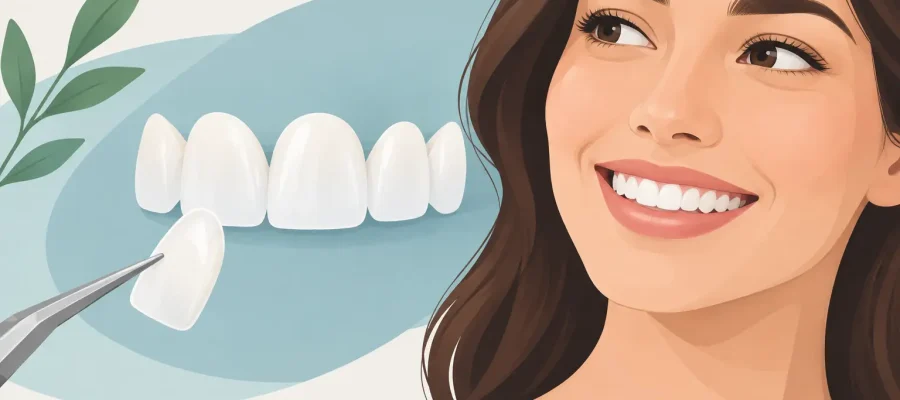
A veneer should not announce itself from across the room. It should make people notice that you look rested, polished, and more confident – then leave them wondering what changed. So, how natural can dental veneers look? With the right material, facially guided design, and disciplined clinical execution, they can be virtually indistinguishable from beautiful natural teeth.
The difference is not simply choosing a whiter shade. A believable smile is engineered around translucency, tooth proportions, gum contours, lip movement, and the small variations that make real teeth look alive. The goal is not a generic set of perfect white squares. It is a signature smile that belongs on your face.
How Natural Can Dental Veneers Look?
Modern veneers can look exceptionally natural, including in close conversation, high-resolution photos, and video. High-quality ceramic reflects and transmits light in a way that resembles enamel, especially when the dentist chooses the correct thickness and shade. The best result has depth: a slightly translucent edge, subtle internal color, and a surface texture that does not look flat or plastic.
Natural-looking does not have to mean understated. You can still choose a bright, camera-ready Hollywood Smile. The key is making the brightness look intentional rather than artificial. A more luminous shade may suit a creator, performer, or patient preparing for a wedding, but it needs to be balanced with skin tone, lip color, gum display, and the natural color character of the lower teeth.
A patient with a broad smile and strong facial features may carry a bolder design beautifully. Someone with delicate features or a narrow smile may look better with softer line angles and a less opaque shade. There is no single “best” veneer shape. There is only the design that looks credible on you.
What Makes Veneers Look Real Rather Than Obvious?
Material creates the light effect
For highly aesthetic front teeth, E-Max lithium disilicate is often selected because it offers strength with enamel-like translucency. It can recreate the way natural teeth catch light, particularly when the underlying tooth color is favorable and only a conservative amount of tooth preparation is needed.
Zirconium-based restorations can also create outstanding cosmetic results, particularly where additional strength or coverage is needed. However, material selection must be matched to the clinical situation. A very opaque material may be useful for masking severe discoloration, yet too much opacity can reduce the depth that makes a tooth look natural. Your dentist should explain this trade-off before treatment begins.
Shape must match the face, not a trend
Veneers look artificial when every tooth is overly uniform, too long, too wide, or aggressively square. Real smiles have rhythm. The central incisors lead the composition, the lateral incisors soften it, and the canines frame it. Tiny adjustments to the edge position and line angles can make a major difference in how refined the smile appears.
A natural design also respects age and personality. Extremely sharp, bright, identical teeth may be the right choice for a deliberate high-glamour transformation. For many patients, a softer contour and controlled brightness create a more timeless result. This is why selecting veneers from a photo alone is risky. A smile has to work with your proportions in motion.
Color needs dimension, not just whiteness
The most convincing veneers are rarely one flat color. Natural enamel has subtle variation from the gumline to the biting edge. The edges may appear slightly translucent, while the center of the tooth has more body and brightness. Skilled ceramic work can layer these effects so the final restorations look luminous under daylight, restaurant lighting, and flash photography.
The shade should also harmonize with your lower teeth. If only the upper front teeth are being treated, a dramatic mismatch can make veneers more noticeable. Whitening may be recommended before final shade selection so the entire smile can be brought into a balanced range.
Gum contours frame the result
Even perfectly made veneers can look unfinished if the gumline is uneven, inflamed, or asymmetrical. Gum aesthetics are part of smile design, not an afterthought. In some cases, subtle gum contouring creates a more balanced frame and allows the veneers to appear properly proportioned.
Healthy gums are equally essential. Bleeding, swelling, and untreated periodontal concerns must be addressed before cosmetic treatment. Premium aesthetics begin with stable biology.
The Planning Stage Is Where Natural Results Begin
The final veneers are only as good as the plan behind them. A predictable cosmetic workflow starts by studying your facial proportions, bite, gum display, existing tooth structure, and smile goals. Photos alone help, but a comprehensive assessment provides the details needed to make clinical decisions safely.
Digital Smile Design can turn those details into a visible plan before veneers are finalized. With digital scans, facial analysis, and 3D previews, you can evaluate tooth length, shape, spacing, and smile line in context. This is especially valuable for international patients who want clarity before traveling for treatment.
At DRGO Smile Clinic, this planning-first approach is designed to replace guesswork with a smile preview that can be discussed, refined, and approved. It gives the clinical team a shared blueprint and gives you a meaningful role in the design of your result.
A well-managed veneer journey typically moves through four practical stages. First comes consultation and digital planning. Next, teeth are prepared conservatively when appropriate, and a mock-up or temporary design may be used to test the look. Then the ceramic veneers are custom fabricated or digitally milled according to the approved plan. Finally, each veneer is tried in for fit, color, and harmony before it is permanently bonded.
The try-in is not a formality. It is the final checkpoint for a premium result. The dentist assesses how the veneers look when you speak, smile fully, and relax your lips. Small refinements at this stage can separate a good result from a smile that looks completely at home on your face.
The Trade-Off: Natural Veneers Require Restraint
Patients sometimes request the brightest possible shade, the longest teeth, and total uniformity. Those choices can be striking, but they may not read as natural. The more dramatic the transformation, the more careful the design must be.
Another consideration is tooth preparation. Some cases are suitable for ultra-thin or minimal-prep veneers, while others require more preparation to correct major alignment issues, bulky existing restorations, dark tooth color, or large shape changes. A responsible dentist will not promise no-prep veneers to every patient, because adding ceramic without creating space can make teeth look thick.
Veneers are also not the right solution for every concern. Active tooth decay, gum disease, untreated grinding, or a severely unstable bite may need treatment first. Patients who clench or grind may benefit from a night guard after veneers are placed. This protects both the ceramics and the investment behind the smile.
How to Avoid the “Fake Veneer” Look
Start by being specific about the feeling you want, not only the celebrity smile you like. Do you want polished and executive? Soft and youthful? Bright enough for content creation? Natural enough that no one can identify the treatment? These priorities guide the design more effectively than asking for “perfect teeth.”
Ask to see the planned shape and shade before final placement. Discuss whether you prefer subtle character, such as gentle edge translucency, or a more uniform luxury finish. Be honest about your lifestyle too. A television-facing professional may choose a brighter smile than someone whose priority is an undetectable everyday result.
Most importantly, choose a clinic that plans the entire smile, not just individual teeth. The right number of veneers depends on how many teeth show when you smile broadly. Treating too few teeth can create color or shape transitions that are difficult to hide. Treating more teeth than necessary can be unnecessarily invasive. Precision means choosing the right scope, not the biggest one.
A Smile That Looks Like You, Refined
The most natural veneer result is not one that looks untouched. It is one that looks believable, balanced, and completely aligned with the way you want to be seen. When the materials, facial design, bite, and gum aesthetics are handled with equal care, veneers can deliver a striking transformation without losing the individuality that makes your smile yours.
Before committing, request a personalized digital preview and use it to ask one simple question: would this still look like me on my best day? That answer should guide every decision that follows.