


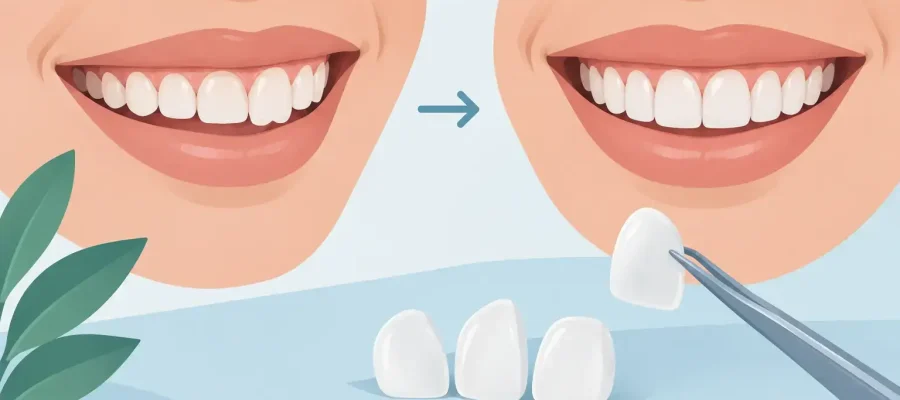
A tooth can be perfectly healthy and still disrupt the entire smile. One tooth may look too short, another too narrow, or the edges may appear uneven in photos and video calls. So, can veneers correct uneven tooth shapes? In many cases, yes. Custom-designed porcelain veneers can reshape the visible front surface of teeth to create a more balanced, proportionate smile without changing teeth that do not need treatment.
For patients pursuing a refined Hollywood Smile, the goal is not to make every tooth look identical. It is to create harmony between tooth length, width, color, gumline, lips, and facial features. That requires planning, not a one-size-fits-all set of veneers.
How Veneers Correct Uneven Tooth Shapes
A veneer is a thin, custom restoration bonded to the front of a natural tooth. High-quality porcelain, including E-Max in appropriate cases, can be shaped with exceptional precision. It allows a dentist to adjust the appearance of a tooth that looks chipped, undersized, overly pointed, worn down, or irregularly contoured.
For example, veneers may make naturally small lateral incisors appear proportional to the central front teeth. They can soften sharp canine teeth, rebuild worn biting edges, or add length to teeth that create an uneven smile line. They can also close small spaces while improving color and surface texture at the same time.
The result is often more than a cosmetic correction. When tooth proportions are planned well, the smile can look calmer, healthier, and more intentional. The change should still look like you, only more polished.
Which Uneven Shapes Can Veneers Improve?
Veneers are particularly effective when the concern is visible shape rather than major tooth movement or structural damage. They can improve teeth with minor chips, uneven incisal edges, asymmetrical front teeth, small or peg-shaped teeth, mild wear, and teeth that look too short compared with neighboring teeth.
They may also help when one side of the smile appears different from the other. A skilled smile design can subtly adjust tooth dimensions so the left and right sides feel balanced without producing an artificial, overly uniform result.
Color often matters alongside shape. If teeth have old bonding, discoloration, or uneven enamel tones, veneers can provide a consistent shade while correcting their contours. This is why they are frequently chosen for comprehensive smile makeovers rather than isolated cosmetic fixes.
What Veneers Cannot Fix Alone
Veneers have limits, and a trustworthy plan should make those limits clear. If teeth are severely rotated, crowded, or positioned far forward or backward, orthodontic treatment may be the more conservative first step. Trying to mask significant misalignment with bulky veneers can compromise both appearance and long-term gum health.
A tooth with a large fracture, extensive decay, a root canal, or substantial loss of structure may need a crown instead of a veneer. Crowns cover the tooth fully and can provide stronger protection when the tooth itself is weakened.
Bite is another deciding factor. Patients who grind or clench their teeth need a careful assessment before cosmetic treatment. Veneers can still be possible, but the treatment plan may include bite adjustment, protective night guards, or a different restoration type. A beautiful smile should also be designed to function comfortably.
The Difference Between Quick Camouflage and Smile Design
Not all veneer work is equal. The visible correction may look simple, but the design process determines whether the result looks natural and lasts.
An experienced cosmetic dentist considers the width-to-length ratio of each tooth, how much tooth shows when you speak and smile, the curve of the lower lip, facial symmetry, and the gumline. A tooth that looks ideal in a close-up photograph may look too long or too square once it is seen in the full face.
Digital Smile Design brings clarity to this process. Digital scans, photographs, and 3D planning can be used to create a proposed smile before final treatment begins. You can see how adjusted tooth shapes may look in relation to your face and discuss changes before the porcelain is made.
For international patients, this level of visualization is especially valuable. It replaces uncertainty with a clear aesthetic direction before travel and helps keep the clinical plan focused, efficient, and predictable.
What the Veneer Process Looks Like
The first stage is a detailed consultation and smile analysis. Your dentist checks enamel quality, gum health, bite, existing restorations, and the reason the teeth look uneven. Sometimes the best answer is a few veneers. In other cases, a complete upper smile zone creates the most balanced outcome.
Next comes the digital design phase. The proposed tooth shapes, shade, and smile line are planned around your goals. If you want a bright, camera-ready finish, that can be incorporated. If you prefer a softer, natural look, the design can preserve more translucency and individual character.
Preparation is then kept as conservative as the case allows. A small amount of enamel may be refined to create space for porcelain and prevent a thick or over-contoured result. Some minor reshaping cases may need very little preparation, but no-prep veneers are not automatically the best choice for every tooth.
Before final bonding, a try-in allows the dentist to evaluate fit, color, shape, speech, and smile balance. This is the point to confirm details such as edge length and tooth character. Once the veneers are bonded, they become a durable part of the smile design.
How Many Veneers Are Needed for Uneven Teeth?
There is no universal number. One veneer can correct a single small or misshapen tooth, but matching one veneer perfectly to surrounding natural enamel can be demanding. If several front teeth vary in shape or color, treating a group of teeth may produce a more consistent result.
Many smile makeovers focus on the teeth visible when you smile broadly, often six to ten teeth in the upper arch. The lower teeth may be addressed when they are highly visible, worn, or uneven. The right number depends on your smile width, facial proportions, existing tooth color, and the level of transformation you want.
The best plans avoid treating teeth simply to increase the count. Every restoration should have a reason within the final design.
Veneers, Bonding, Orthodontics, or Crowns?
Composite bonding can be an excellent option for small chips or slight edge irregularities. It is usually less invasive and may cost less initially, but it can stain, chip, and require maintenance sooner than porcelain. Veneers generally offer greater color stability and more precise aesthetic control.
Orthodontics is better when tooth position is the central problem. Aligners may create the space and alignment needed to minimize the amount of reshaping required later. Some patients choose orthodontics alone; others combine it with veneers for final refinement.
Crowns are reserved for teeth needing more structural coverage. Placing a crown on a healthy tooth purely for a minor shape issue is usually not the most conservative approach. The right treatment protects natural tooth structure while delivering the visual result you expect.
Making the Result Last
Porcelain veneers are durable, but they are not maintenance-free. Good brushing, flossing, routine hygiene visits, and a night guard if you grind are essential. Avoid using veneers to open packaging, bite hard objects, or chew ice.
Your gums also frame the work. If gum levels are uneven, gum contouring may be recommended before veneers so the final teeth do not appear mismatched even when their shapes are corrected. This small step can make a major difference in a high-end smile makeover.
At DRGO Smile Clinic, veneer cases are planned as a complete aesthetic and functional journey, with digital previews and carefully managed treatment stages for patients traveling to Istanbul. The objective is not simply straighter-looking teeth. It is a signature smile with proportions that feel right every time you see yourself on camera.
Uneven tooth shapes do not have to dictate how you smile. Start with a detailed evaluation, ask to see the proposed design, and choose the solution that respects both your natural teeth and the result you want to carry into every important room.