


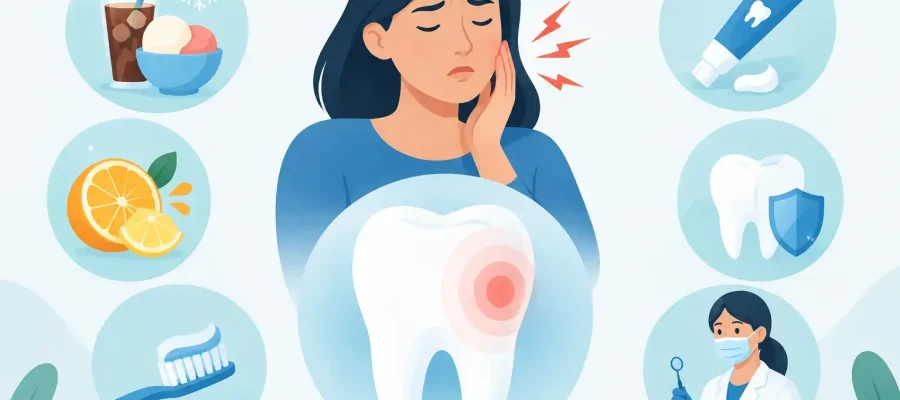
That sharp flash of pain when iced water touches a tooth can make a coffee date, a business lunch, or a vacation meal feel far less effortless. Teeth sensitivity: common causes and available treatments are not just a comfort question. For patients considering whitening, veneers, crowns, or a complete smile makeover, sensitivity can reveal an issue that deserves precise planning before any aesthetic work begins.
The good news is that sensitive teeth are highly manageable in many cases. The right answer depends on why the tooth is reacting, whether the pain is brief or lingering, and whether it affects one tooth or several. A clinical examination turns a vague symptom into a clear treatment path.
Teeth Sensitivity: Common Causes and Available Treatments
Sensitivity happens when the protective outer layer of a tooth no longer fully shields the softer layer beneath it. That inner layer, called dentin, contains microscopic channels connected to the nerve. Cold, heat, sweetness, acidity, air, or pressure can move through those channels and create the familiar sudden sting.
Not every painful tooth is “sensitive” in the same way. A quick sensation that ends as soon as the cold drink is gone is different from pain that lingers, wakes you at night, or strikes when you bite down. That distinction matters because it changes the recommended treatment.
Enamel erosion and wear
Enamel is exceptionally strong, but it can gradually wear down. Frequent acidic drinks, citrus, reflux, aggressive brushing, and years of natural wear can leave dentin more exposed. People who sip sparkling water, energy drinks, soda, or lemon water throughout the day may be exposing their teeth to repeated acid attacks, even when they otherwise maintain a healthy routine.
Brushing harder is not the solution. In fact, a firm brush or abrasive whitening toothpaste can worsen worn enamel and gum recession. A dentist may recommend a low-abrasion toothpaste, fluoride support, dietary adjustments, and a gentler brushing technique with a soft-bristled brush. If wear is advanced, bonded restorations, veneers, or crowns may be considered to restore protection and appearance, but only after the underlying cause is controlled.
Gum recession and exposed roots
When gums recede, the root surface becomes visible. Roots do not have the same enamel covering as the visible part of the tooth, so they can react strongly to cold air, brushing, and temperature changes. Recession can result from periodontal disease, thin gum tissue, brushing trauma, orthodontic movement, grinding, or simply anatomy.
Treatment depends on severity. Mild sensitivity may improve with desensitizing toothpaste, fluoride varnish, or a protective bonding agent applied in the clinic. If recession is significant or continues to progress, gum treatment or grafting may be the more durable choice. For smile-makeover patients, gum health and gumline symmetry should be assessed before veneers or crowns are designed. Beautiful porcelain cannot compensate for unstable soft tissue.
Cavities, leaking fillings, and cracked teeth
Sensitivity isolated to one tooth deserves particular attention. A cavity, a worn or fractured filling, or a small crack can let temperature and bacteria reach deeper layers of the tooth. Pain during chewing, sensitivity to sweets, or a sharp reaction when releasing a bite can point to a crack or failing restoration.
These conditions do not usually resolve with toothpaste alone. Depending on the diagnosis, treatment may involve removing decay and placing a new filling, replacing an old restoration, sealing a crack, or protecting the tooth with a custom crown. If the nerve is inflamed beyond recovery, root canal treatment may be needed before the final crown. Treating the tooth early often preserves more natural structure and keeps the solution simpler.
Teeth grinding and bite pressure
Many patients grind or clench without realizing it, especially during sleep or periods of high stress. This repeated pressure can create small fractures, wear the biting edges, loosen restorations, and make teeth sensitive to pressure and temperature.
A custom night guard can protect the teeth from further damage. Bite analysis is equally valuable when planning crowns, veneers, or full-arch rehabilitation. A cosmetic result should look refined, but it also needs to function under real-world chewing forces. Digital planning helps the dentist design the right shape, thickness, and bite relationship before final restorations are placed.
Whitening-related sensitivity
Professional whitening can temporarily increase sensitivity because peroxide moves through enamel and reaches the dentin. This is common, usually short-lived, and should not be confused with permanent damage. Still, it is a reason to choose supervised whitening rather than overusing strong at-home products.
A dentist may adjust the concentration, shorten wear time, space out sessions, or apply desensitizing agents before and after treatment. Patients with active cavities, gum recession, cracks, or existing severe sensitivity should be evaluated before whitening. Whitening is most successful when the teeth and gums are stable first.
How Dentists Identify the Real Cause
The most polished result begins with diagnosis, not a generic sensitivity product. During an evaluation, a dentist examines enamel wear, gum levels, restorations, bite forces, and signs of decay or cracks. X-rays may be used to check areas that cannot be seen directly, including decay between teeth and changes around the root.
The conversation is just as useful. Your dentist may ask whether pain comes from cold, heat, sweets, brushing, or biting, and whether it lasts seconds or minutes. They may also ask about reflux, jaw tension, whitening habits, diet, and previous dental work. These details guide the treatment plan.
For international patients seeking aesthetic or restorative dentistry, this diagnostic stage should happen before the treatment timeline is finalized. At DRGO Smile Clinic, digital smile planning can show the aesthetic direction of a case, while the clinical assessment confirms that every tooth supporting that design is healthy enough for long-term results.
Available Treatments, From Simple Relief to Full Restoration
For generalized mild sensitivity, desensitizing toothpaste is often the first step. Ingredients such as potassium nitrate can calm nerve response, while stannous fluoride can help protect exposed dentin. Results are not always immediate. Daily use for several weeks is often needed, and the toothpaste should not be rinsed away aggressively right after brushing.
In-office fluoride varnish, desensitizing gels, and resin bonding can provide faster protection for exposed areas. These are conservative options when the tooth is structurally sound but the dentin is vulnerable.
When sensitivity is caused by decay, fractures, worn restorations, or major enamel loss, restorative care is more appropriate. A filling can close a cavity; a crown can reinforce a weakened tooth; a veneer can improve the visible surface of selected teeth when enough healthy structure remains. The ideal option depends on tooth strength, bite, gum health, and the amount of correction required. Veneers are not automatically the best choice for every sensitive tooth, and a crown is not always necessary when a smaller restoration will protect the area.
If the dental pulp is severely inflamed or infected, root canal treatment removes the damaged tissue inside the tooth and allows it to be restored securely. This is often the right way to save a natural tooth that would otherwise be lost. Afterward, a crown may be recommended for back teeth or structurally compromised teeth to prevent fracture.
What to Do Before Your Appointment
Until you are examined, switch to a soft brush and use gentle, circular brushing motions along the gumline. Choose a sensitivity toothpaste and avoid highly abrasive charcoal or aggressive whitening formulas. Try not to brush immediately after acidic foods or drinks. Rinsing with water first and waiting about 30 minutes can reduce additional wear on softened enamel.
Avoid testing the tooth repeatedly with ice, hot drinks, or hard foods. If a tooth is cracked, repeated pressure can make the damage worse. Seek prompt dental care if you have facial swelling, fever, a broken tooth, spontaneous throbbing pain, or pain that lasts well after a cold or hot trigger is removed.
Sensitivity is a signal, not something to simply tolerate. A precise diagnosis can protect your comfort now and create the stable foundation needed for whitening, veneers, crowns, or a complete signature smile. The next time a cold drink causes that sudden jolt, let it be the reason to have the tooth assessed – and to choose a treatment plan designed for both confidence and longevity.