


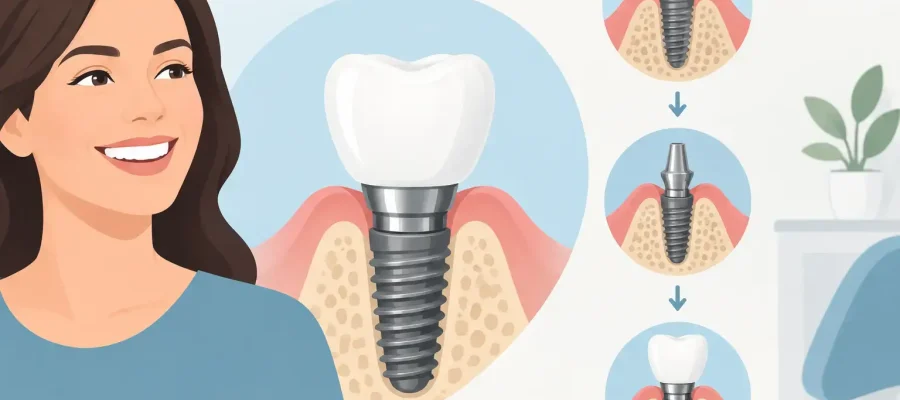
A missing tooth can change more than your bite. It can alter how you smile in photos, how you speak in meetings, and how confidently you show up for a milestone event. So, what is immediate loading in dental implant treatment? It is a carefully planned approach that allows a temporary fixed tooth or bridge to be attached to a dental implant shortly after placement, often on the same day.
The key word is temporary. Immediate loading can give you visible, fixed teeth without waiting months for a removable denture or an empty space. But the final, custom-designed restoration is fitted only after the implant has had time to integrate securely with the jawbone. The result can be a faster path to a complete smile, provided the biology, bite, and treatment plan support it.
What Is Immediate Loading in Dental Implant Treatment?
A dental implant is a small titanium post placed in the jawbone to replace a missing tooth root. Traditionally, the implant is left undisturbed beneath the gum for several months before a crown or bridge is connected. That healing period allows bone cells to grow around the implant in a process called osseointegration.
With immediate loading, the clinician places the implant and attaches a temporary crown, bridge, or full-arch prosthesis during the same appointment or within a very short period afterward. For a single front tooth, that may mean you leave with a natural-looking temporary tooth rather than a visible gap. For a full arch, it may mean leaving surgery with a fixed bridge instead of a removable denture.
Immediate loading is not a shortcut around healing. The implant still needs time to integrate. The difference is that a precisely engineered temporary restoration protects your appearance and helps you function while that healing happens. It is designed to be gentle on the new implant, especially during the first weeks.
Immediate Loading vs. Immediate Implant Placement
These terms are often used together, but they describe different parts of treatment.
Immediate implant placement means the implant is placed immediately after a damaged or failing tooth is extracted. Immediate loading means a tooth or bridge is attached to the implant soon after placement. A patient may receive both on the same day, but one does not automatically guarantee the other.
For example, a front tooth may be extracted and replaced with an implant immediately. If the bone is stable, the bite is favorable, and the implant achieves strong initial stability, a temporary crown may also be fitted that day. If those conditions are not present, placing the implant without loading it may be the safer choice.
This distinction matters because a premium result is not defined by speed alone. It is defined by placing the right restoration at the right time for long-term stability, gum health, and natural aesthetics.
Who Is a Good Candidate for Immediate Loading?
Eligibility comes down to clinical stability, not just a patient’s schedule. During planning, the dental team evaluates 3D scans, bone volume and density, gum condition, bite forces, medical history, and the position of surrounding teeth. The goal is to determine whether an implant can be placed with enough initial fixation to support a temporary restoration safely.
Immediate loading is often a strong option for patients who have healthy gums, sufficient bone, good overall health, and a controlled bite. It can be especially valuable for visible front teeth and for full-arch implant treatment, where fixed temporary teeth can dramatically improve comfort and confidence right away.
It may not be the best approach when there is active infection, severe bone loss, uncontrolled gum disease, heavy grinding, or insufficient implant stability at surgery. Smoking, poorly managed diabetes, and certain medications can also affect healing and need to be discussed honestly during consultation.
For full-arch cases such as All-on-4 or All-on-6, immediate loading is frequently possible because multiple implants work together to support a fixed provisional bridge. Even then, the implants must meet stability requirements, and the temporary bridge must be designed to distribute pressure carefully. Every case earns its same-day result through planning.
How the Immediate Loading Process Works
The process begins well before treatment day. Digital imaging and 3D planning show the available bone, sinus position, nerve pathways, and ideal implant angles. For aesthetic cases, a Digital Smile Design can help map tooth shape, length, shade, gum display, and facial harmony before any clinical work begins.
On the day of treatment, any failing tooth is removed as gently as possible when extraction is required. The implant is then placed in the planned position. The clinician measures primary stability, which describes how firmly the implant is anchored in bone at that moment. If stability is high enough and all other conditions are favorable, the immediate-loading protocol can move forward.
A temporary crown or bridge is then fabricated or adjusted to fit. In a single-tooth case, the temporary is often kept slightly out of heavy biting contact. This protects the implant while still restoring your smile. In a full-arch case, the provisional bridge is secured to the implants and adjusted so your bite is balanced and controlled.
The temporary restoration is not simply a placeholder. It helps shape the gum line, supports facial appearance, and gives the dental team valuable information about speech, comfort, and bite before the final teeth are made. After a healing period, the team reassesses implant integration and creates the final crown or bridge from materials selected for durability and aesthetics, such as zirconia or ceramic.
The Benefits of Fixed Teeth Immediately
The clearest benefit is emotional: you do not have to hide your smile while waiting for healing. For international patients, this can be especially meaningful. You can return home with a fixed temporary restoration rather than trying to manage a removable appliance during travel, work, or social events.
Immediate loading can also support gum contours in the smile zone. When a properly designed temporary crown is placed after extraction, it can help guide the soft tissue as it heals. This is one reason immediate protocols can be valuable for patients seeking highly natural results in visible areas.
There is also a practical benefit for full-mouth rehabilitation. A fixed provisional bridge can provide a major quality-of-life change quickly, allowing patients to speak more naturally and enjoy a carefully managed soft-food diet without the instability of traditional dentures.
Still, “fixed immediately” does not mean “eat anything immediately.” Healing implants need protection. Following the prescribed diet, avoiding biting hard foods with the temporary teeth, attending follow-up appointments, and using a night guard when recommended all protect the investment you have made in your new smile.
What Are the Trade-Offs?
Immediate loading demands more precision from both the clinical team and the patient. The temporary restoration must fit accurately, the bite must be managed carefully, and the patient must follow healing instructions. A beautiful temporary bridge can fail if it is overloaded too early by hard foods, clenching, or grinding.
A delayed-loading protocol may be preferable in complex cases because it gives the implant a quieter healing environment. That is not a lesser result. In fact, choosing a staged approach when the bone or implant stability calls for it may be the most predictable way to protect long-term success.
Patients should also understand that temporary teeth are not identical to final teeth. They are designed for healing, appearance, and controlled function. Final restorations are refined after the gums settle and the implants are confirmed to be stable, which allows for more precise adjustments in shape, color, translucency, and bite.
Planning Immediate Loading for Dental Travel
For patients traveling to Istanbul, immediate loading can make implant treatment feel more manageable, but it requires organized pre-travel planning. Sharing recent X-rays, medical history, and clear photos before arrival can help the team make an initial assessment. A full examination and 3D scan at the clinic still determine the final treatment decision.
Allow enough time in your itinerary for surgery, temporary restoration fitting, bite adjustments, and post-treatment review. You should also plan for a soft-food period and avoid scheduling demanding activities immediately after surgery. A well-managed treatment journey balances efficiency with the clinical time needed to protect the outcome.
At DRGO Smile Clinic, immediate implant protocols are planned around digital diagnostics, surgical stability, and a smile design that looks intentional from the first day, not rushed for the camera.
The best question is not simply whether you can get teeth in one day. Ask whether your bone, bite, gum health, and lifestyle support fixed temporary teeth safely. When the answer is yes, immediate loading can turn a long period of uncertainty into a confident, carefully controlled first step toward your final smile.