


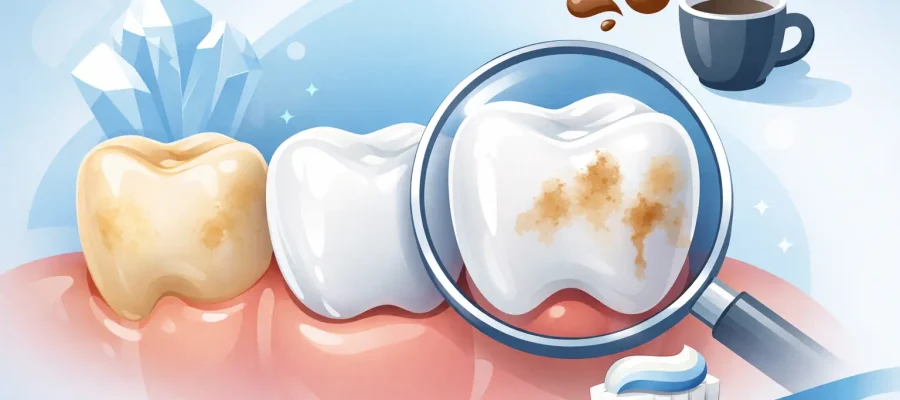
Coffee at 8, red wine at dinner, and the occasional turmeric-heavy meal – if you are investing in a new smile, this question matters: do zirconium crowns stain? The short answer is that high-quality zirconium crowns are highly stain-resistant, far more than natural enamel in many cases. But stain-resistant is not the same as stain-proof, and the final result depends on material quality, surface finish, oral hygiene, and what is happening around the crown, not just in the crown itself.
For patients choosing cosmetic dentistry, especially as part of a fast, high-precision smile makeover, this distinction is worth understanding. A crown that looks bright on day one should still look refined months and years later. That is exactly why material choice, lab standards, and polishing protocol matter.
Do zirconium crowns stain easily?
Not usually. Zirconium crowns, more accurately called zirconia crowns in dental materials science, are known for their dense structure and smooth surface. Because the material is non-porous compared with natural tooth structure, pigments from coffee, tea, cola, berries, tobacco, and wine do not penetrate it easily.
That gives zirconium an advantage in cosmetic cases. Natural teeth can absorb and hold stains over time, especially if enamel is worn or naturally porous. A well-made zirconium crown is much less likely to pick up that type of deep discoloration.
Still, there are a few real-world situations where people think their zirconium crowns have stained when the issue is slightly different. Surface buildup, poor polishing, staining at the crown margins, or discoloration of nearby natural teeth can make the crown appear darker or more yellow than expected.
What actually causes a zirconium crown to look discolored?
In most cases, the crown itself is not absorbing pigment. The more common issue is external staining on the surface or around the edges.
Plaque and tartar are the first culprits. If they accumulate around a crown, they can trap pigments from food and drinks. That can create a yellow or brown appearance, especially near the gumline. Patients sometimes assume the zirconium has changed color, when what they are seeing is buildup sitting on top of the restoration.
The second issue is surface texture. A premium zirconium crown should be carefully polished and, when indicated, glazed to create a smooth finish. A rougher surface holds onto pigments more easily. This is one reason precision manufacturing matters. The crown is not just about shade matching on delivery. It is about how that finish performs after months of real use.
The third issue is contrast. If surrounding natural teeth stain over time but the crown stays bright, the smile can start to look uneven. Some patients describe that as the crown staining, when the opposite is true – the crown stayed stable while the nearby teeth changed.
Are zirconium crowns more stain-resistant than porcelain?
It depends on the type of restoration, but zirconium is generally one of the strongest and most color-stable options in modern dentistry. Traditional porcelain-fused crowns can still look excellent, but they may be more vulnerable to chipping, wear, or surface changes over time depending on the design and quality. Monolithic zirconium crowns are especially valued because they combine durability with strong stain resistance.
For cosmetic patients, this matters for two reasons. First, you want brightness that lasts. Second, you want a restoration that can hold up under everyday function without losing its finish quickly.
That said, not every zirconium crown is created at the same standard. The quality of the block, the milling accuracy, the final contouring, and the polishing all influence how the crown looks long term. The material is excellent, but execution still decides the outcome.
Do zirconium crowns turn yellow over time?
A properly made zirconium crown should not turn yellow in the way natural teeth often do. Zirconia is color-stable, so it does not usually undergo the gradual internal discoloration people associate with aging enamel.
If a crown starts to look yellow, there is usually another explanation. It may be plaque film, tartar, smoking-related residue, dehydration during the original shade check, or recession at the gumline exposing the edge of the restoration or the underlying tooth structure.
This is why cosmetic planning needs to go beyond simply picking a white shade. The shape of the crown, the transition at the gumline, and the harmony with adjacent teeth all affect how bright and natural the final smile appears over time.
Can coffee, tea, and red wine stain zirconium crowns?
These drinks are far less likely to stain zirconium than they are to stain natural teeth. If you drink them daily, though, some surface residue can still collect on the crown, especially if oral hygiene is inconsistent or the crown surface is not polished to a high standard.
Think of it this way: pigments may cling to buildup on the crown, but they usually do not soak into the zirconium itself. That means professional cleaning can often restore the brighter appearance quite easily.
Smoking is similar. Nicotine and tar tend to leave stubborn external deposits, particularly along the gumline. Again, this does not necessarily mean the zirconium material has changed color internally.
How to keep zirconium crowns bright
Maintenance is straightforward, but consistency matters. Brush thoroughly twice a day with a non-abrasive toothpaste, floss carefully around the crown, and stay current with professional cleanings. If you use highly abrasive whitening pastes or charcoal products, you may create unnecessary surface wear on surrounding teeth and restorations, which can affect the overall polish and appearance.
It also helps to rinse with water after coffee, tea, or red wine if you consume them often. You do not need to live like a dental monk to protect zirconium crowns, but small habits preserve a cleaner, more polished finish.
For patients who want a very bright smile, it is smart to think about the whole smile rather than one restoration in isolation. Natural teeth can be whitened, but crowns do not bleach. That means if your adjacent teeth darken and you whiten them later, the crown shade still needs to match the final plan from the start.
Why the clinic and lab process matter so much
When patients ask whether zirconium crowns stain, they are really asking a bigger question: will my investment still look premium after the treatment is over?
The answer depends heavily on planning and manufacturing standards. High-end clinics use digital design, controlled shade planning, and precision milling to produce crowns with better fit and smoother surfaces. That smoother finish is not a minor detail. It directly affects how easily the restoration picks up external deposits and how polished it continues to look under bright light, in photos, and in daily life.
For international patients coming for cosmetic treatment on a tight schedule, speed should never mean compromise. Same-visit or short-stay crown workflows only perform at a premium level when they are backed by disciplined preparation, advanced CAD/CAM systems, and careful final finishing. That is where experienced smile design teams create a different class of result.
When a zirconium crown may need attention
If your crown looks darker, duller, or more opaque than before, it is worth having it checked. Sometimes the fix is simple – a professional cleaning and polish. In other cases, the issue may be gum recession, margin staining, bite wear, or mismatch with neighboring teeth.
A good cosmetic dentist will not just ask whether the crown is intact. They will look at how it performs within the full smile, how it reflects light, and whether the gum frame still supports the aesthetic result. That level of detail is what keeps a smile looking engineered, not just repaired.
At DRGO Smile Clinic, this is why zirconium cases are planned as complete aesthetic outcomes, not one-off restorations. Patients are not only buying a crown. They are buying a smile that needs to hold up in person, on camera, and over time.
So, do zirconium crowns stain? Not easily, and not in the way most people fear. High-quality zirconium crowns are one of the most reliable options for patients who want brightness, durability, and a polished finish that keeps its edge. The smartest move is not just choosing zirconium. It is choosing a treatment process precise enough to let the material perform at its best.