


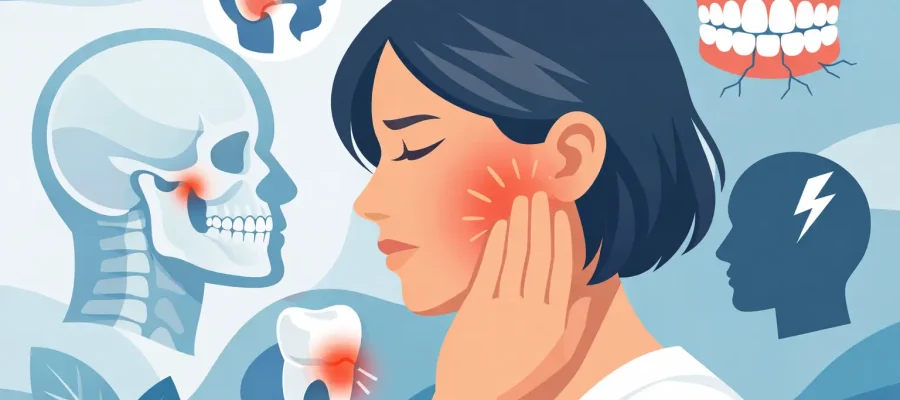
Jaw pain rarely shows up at a convenient time. It can start as a dull ache during dinner, a sharp click when you yawn, or pressure near the ear that makes you wonder whether the problem is your teeth, your joint, or something deeper. If you are asking what causes jaw pain, the answer is not always simple – but the pattern of your symptoms usually points in the right direction.
In dentistry, jaw pain matters for two reasons. First, it can affect daily basics like eating, speaking, and sleeping. Second, it can be a sign that something mechanical, muscular, or dental is no longer working in balance. For patients considering veneers, crowns, implants, or a full smile makeover, identifying the source of jaw tension is especially important because the foundation of a beautiful result is stable function.
What causes jaw pain most often?
The most common causes fall into a few categories: jaw joint dysfunction, teeth grinding, dental infection, bite imbalance, muscle strain, and referred pain from nearby structures like the sinuses or ears. These issues can feel surprisingly similar, which is why self-diagnosis often misses the real cause.
The jaw itself is a high-performance system. It includes the temporomandibular joint, or TMJ, the chewing muscles, the teeth, and the way the upper and lower arches meet. When one part is overloaded, the rest of the system compensates. That is why jaw pain may start in the joint but feel like a toothache, or begin as clenching at night and show up as morning headaches.
TMJ disorders
One of the leading answers to what causes jaw pain is temporomandibular joint dysfunction. This joint works like a sliding hinge, allowing you to open, close, and move your jaw side to side. When the joint becomes inflamed, misaligned, or stressed, you may notice clicking, popping, stiffness, or pain in front of the ear.
Some people have occasional clicking with no pain at all. Others develop locking, limited opening, or soreness that worsens when chewing. TMJ problems can come from grinding, stress, arthritis, trauma, or bite instability. The key detail is that not every clicking jaw needs aggressive treatment, but persistent pain or restricted movement deserves a proper exam.
Teeth grinding and clenching
Grinding and clenching, also called bruxism, is another major cause. Many patients do it during sleep and do not realize it until they wake up with a tight jaw, worn teeth, or headaches. Stress is a common trigger, but so are sleep issues, certain medications, and bite irregularities.
This kind of overload does not just affect the muscles. It can flatten enamel, crack restorations, and place pressure on the jaw joints. For aesthetic and restorative patients, this matters because untreated bruxism can shorten the lifespan of veneers, crowns, and even implant restorations if the forces are not managed correctly.
Dental infections and tooth problems
Sometimes jaw pain is not really a joint problem at all. A deep cavity, cracked tooth, gum infection, or abscess can send pain into the jawbone and surrounding tissues. In these cases, the pain may feel throbbing, localized, or worse when biting.
A dental infection often comes with other clues, such as swelling, bad taste, heat sensitivity, or pain that seems to pulse. If the infection spreads, the discomfort can become more intense and more urgent. This is one of the situations where waiting can turn a manageable issue into a more complex one.
Bite problems and misalignment
Your bite is more influential than most people realize. When the teeth do not meet evenly, the jaw muscles may work harder to find a comfortable position. Over time, that compensation can create fatigue, soreness, and joint stress.
This does not mean every slightly uneven bite causes pain. Many people adapt well. But when bite imbalance combines with clenching, missing teeth, worn enamel, or poorly fitted dental work, symptoms become more likely. Patients who have had old crowns, shifting teeth, or recent dental changes sometimes notice jaw discomfort because the system is no longer distributing force evenly.
In high-end restorative dentistry, this is why planning matters. A smile should not only look refined in photos. It should also function smoothly under daily pressure. Precision bite design is part of protecting comfort, not just aesthetics.
Muscle strain and lifestyle habits
Jaw muscles can become overworked for simple reasons. Chewing gum constantly, eating very hard foods, holding tension in the face, nail biting, or even resting your chin on your hand can contribute. Long hours at a desk with poor posture can also play a role because neck and shoulder tension often feeds into the jaw.
This is where jaw pain becomes a bit less dramatic but still disruptive. The discomfort may be mild, recurring, and worse during stressful periods. You may not see swelling or obvious tooth damage, but the muscles feel tired, tender, or tight. For some patients, the pain is strongest first thing in the morning or late at night after a demanding day.
What causes jaw pain besides dental issues?
Not every case starts in the mouth. Sinus pressure can create pain in the upper jaw, especially around the back teeth. Ear conditions may produce discomfort close to the jaw joint. Nerve-related pain, arthritis, headaches, and previous facial injury can also be involved.
That is why location alone is not enough to identify the source. Pain near the ear is not always an ear problem. Pressure in the upper jaw is not always a tooth problem. A focused dental and joint assessment helps separate what is actually causing the pain from where the pain is being felt.
Wisdom teeth and eruption issues
For younger adults, erupting or impacted wisdom teeth can be part of the picture. When these teeth do not have enough room, they may create soreness, gum inflammation, and pressure toward the back of the jaw. Sometimes the discomfort feels diffuse rather than sharp, which makes it easy to confuse with TMJ pain.
The timing matters here. If the pain is concentrated at the back, comes with swollen gums, or flares during chewing, wisdom teeth should be evaluated. Not every wisdom tooth needs removal, but infected or poorly positioned ones often do.
When jaw pain needs prompt attention
Some jaw pain can be monitored briefly. Some should be seen quickly. If you have swelling, fever, difficulty opening your mouth, pain with chewing that is getting worse, facial asymmetry, or a bad taste from a suspected infection, you should not delay care.
There is also a non-dental side to this. Severe jaw pain can occasionally be confused with pain related to heart problems, especially if it appears with chest pressure, shortness of breath, nausea, or pain radiating into the arm or neck. That kind of symptom pattern is not a wait-and-see situation.
How dentists diagnose the real cause
The best diagnosis starts with pattern recognition. Is the pain worse in the morning or after meals? Is there clicking, locking, swelling, or tooth sensitivity? Did it begin after stress, a dental procedure, or an injury? Those details help narrow the cause quickly.
A proper exam may include checking the jaw joint, chewing muscles, bite contacts, tooth condition, gums, and range of motion. X-rays or 3D imaging may be needed if the issue points to infection, impacted teeth, bone conditions, or deeper joint concerns. In advanced clinics, digital planning is not just for smile design. It also helps create more precise, balanced restorative outcomes when bite correction is part of the solution.
Treatment depends on the cause
This is where nuance matters. There is no single jaw pain treatment that works for every patient. A grinding-related problem may improve with a night guard, bite adjustment, or muscle-relaxing support such as masseter Botox in selected cases. A joint issue may require rest, soft diet changes, physiotherapy, or a stabilization appliance. An infected tooth may need root canal treatment, gum care, or extraction.
If the pain is tied to missing teeth, worn restorations, or a collapsed bite, the solution may be more comprehensive. Restorative dentistry can rebuild proper support so the jaw is not forced to overcompensate. At DRGO Smile Clinic, that kind of planning is approached with the same precision used in aesthetic cases – because long-term comfort depends on function as much as appearance.
What patients often want is a fast answer. What delivers the best result is an accurate answer. Treating the wrong cause may mask symptoms for a while, but it rarely creates lasting relief.
Can jaw pain go away on its own?
Sometimes, yes. Mild muscle strain from temporary stress or overuse may settle with rest, softer foods, heat, hydration, and reduced clenching. But recurring pain is different. If it keeps returning, affects sleep, changes the way you chew, or makes you avoid using one side of your mouth, the system is telling you something.
Jaw pain is one of those symptoms that should not be normalized just because it is common. The earlier the real cause is identified, the easier it usually is to correct without escalating into cracked teeth, advanced wear, or more complex joint issues.
A jaw that moves smoothly, feels relaxed, and supports your bite properly is not a luxury. It is part of the architecture behind a confident smile – and it deserves the same level of precision as the smile itself.