


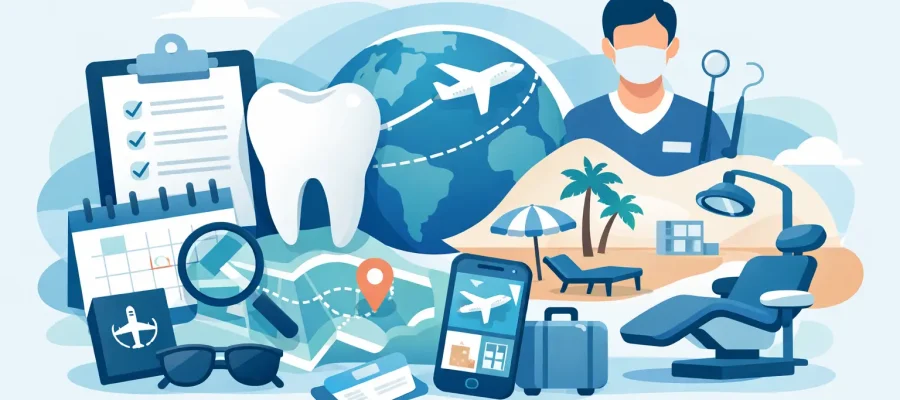
A smile makeover abroad can look easy on Instagram. The reality is simpler and more serious: the best results come from planning, not guesswork. If you are flying for veneers, crowns, implants, or a full-arch restoration, your outcome depends on what happens before you board the plane just as much as what happens in the chair.
This international dental travel planning guide is built for patients who want high-end results, a clear process, and no unnecessary friction. If you are comparing destinations and clinics right now, the goal is not to find the cheapest option. It is to find the most predictable path to the smile you actually want.
What good dental travel planning really means
Dental tourism has matured. Patients are no longer just asking, “How much are veneers in Turkey?” They are asking better questions: How many visits will I need? Can I preview the design? What happens if I need implants and cosmetics together? Who is managing my transfers, hotel, and communication? How fast can treatment be completed without compromising the result?
That shift matters. Cosmetic and implant dentistry are not generic purchases. A premium smile design involves facial proportions, bite balance, material choice, tissue health, and timing. Full-arch implant treatment adds another layer, because stability, healing, and immediate loading protocols have to be assessed correctly.
A strong plan gives you three things: clinical clarity, travel clarity, and financial clarity. If any one of those is vague, delays and disappointment usually follow.
International dental travel planning guide for choosing the right clinic
Start with the clinic’s planning system, not just the before-and-after gallery. Beautiful photos can be real and still tell you very little about whether your case is being engineered properly.
For aesthetic work, ask how the smile is designed. Digital Smile Design, 3D previews, and a structured try-in process matter because they reduce subjectivity. You should know whether your final look is being tailored to your face, lip line, and goals, or whether you are being pushed toward a standard shape that photographs well but may not suit you.
For restorative and surgical cases, ask how diagnostics are handled before travel. A clinic should review your images, medical history, and goals in advance and explain what can be confirmed remotely versus what must be decided after an in-person scan. That distinction is important. A trustworthy team will not promise the impossible from a few selfies.
You also want to understand speed in context. Same-day crowns, immediate implants, and instant smile makeovers can be excellent solutions when used for the right case. They are not shortcuts when supported by CAD/CAM workflows, digital planning, and experienced clinicians. But speed without proper assessment is where risk enters the picture.
This is where premium clinics separate themselves. The right provider combines specialist dentistry with concierge coordination so your treatment days, recovery time, and travel logistics work together instead of competing with each other.
Build your timeline around the procedure, not your vacation days
One of the biggest mistakes patients make is trying to fit treatment into an arbitrary travel window. Dentistry does not care that you only want to be away for four days.
Veneers, zirconium crowns, and whitening usually allow tighter timelines, especially in digitally equipped clinics with in-house production or fast lab coordination. In many cosmetic cases, consultation, preparation, design approval, and final placement can be managed within one trip.
Implants are different. A single implant may be straightforward, but full-arch cases, bone grafting, and sinus lift procedures require more judgment. Some patients are candidates for immediate fixed teeth. Others need phased treatment. If a clinic treats every implant case as a one-visit transformation without explaining the criteria, that is a warning sign.
Event timing matters too. If you are planning around a wedding, media shoot, or major business appearance, build in buffer time. New restorations may feel perfect visually while still requiring minor bite refinements or simple adjustments once swelling settles. The smart move is to finish well before the moment that matters most.
Budget for the full experience, not just the dental fee
International treatment often saves money, but smart patients do not compare prices in isolation. They compare the complete package.
A lower quote can become more expensive once you add flights, hotel, local transport, translation support, medications, follow-up appointments, and time away from work. That is why all-inclusive planning has real value. It reduces hidden costs and, just as importantly, reduces decision fatigue.
Ask for a breakdown that distinguishes confirmed treatment from possible add-ons. For example, a smile makeover quote may change if gum contouring becomes necessary after examination. An implant quote may shift if bone support is different from what remote images suggested. Transparency here is a sign of clinical discipline, not uncertainty.
Premium pricing should buy more than a luxury car transfer and a polished waiting room. It should buy precision, planning, comfort, and fewer surprises.
Know what to prepare before you travel
The smoother your pre-travel preparation, the more efficient your treatment can be. Send every requested record early, including panoramic X-rays, CBCT scans if available, recent intraoral photos, and a clear list of medications and medical conditions. If you grind your teeth, smoke, or have had previous dental work done elsewhere, say so upfront. These details affect both aesthetics and longevity.
Be honest about your goal. “I want perfect white teeth” is not enough on its own. Say whether you want natural luxury, high-gloss Hollywood brightness, a stronger masculine shape, softer feminine contours, or a conservative refresh. The more precise your aesthetic direction, the easier it is to create a signature smile that looks intentional rather than overdone.
It also helps to ask what your days will look like on the ground. How long is each appointment? Will there be downtime between preparation and final fitting? Can you comfortably sightsee, or should you keep the schedule light? Cosmetic cases are often travel-friendly. Surgical cases usually deserve a calmer itinerary.
Travel logistics that make the experience feel easy
An international dental trip should not feel like a puzzle. The strongest providers remove friction before you arrive.
That means clear airport pickup, hotel coordination, interpreter support if needed, and a treatment calendar that you can understand at a glance. If you are traveling alone, this becomes even more valuable. You should know who your point of contact is, how quickly you can reach them, and what happens if your flight changes.
Location matters, but not in the way many people assume. A clinic in a famous district is nice. A clinic that can move you from consultation to scan to treatment without wasted days is better. Efficiency is part of the luxury.
For patients coming to Istanbul, this is where a full-service model stands out. A clinic such as DRGO Smile Clinic is not only selling veneers or implants. It is selling a tightly managed patient journey, where digital planning, fast-turnaround treatment, VIP transfers, hotel stays, and personal support are built around the final result.
Questions that reveal whether a clinic is truly organized
A serious clinic should be able to answer a few core questions without vague language. Ask what can be completed in one trip, what could extend treatment, how your smile design is approved, what materials are being used, and what kind of aftercare support you receive once you return home.
Also ask about adjustments and contingency planning. If your temporaries reveal a shape change you want, can that be refined before final placement? If a surgical finding changes the timeline, how is that handled? Predictable clinics do not pretend every case is identical. They have a process for when reality requires a smart pivot.
The best answers are specific, calm, and easy to understand. Not flashy. Not defensive. Just precise.
Aftercare starts before you leave the clinic
The end of your trip is not the end of the treatment story. It is the start of living with your new smile.
Before you fly home, make sure you understand the maintenance standard for your procedure. Veneers and crowns need thoughtful hygiene and bite protection, especially if you clench. Whitening results depend on habits. Implant restorations need ongoing reviews and professional cleaning. Immediate results still require responsible ownership.
You should leave with instructions that are practical, not generic. When can you eat normally? What level of soreness is expected? Which symptoms deserve quick follow-up? How do you request support if you have a concern after returning home?
That final handoff says a lot about the clinic. Great dental travel feels polished from start to finish, but it also feels accountable.
The real goal: confidence with control
The smartest patients do not chase a dental trip. They build a result. That means choosing a clinic with advanced planning, realistic timelines, proven aesthetic standards, and a travel system that respects your time.
If you want your new smile to feel worth the flight, the investment, and the attention it will get, plan like someone buying precision – not just a procedure. The right trip should leave you with more than better teeth. It should leave you feeling fully in command of how you show up in the world.