


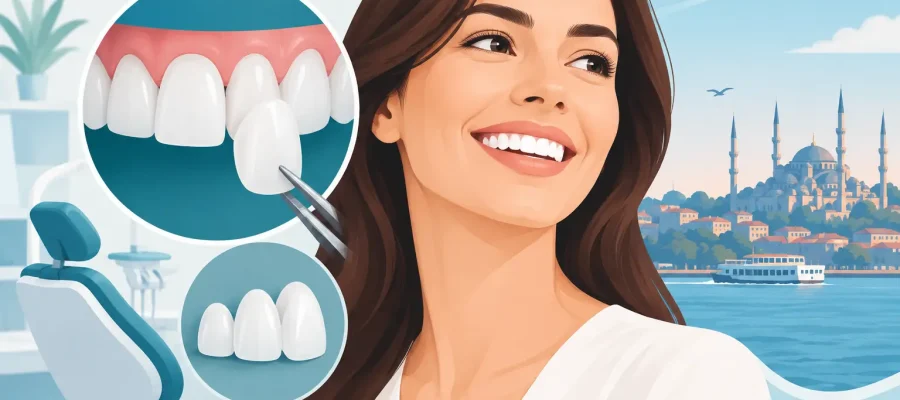
A veneer treatment should never feel like a gamble with your face. For patients researching porcelain veneers in Turkey: procedure, benefits and expectations come down to three questions: Will the smile look like me, how much natural tooth will be preserved, and can the result be planned before treatment begins? The right clinic answers all three with clinical detail, not just bright before-and-after photos.
Porcelain veneers can create a refined, camera-ready smile by correcting color, shape, small gaps, worn edges, and minor alignment concerns. They are not a shortcut for every dental issue, and the most convincing results come from precise planning, conservative preparation, and a design that respects your features rather than copying someone else’s smile.
Why choose porcelain veneers in Turkey?
Turkey has become a leading destination for cosmetic dentistry because international patients can access advanced smile design, experienced cosmetic teams, and coordinated treatment travel at a clearer overall cost than many patients find at home. For US patients, the appeal is not simply pricing. It is the opportunity to complete a high-level smile makeover on a structured timetable without arranging every clinical and travel detail independently.
Porcelain veneers are thin custom shells, usually crafted from high-quality ceramic, that bond to the visible front surface of teeth. Unlike whitening, which changes the shade of natural enamel, veneers can alter the proportion, translucency, contour, and symmetry of the smile. They are often chosen by professionals, creators, brides and grooms, and anyone who wants a polished result that holds up in person and on camera.
At DRGO Smile Clinic, the veneer journey is designed as a complete international patient experience: digital planning, treatment coordination, and concierge support that can include airport transfers, hotel arrangements, and multilingual assistance. The focus remains clinical. Travel is easier when every appointment has been mapped around your treatment plan.
The porcelain veneer procedure in Turkey
A premium veneer result is built in stages. The exact number of appointments depends on the health of your teeth, the number of veneers, the chosen ceramic, and whether you need additional treatment such as gum contouring, whitening, fillings, or bite correction.
1. Consultation and digital smile planning
Your journey begins with an assessment of your teeth, gums, bite, facial proportions, and cosmetic goals. Photos, digital scans, and X-rays allow the clinical team to identify issues that can affect the final result, including decay, gum inflammation, cracks, old restorations, or teeth that receive excessive bite pressure.
Digital Smile Design can help turn a general request such as “I want a Hollywood Smile” into a specific plan. You may review proposed tooth shapes, proportions, and shade direction before the work begins. A good design considers your lips, skin tone, facial balance, speech, and personality. Ultra-white can be striking, but a softer natural white may be the stronger choice for someone who wants a result that looks effortlessly theirs.
2. Tooth preparation and temporary veneers
For traditional porcelain veneers, a small amount of enamel is usually shaped to create room for the ceramic. The amount varies. Some cases require minimal preparation, while severely discolored, prominent, or rotated teeth may need more adjustment for a balanced result. Preparation is irreversible, which is why it should be conservative and never rushed.
Local anesthesia is used when needed to keep you comfortable. Once preparation is complete, digital impressions are taken for the final veneers. Temporary veneers may be placed to protect prepared teeth and give you an early sense of the new smile’s length and shape.
This is an important checkpoint. If something feels too long, too square, too bright, or too uniform, say so before final bonding. A premium treatment team expects feedback and uses it to refine the plan.
3. Ceramic fabrication and try-in
Your final veneers are fabricated to the approved design, with attention to color depth, surface texture, translucency, and edge detail. Natural teeth are not flat white, and neither should well-made veneers be. The most elevated work uses subtle characterization so the smile reflects light naturally rather than looking opaque or artificial.
At the try-in appointment, the dentist checks fit, bite, symmetry, phonetics, and appearance in different lighting. You should be able to see the result, discuss it, and approve it before permanent placement. Minor refinements at this stage are normal and often make the difference between a nice smile and a signature smile.
4. Final bonding and bite adjustment
Once approved, each veneer is bonded using a precise adhesive protocol. The dentist then checks how your upper and lower teeth meet when you bite, speak, and move your jaw. This detail matters. Veneers need to look exceptional, but they must also function comfortably within your natural bite.
After bonding, you will receive instructions for cleaning, eating, and protecting the new restorations. If you clench or grind your teeth, a custom night guard is usually recommended. It is a small habit that can protect a significant investment.
Benefits that go beyond a whiter smile
The main benefit of porcelain veneers is control. Whitening may improve shade, and orthodontics may improve alignment, but veneers can address several visible concerns at once. With the right case selection, they can create more even edges, close small spaces, soften irregular shapes, conceal intrinsic stains, and make teeth appear more proportionate.
Porcelain also has a refined light response that can closely resemble natural enamel. It is highly stain-resistant compared with composite bonding, helping coffee, tea, red wine, and daily life have less effect on the visible color over time. Veneers can last many years with thoughtful care, though they are not permanent in the sense of never requiring maintenance or replacement.
For international patients, another benefit is efficiency. Treatment schedules are often organized around a defined stay, allowing consultation, preparation, try-in, and final placement to occur within one carefully planned visit. That does not mean every smile should be completed at maximum speed. If gum health, bite concerns, or complex restorative work need attention first, the safer plan may involve additional time or a staged approach.
What to expect from porcelain veneers in Turkey
Expect a detailed process, not a commodity purchase. Prices can vary according to the number of veneers, the ceramic material, laboratory quality, dentist experience, complexity of the case, and whether additional procedures are required. Be cautious of quotes that promise a full smile without asking for clear photos, X-rays, or information about your bite and dental history.
You should also expect some adjustment after placement. Your smile may feel fuller or smoother at first, and your speech can take a short period to settle as your tongue adapts to new contours. Mild gum sensitivity is possible after preparation and bonding, especially in the first days. Persistent pain, sharp bite pressure, or gum swelling is not something to ignore and should be reviewed promptly.
A common misconception is that veneers are always “no-prep” or that every patient should receive crowns instead. Neither is universally true. Veneers can be an excellent conservative option when teeth are healthy and structurally sound. Crowns may be more appropriate for teeth with large fillings, fractures, root canal treatment, or significant loss of structure. The best recommendation protects your long-term dental health, not just the immediate photograph.
Protecting your new smile
Daily care is straightforward: brush twice daily with a non-abrasive toothpaste, floss carefully around the gumline, and attend regular dental cleanings. Veneers cannot decay, but the natural tooth structure and gums around them can. Gum health is what keeps the edges of the restorations looking clean and stable.
Avoid using veneered teeth to open packaging, bite fingernails, or crack hard objects. Limit habits such as chewing ice. If you play contact sports, wear a protective mouthguard. If you grind at night, wear the guard provided or recommended by your dentist.
The goal is not a smile that looks manufactured. It is a smile that feels aligned with the version of yourself you want to show up as, whether that is at a wedding, in a boardroom, or in front of a camera. Request a personalized consultation, ask to see your options in a digital smile plan, and choose the design only when it feels unmistakably right for you.