


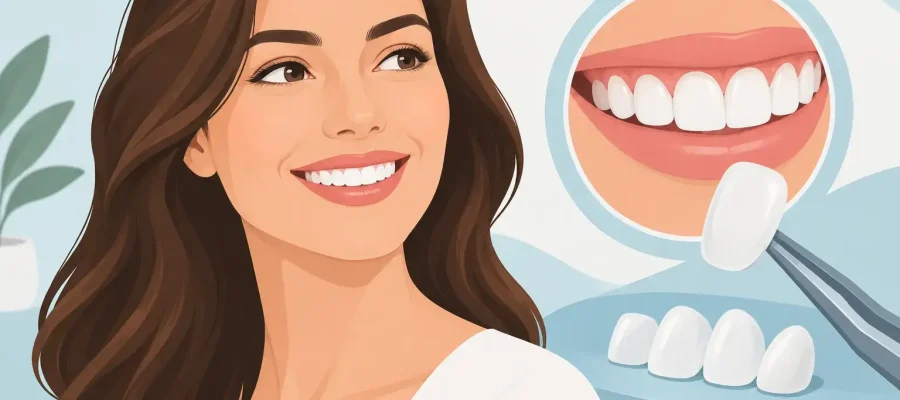
A veneer should not announce itself from across the room. It should make people notice that you look rested, confident, and naturally well put together – then wonder what changed. So, can you get a natural-looking smile with dental veneers? Yes, when the smile is designed around your face, bite, gums, and natural tooth character rather than a one-size-fits-all shade or shape.
The difference between an elegant smile makeover and an artificial-looking result is rarely the veneer alone. It is the planning behind it. Premium veneers can refine color, close spaces, correct small chips, balance uneven edges, and improve proportions while still looking like they belong to you.
What Makes Dental Veneers Look Natural?
Natural smiles are not perfectly uniform. Real teeth have subtle translucency near the edges, gentle variations in surface texture, and proportions that suit the lips and face. A convincing veneer design recreates those details instead of covering them with an overly bright, flat, identical row of teeth.
The first decision is facial harmony. Tooth length, width, corner shape, and the amount of tooth visible when you speak or smile should complement your facial features. A broad, square design may look strong and polished on one patient but feel too heavy on another. Softer contours can create a more youthful effect, while slightly sharper edges may better suit a more defined look.
Color matters just as much. The brightest possible shade is not always the most premium-looking choice. A shade that works with your skin tone, lip color, and the whites of your eyes is usually more believable in photographs and in person. Many patients want a noticeably whiter smile, but natural-looking does not have to mean understated. It means the brightness is intentional, balanced, and layered with the right depth.
Gum symmetry is another overlooked detail. Even beautifully made veneers can look less refined if the gumline is uneven or covers too much of certain teeth. In selected cases, gum contouring can create a more balanced frame for the new smile before the veneers are placed.
Can You Get a Natural-Looking Smile With Dental Veneers in a Short Timeline?
You can, but speed should come from advanced workflow, not rushed decisions. International patients often need an efficient treatment plan because they are combining dentistry with travel. The right clinic can reduce unnecessary waiting through digital planning, in-house CAD/CAM technology, and coordinated appointments, while protecting the clinical steps that determine the final result.
At DRGO Smile Clinic, the process begins with a detailed assessment of tooth health, bite, gum condition, facial proportions, and aesthetic goals. Digital Smile Design allows the team to plan the shape, position, and visual effect of the proposed smile before the final restorations are made. A 3D preview gives you a clearer basis for decisions than choosing from a generic before-and-after photo.
For many veneer cases, the journey follows a clear sequence:
- Digital planning and smile analysis: Photos, scans, and bite records are used to create a design tailored to your facial structure and expectations.
- Conservative preparation: When preparation is needed, only the appropriate amount of enamel is shaped to create space for the veneer. The exact approach depends on tooth position, color, and the degree of correction required.
- Try-in and refinements: The proposed look is reviewed for shape, length, shade, speech, and bite comfort. This is where small adjustments can make a major difference.
- Final bonding: The completed veneers are bonded with precision, then checked carefully for fit, contact points, and how your teeth meet when you bite.
Not every patient is a candidate for same-day final veneers. Complex bite issues, active gum disease, significant decay, or the need for orthodontic movement may require treatment before cosmetic work begins. A clinic that promises the same answer to every patient is not offering true personalization.
Why Material Choice Changes the Result
For natural aesthetic work, material selection is not a minor detail. E-Max veneers are widely chosen for their lifelike translucency and ability to mimic the way natural enamel reflects light. They can deliver brightness without the opaque, solid appearance that some patients associate with older-style cosmetic dentistry.
That does not mean E-Max is automatically the best option for every tooth. Zirconium-based restorations may be recommended where greater strength or masking ability is needed, particularly for heavily discolored teeth or teeth requiring more extensive restoration. The best material depends on how much healthy tooth structure remains, your bite forces, the underlying tooth color, and the design goal.
A beautiful result also depends on the ceramic technician’s artistry and the dentist’s preparation design. Veneers that are too thick can look bulky near the gumline or push the lips forward. Veneers that are too thin may not mask deep discoloration effectively. Precision is what creates the balance between preservation, strength, and realism.
The Biggest Mistakes That Create an Artificial Smile
The most common problem is copying a smile that was designed for someone else. Celebrity references and social media photos can be useful for communicating preferences, but they should be a starting point, not a blueprint. Your bone structure, smile line, natural teeth, and lip movement are unique.
Overly uniform shapes can also reduce realism. Matching teeth should look cohesive, but central incisors, lateral incisors, and canines naturally have different roles and contours. The best smile design respects those differences.
Another issue is ignoring function. Cosmetic dentistry is still dentistry. If veneers are designed without considering grinding, clenching, or bite alignment, chips, cracks, and discomfort can follow. Patients who clench or grind may benefit from a custom night guard after treatment. In some cases, masseter Botox may also be considered as part of a broader plan to reduce excessive muscle force, although it is not a replacement for protecting the teeth with a properly designed guard.
Finally, avoid choosing solely by the number of veneers. Some patients need only a few veneers to improve visible asymmetry. Others benefit from a broader treatment zone so the color and proportions blend naturally when they smile. The ideal number is the one that creates visual continuity without treating healthy teeth unnecessarily.
How to Ask for a Smile That Still Looks Like You
Be specific about how you want to feel, not only what shade you want. Do you want a polished executive smile, a camera-ready Hollywood Smile, a softer youthful look, or a subtle correction that colleagues may not immediately identify? These goals guide the design conversation.
Ask to see the planned proportions before final placement. Confirm how the design will account for your gumline, facial midline, bite, and existing tooth color. Discuss whether your request calls for veneers, crowns, whitening, gum aesthetics, or a combination. For example, whitening lower teeth before upper veneers may help the final smile look more integrated.
You should also understand the long-term commitment. Veneers require attentive oral hygiene, regular dental checkups, and sensible habits. They are highly durable, but they are not indestructible. Biting hard objects, opening packaging with teeth, and untreated grinding can compromise even premium ceramic work. When tooth preparation is involved, veneers are generally an irreversible treatment because enamel does not grow back.
A natural-looking veneer result is engineered, not accidental. It comes from digital planning, excellent materials, conservative clinical judgment, and the willingness to refine details before anything is permanently bonded. If you are considering treatment abroad, choose a team that can show you the design, explain the material choices, and build your smile around the person you are – not just the trend you saw online.