


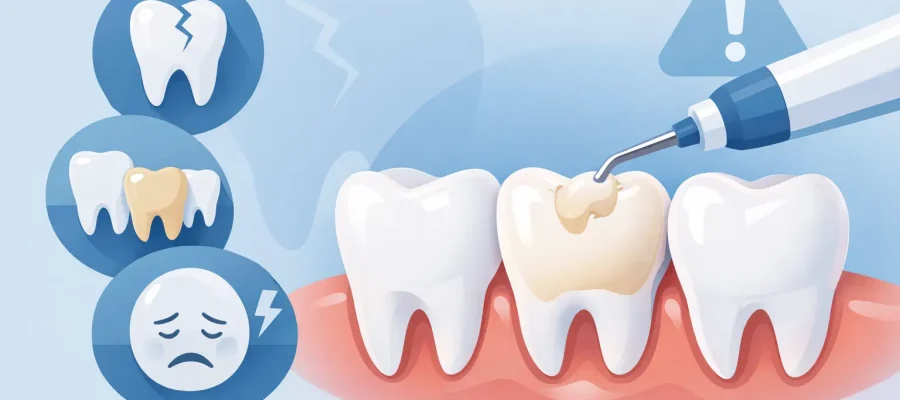
If you want a faster, lower-commitment cosmetic fix, bonding can look appealing at first glance. But the real conversation starts with dental bonding disadvantages – because what looks simple on day one may not deliver the finish, durability, or long-term value every patient expects.
Bonding uses a tooth-colored composite resin to reshape teeth, close small gaps, soften chips, and improve minor imperfections. It is conservative, usually quick, and often more affordable upfront than veneers or crowns. For the right case, that makes sense. For the wrong case, it can lead to frustration, repeated repairs, and a result that loses its edge sooner than expected.
For image-conscious patients planning around weddings, filming, business visibility, or a major life reset, the key question is not whether bonding can work. It is whether it can hold up to the standard of smile you want to live with.
The main dental bonding disadvantages
The biggest drawback is durability. Composite resin is not as strong as ceramic, and it is more vulnerable to edge wear, chipping, and surface damage. If you bite your nails, grind your teeth, use your front teeth to open packaging, or simply have a stronger bite, bonding may need maintenance sooner than you expect.
Another concern is staining. Composite does not hold its polish as well as porcelain. Coffee, red wine, tea, smoking, and highly pigmented foods can dull the finish over time. Even when the shape still looks acceptable, the surface can start to lose that clean, bright aesthetic patients usually want from cosmetic dentistry.
Longevity is also a factor. Bonding can last for years, but it generally does not compete with the lifespan of well-made ceramic veneers or crowns. That does not make it a bad treatment. It just means the lower starting cost can be offset by more frequent touch-ups, repairs, or replacement.
There is also a limit to how transformative bonding can be. It works best for smaller corrections. If the teeth are heavily stained, significantly uneven, widely spaced, worn down, or part of a larger smile design issue, bonding can become a compromise rather than a true upgrade.
Where bonding tends to fall short aesthetically
From a distance, well-executed bonding can look very natural. Up close, and over time, the differences between composite and ceramic become more visible.
Porcelain reflects light in a way that more closely mimics natural enamel. It tends to maintain a smoother, glassier finish and more stable color. Bonding can still look attractive, but it may not deliver the same depth, brightness, and refined texture, especially in high-visibility front teeth.
This matters more than many patients realize. If your goal is a polished, camera-ready smile that looks consistently elevated in daylight, studio lighting, and close-up photos, material choice matters. Bonding is often best for correction. It is not always the best material for a full aesthetic statement.
Color matching can change over time
A bonded tooth might match beautifully when it is first placed. Months later, the surrounding teeth can whiten differently, or the composite can absorb stain while natural enamel changes at another pace. That mismatch can become noticeable.
This creates a practical issue for patients who may want whitening later. Bonding does not bleach like natural teeth. If you whiten the smile after bonding, the bonded areas may no longer blend, which can lead to additional refinishing or replacement.
Surface polish does not stay perfect forever
Composite can be polished to a smooth finish, but it is more likely to lose that surface quality with daily use. Tiny abrasions, dullness, and slight texture changes can make the restoration look older even if it remains intact.
For patients seeking a luxury-level aesthetic, that gradual loss of crispness is often one of the most disappointing dental bonding disadvantages.
Functional limitations matter too
Bonding is not just about appearance. It also has mechanical limits.
When used on edges that take pressure, composite can chip more easily than ceramic restorations. This is especially relevant for patients with bite issues, clenching habits, or existing wear. A small repair may seem minor, but repeated maintenance appointments are rarely convenient, especially for international patients who want treatment choices with more predictability.
If a tooth has a large structural problem, a crack risk, old fillings, or substantial enamel loss, bonding may not be the ideal solution. In those cases, a veneer or crown may provide better coverage and support, depending on the amount of healthy tooth remaining.
Dental bonding disadvantages vs veneers and crowns
This is where expectations need to be calibrated carefully. Bonding, veneers, and crowns are not interchangeable. They sit at different levels of strength, transformation, and commitment.
Bonding is usually the least invasive and the fastest. It is excellent for minor chips, small spaces, and subtle shape improvements. But if your goal is a more engineered smile line, brighter uniformity, stronger stain resistance, and longer-lasting polish, porcelain veneers are often the more stable aesthetic option.
Crowns enter the picture when the tooth needs more coverage and structural reinforcement. They are not chosen only for beauty. They are often selected because the tooth itself requires more protection.
The mistake is choosing bonding because it sounds easier, when the real goal actually points toward a more durable material. That can create a cycle of compromise – lower upfront commitment, then higher upkeep and lower satisfaction.
Who should think twice before choosing bonding
Bonding may not be the best fit if you want a dramatic smile makeover, if you drink coffee throughout the day, if you smoke, if you have a heavy bite, or if you are hoping for a very bright and uniform Hollywood Smile effect.
It is also less ideal for patients who want one treatment decision to carry them through years with minimal maintenance. If travel logistics, scheduling, or public-facing work make repeat corrections inconvenient, a longer-lasting option often makes more sense.
Patients who already know they are detail-focused should be honest about that too. If tiny changes in color, shine, or symmetry will bother you, bonding may feel acceptable at first and disappointing later.
When bonding is still a smart choice
None of this means bonding is a poor treatment. It means it has a lane.
For a small chip on one front tooth, slight reshaping, minor gap closure, or a short-term cosmetic improvement with minimal preparation, bonding can be an excellent choice. It is also useful when a patient wants a conservative enhancement before committing to veneers.
In skilled hands, it can be elegant, natural, and efficient. The key is using it where it performs best rather than asking it to behave like ceramic.
The better question is not price – it is value over time
Bonding usually wins on initial cost. That is why many patients start there. But premium smile planning is not about the cheapest entry point. It is about what the result looks like after daily life, photography, travel, meals, whitening, and wear.
A treatment that needs more polishing, more repairs, and more replacements may cost less on paper today while delivering less confidence over time. For some patients, that trade-off is acceptable. For others, especially those seeking a high-impact aesthetic transformation, it is the wrong economy.
This is why advanced smile design starts with the end result, not the menu of procedures. If the vision is a stable, high-finish, camera-ready smile, the material should match the mission. Clinics such as DRGO Smile typically assess this through digital planning so patients can compare what a conservative fix can achieve versus what a more complete ceramic approach can deliver.
How to decide wisely
Ask what you want your smile to do for you. If the answer is fix one small flaw, bonding may be enough. If the answer is look brighter, sharper, more symmetrical, more premium, and stay that way with less maintenance, then bonding may not be the right investment.
You should also ask how much maintenance you are willing to accept, how visible the treated teeth are, whether your lifestyle exposes restorations to stain, and whether your bite puts pressure on front teeth. Those factors matter just as much as budget.
The most successful cosmetic dentistry is not the most aggressive and not the most conservative. It is the option that fits your anatomy, your habits, your timeline, and your standard for the final look.
A beautiful smile should not only photograph well the week it is done. It should still feel like the right decision once real life starts using it.