


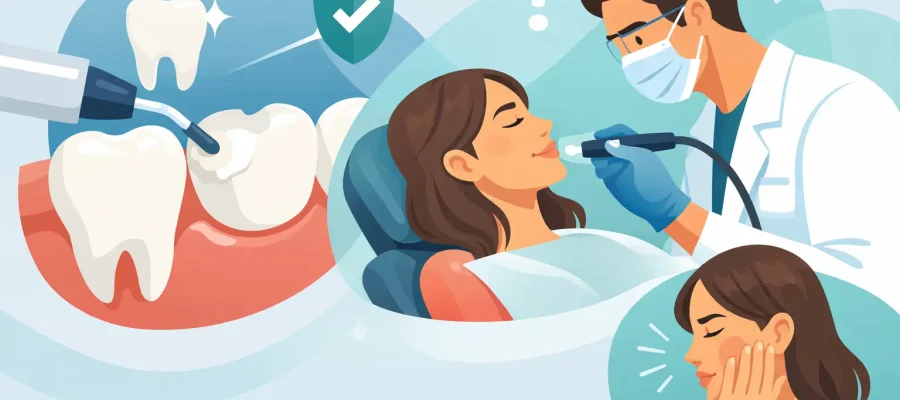
If you are considering bonding to fix a chip, close a small gap, or refine the shape of a front tooth, one question usually comes first: does dental bonding hurt? The short answer is no for most patients. Dental bonding is one of the least invasive cosmetic dental treatments, and in many cases it is completed with little to no discomfort at all.
That said, comfort is not just about the procedure itself. It also depends on why you need bonding, which tooth is being treated, and whether the enamel needs any preparation first. For patients who care about both appearance and a smooth experience, knowing exactly what the appointment feels like can take a lot of pressure off the decision.
Does dental bonding hurt during the procedure?
Most dental bonding appointments feel surprisingly simple. In many cases, your dentist lightly prepares the tooth surface, applies a conditioning liquid, places the tooth-colored resin, shapes it, hardens it with a curing light, and then polishes it. If the bonding is purely cosmetic and only a small amount of enamel is touched, anesthesia may not be needed.
That is why so many patients describe bonding as pressure-free rather than painful. You may notice a little vibration from polishing or a slightly dry feeling from keeping the area isolated, but sharp pain is not typical.
The exception is when bonding is used to repair damage that already exposes sensitive areas of the tooth. If there is decay, a crack near the nerve, or a broken edge that has made the tooth reactive, your dentist may recommend local anesthetic. In those cases, the discomfort usually comes from the tooth’s condition, not from the bonding material itself.
What dental bonding actually feels like
For a cosmetic correction on a healthy tooth, bonding often feels more like a design appointment than a traditional dental procedure. Your dentist is sculpting the surface, refining symmetry, and adjusting the finish so it blends naturally with your smile.
You may feel your mouth staying open for a short time, and you may notice the dentist checking your bite several times. Some patients feel brief sensitivity when air touches the tooth, especially if they already have naturally sensitive enamel. Even then, it is usually mild and temporary.
If numbing is required, the injection tends to be the only part patients are concerned about. Once the area is numb, the rest of the visit is generally comfortable.
When bonding can be more sensitive
Dental bonding is low-discomfort, but not every case is identical. A few situations can make the experience more noticeable.
Bonding on a chipped or cracked tooth
If the tooth has been recently chipped, the inner layers may be more exposed than normal. That can make the tooth sensitive to cold air, pressure, or water before treatment even begins. Bonding often improves comfort once the area is sealed, but the tooth may be tender during the appointment if it was already irritated.
Bonding near the gumline
Bonding used for recession-related wear or root exposure can be slightly more sensitive because those areas are not covered by enamel in the same way. Patients often still tolerate it very well, but local anesthetic is more commonly used.
Bite adjustments after bonding
Once the resin is shaped and cured, your dentist fine-tunes your bite. If the bonded tooth hits too early, it can feel “off” or sore when chewing. This is usually easy to correct, but it is worth mentioning because some patients mistake a bite issue for pain from the bonding itself.
Does dental bonding hurt after the appointment?
Most patients leave the office and return to normal activities the same day. If any sensitivity happens afterward, it is usually mild and short-lived. You might notice slight tenderness with very cold drinks, or a small awareness of the treated tooth for a day or two.
That post-treatment sensitivity is more likely if enamel was reshaped, if the tooth was already compromised, or if multiple teeth were treated in one session. It typically settles quickly.
What should not happen is severe throbbing pain, swelling, or lingering discomfort that keeps getting worse. If that occurs, the tooth may have an underlying problem unrelated to the bonding finish, or the bite may need adjustment.
How dentists keep bonding comfortable
A well-planned bonding appointment is built around precision and comfort. The less invasive the preparation, the easier the experience tends to be.
Dentists usually start by checking whether bonding is the right treatment in the first place. For a tiny chip or shape correction, it often is. For larger structural issues, heavy bite pressure, or more advanced cosmetic changes, veneers or crowns may be the better long-term choice. That matters because the wrong treatment can create more sensitivity, more maintenance, and less predictability over time.
When bonding is the right fit, comfort comes from technique. Careful isolation keeps moisture away. Minimal enamel preparation preserves the tooth. Layered resin placement helps the restoration blend naturally without unnecessary removal of healthy structure. In a premium cosmetic setting, this kind of discipline is part of the result.
Is dental bonding more comfortable than veneers?
In many cases, yes. Bonding is usually more comfortable than veneers because it often requires less tooth preparation. Veneers can still be a smooth, highly controlled treatment, but they typically involve more planning, more shaping, and a bigger cosmetic commitment.
Bonding is often chosen when patients want a fast improvement without moving into full restorative work. It is ideal for small refinements, edge repair, minor spacing, and contour corrections. If your goal is a complete smile redesign with major color and shape changes, veneers may deliver a more dramatic and durable result, but the process is more involved.
So if your main concern is whether the treatment will hurt, bonding usually sits on the gentler end of cosmetic dentistry.
Who is most likely to feel discomfort?
Patients with existing sensitivity are more likely to notice the procedure. That includes people with enamel erosion, exposed roots, active decay, cracked teeth, or gum recession. Patients who clench or grind may also feel more awareness afterward if the bonded tooth is under pressure.
Anxiety plays a role too. When patients expect pain, normal sensations can feel more intense. Clear communication, visual planning, and a step-by-step approach make a real difference here. In cosmetic dentistry, confidence starts before treatment, not after it.
How long does any sensitivity last?
If bonding causes mild sensitivity, it usually fades within a few days. Some patients feel nothing at all once the numbness wears off. Others may notice a brief response to cold drinks for a week or so, especially if the treated area was close to the edge of the tooth or near the gumline.
If your bite feels uneven, sensitivity may last until that is corrected. This is why follow-up matters. A fast adjustment can turn an annoying result into a completely natural one.
What you can do after bonding
After your appointment, it helps to be sensible for the first 24 to 48 hours. Avoid biting directly into very hard foods if bonding was placed on front teeth. If the area feels a little sensitive, choose room-temperature drinks instead of icy ones for a day or two.
It is also smart to avoid habits that stress the resin, like chewing pens, opening packaging with your teeth, or grinding at night without protection. Bonding is aesthetic and effective, but it is not indestructible.
When should you worry?
Mild sensitivity is normal. Sharp pain is not. If the tooth hurts when you bite down, feels too high, reacts strongly to temperature for more than a week, or starts aching on its own, you should contact your dentist.
Sometimes the solution is simple, such as smoothing a rough edge or adjusting the bite. Sometimes the tooth had a deeper issue that bonding alone could not solve. Either way, discomfort that escalates instead of settling deserves attention.
The real answer to does dental bonding hurt
For most people, dental bonding is one of the easiest cosmetic treatments to go through. It is conservative, fast, and typically completed with little to no pain. Any sensitivity is usually mild, short-term, and manageable.
The bigger question is not just whether bonding hurts. It is whether bonding is the best way to get the result you want. A small repair, subtle refinement, or quick aesthetic upgrade can be an excellent use of bonding. A full smile transformation may call for a more engineered solution. Clinics like DRGO Smile build that decision around precision, comfort, and visible outcome planning so patients know what they are getting before treatment starts.
If you are weighing bonding for a chipped or uneven tooth, the procedure itself should not be the part that holds you back. The smarter move is to focus on fit, finish, and whether the treatment matches your long-term smile goals.