


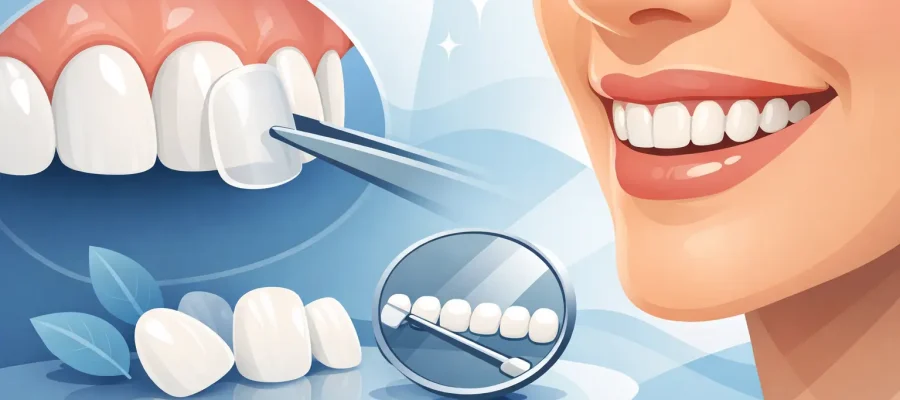
If you have ever seen veneers that looked too bright, too flat, or too bulky, you already know the real question is not whether veneers work. It is which are the best veneers for natural look results on your face, your smile line, and your skin tone. The most believable veneer work is never about choosing the whitest material. It is about choosing the right material, shape, thickness, and finish with clinical precision.
For patients investing in a smile makeover, natural-looking veneers usually matter more than “perfect” veneers. A smile can be straight, white, and expensive, yet still look artificial. The difference comes from how light moves through the veneer, how the edges reflect, how the teeth fit the lips, and how the final design matches your age, facial features, and personality.
What actually makes veneers look natural?
Natural teeth are not one flat shade. They have depth, translucency, texture, and slight variation from tooth to tooth. The enamel catches light differently at the edge than at the center. That is why overly opaque veneers often look fake, even when they are technically well made.
The most natural smiles are designed with restraint. The color is bright but believable. The tooth proportions are balanced but not identical. The surface has subtle texture instead of a polished, plastic finish. Even the incisal edge – the bottom edge of the front teeth – needs the right amount of softness and translucency to avoid a denture-like appearance.
Material matters, but design matters just as much. A premium ceramic in the wrong shape will still look wrong. On the other hand, a well-designed veneer plan can create a refined, high-end result that looks like you were simply born with exceptional teeth.
Best veneers for natural look: which material wins?
For most patients seeking the best veneers for natural look results, E-Max veneers are the leading option. E-Max is a lithium disilicate ceramic known for its strength, lifelike translucency, and ability to mimic natural enamel. It reflects and transmits light in a way that feels closer to real teeth, which is why it is often chosen for visible front teeth.
E-Max works especially well when the goal is elegant, camera-ready aesthetics without the heavy, opaque effect that can happen with less refined materials. It is ideal for patients who want brighter teeth but still want depth and softness in the final smile.
Zirconia can also be an excellent option, but usually for different reasons. It is stronger and more opaque than E-Max, which makes it useful in cases where underlying tooth discoloration needs to be masked or where durability is the top concern. For back teeth or certain restorative cases, zirconia can be the smart choice. For front-facing cosmetic veneers where natural beauty is the priority, it is often less convincing than E-Max unless layered and handled with very high artistic skill.
Composite veneers are the more budget-conscious route, but they generally do not deliver the same refined, long-term natural effect as ceramic. They can look attractive at first, especially in skilled hands, but they are more prone to staining, wear, and loss of surface polish over time. For patients flying in for a premium smile transformation, composite usually feels like a temporary answer rather than a signature result.
Why E-Max is often the first choice
E-Max veneers are popular for a reason. They are thin, strong, and highly aesthetic. They allow for excellent shade control, and when designed properly, they create that “beautiful but believable” finish most patients want. If someone says they want people to notice they look amazing, not notice they had dental work, E-Max is usually where the conversation starts.
That said, not every patient is a perfect candidate. If teeth are heavily discolored, structurally compromised, or affected by bite issues, another material or a combination approach may be better. The best treatment plan is never copied and pasted.
Veneer style matters as much as veneer material
Patients often focus on the ceramic and ignore the design brief. That is where natural results are either won or lost.
A natural-looking veneer case starts with proportion. Teeth should suit the width of the face, the fullness of the lips, and the amount of gum show. Larger veneers can look glamorous on some patients, especially those seeking a Hollywood Smile. On others, that same size reads too bold and artificial.
Shape also changes everything. Rounded edges tend to look softer and younger. More squared designs can look stronger and more dramatic. Neither is automatically better. The best choice depends on gender expression, facial anatomy, and the image the patient wants to project.
Then there is shade. Ultra-white veneers can photograph well under certain lighting, but they do not always look natural in daylight or conversation. Many of the most elegant smile makeovers use bright shades with a touch of warmth and translucency, rather than an opaque bleach-white finish.
Minimal prep vs no-prep veneers
The internet loves the idea of no-prep veneers, but the truth is more nuanced. Preserving tooth structure is a priority, yet completely avoiding preparation is not always what creates the most natural result.
No-prep veneers can work well in selected cases, especially when teeth are small, slightly spaced, or positioned in a way that allows added ceramic without bulk. But if veneers are placed over teeth that already project outward, they may look thick and overcontoured. That is one of the fastest ways to lose a natural look.
Minimal-prep veneers are often the better middle ground. A conservative amount of preparation allows the ceramic to sit flush, so the final smile looks refined rather than added on. This approach supports both aesthetics and long-term gum health.
The role of Digital Smile Design in natural results
Natural-looking veneers are not guesswork. The strongest clinics plan them digitally before any final work begins. With Digital Smile Design and 3D previews, patients can see the proposed tooth shapes, lengths, and smile balance in advance.
This matters for international patients especially. If you are traveling for treatment, you want clarity before committing. Digital planning reduces surprises. It also gives the clinical team a blueprint, so the final veneers are built around facial harmony rather than generic tooth templates.
At a clinic like DRGO Smile Clinic, this planning stage is where speed and precision come together. Patients are not just choosing veneers. They are choosing an engineered aesthetic outcome, often within a tightly managed travel schedule.
Who is the best candidate for the most natural veneer result?
Patients with healthy gums, stable bite patterns, and realistic expectations usually achieve the most seamless outcomes. If your teeth are chipped, uneven, worn, slightly misaligned, or discolored, veneers can create a major upgrade while still looking very real.
The conversation changes if there is active grinding, severe crowding, untreated gum disease, or major structural damage. In those cases, veneers may still be part of the final plan, but not always as the first step. Sometimes whitening, gum contouring, orthodontic alignment, or crowns are needed to create the right foundation.
This is where an aesthetic consultation should feel strategic, not sales-driven. The right provider will explain whether veneers alone are enough or whether combining treatments will produce a cleaner, more natural finish.
How many veneers look most natural?
There is no universal number. Some patients only need four to six veneers to refine the visible smile zone. Others need eight to ten for a balanced result. In broader smiles, stopping too early can create a mismatch between enhanced front teeth and untreated neighboring teeth.
The natural approach is not always the smallest treatment plan. It is the one that creates continuity in color, shape, and brightness when you speak and smile. A veneer count that is too limited can look just as unnatural as veneers that are too white.
How to avoid the fake veneer look
Most unnatural veneer cases happen for predictable reasons. The teeth are too opaque, too large, too uniform, or too white for the patient’s features. Sometimes the gum line is ignored. Sometimes the bite is not considered. Sometimes speed is prioritized without enough planning.
The solution is not simply spending more. It is choosing a clinic that controls the full process: facial analysis, smile design, material selection, try-in review, and precise final placement. The best veneer work combines dental science with aesthetic discipline.
If natural is your goal, ask better questions. Ask what material is being used and why. Ask how the shade is selected. Ask whether the edges will have translucency. Ask to see smile designs that look refined, not exaggerated. Great cosmetic dentistry should feel tailored, not templated.
So, what are the best veneers for natural look results?
For most front-tooth cosmetic cases, E-Max veneers are the best answer because they offer the translucency, depth, and fine detailing that natural smiles require. But the real answer is more complete than that. The best veneers for natural look results are the ones designed specifically for your face, your bite, and your aesthetic goals.
That means the material must be right, but so must the prep style, the shade, the proportions, and the planning process behind it. When those pieces come together, veneers do not look obvious. They look effortless.
If you are investing in your smile for a wedding, public-facing career move, content work, or simply a more confident daily presence, aim for a result that looks elevated rather than overdone. The best cosmetic dentistry does not erase your identity. It sharpens it.