


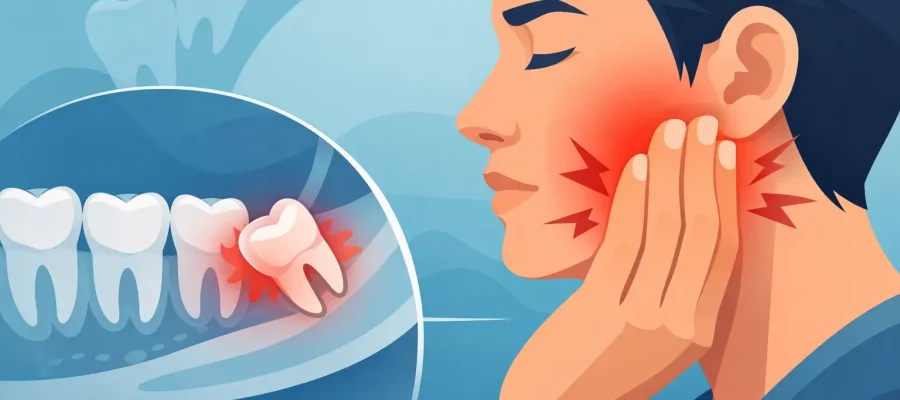
Jaw pain that seems to come out of nowhere often has a very specific source – and yes, can wisdom teeth cause jaw pain is a question dentists hear all the time. If the discomfort is showing up near the back of your mouth, radiating toward your ear, making it harder to chew, or flaring on one side, wisdom teeth are absolutely on the shortlist.
The reason is simple: wisdom teeth are the last teeth to arrive, and they often show up when there is very little room left. That lack of space can create pressure under the gums, irritation around neighboring teeth, and even inflammation that spreads into the jaw muscles. What feels like a joint problem or a random ache can actually start with one partially erupted tooth.
Can wisdom teeth cause jaw pain when they are coming in?
Yes – especially when they are erupting at an angle, trapped below the gumline, or pushing against the tooth in front of them. Wisdom teeth, also called third molars, typically emerge in the late teens or twenties. By that point, many mouths simply do not have the space to accommodate four more molars comfortably.
When a wisdom tooth cannot erupt in a clean, vertical path, it may become impacted. That means it is blocked by bone, gum tissue, or another tooth. Impacted wisdom teeth are one of the most common causes of pressure-related jaw pain in younger adults. Some people describe it as a dull ache deep in the jaw. Others notice throbbing, tenderness when opening wide, or pain that seems to move toward the ear or temple.
This is where the experience of pain can be misleading. The issue may be in the back molar area, but the discomfort can feel broader because the jaw, muscles, and surrounding tissues are all connected.
Why wisdom teeth can trigger more than tooth pain
Wisdom teeth do not always hurt like a classic toothache. In many cases, the pain is less about the tooth itself and more about what it is doing to the surrounding structures.
A partially erupted wisdom tooth can leave a flap of gum over the crown. Food and bacteria get trapped there easily, which can lead to a localized infection called pericoronitis. When that tissue becomes inflamed, the area can swell, the jaw can feel sore, and chewing may become uncomfortable. If the inflammation increases, even swallowing or fully opening the mouth may start to feel restricted.
There is also the mechanical side. If a wisdom tooth is pressing against the second molar, the pressure can cause soreness along the jawbone. Some patients unconsciously clench in response to that irritation, which adds muscle tension on top of the dental problem. What starts as tooth-related pressure can quickly become a jaw-wide pain pattern.
Signs your jaw pain may be related to wisdom teeth
Timing and location matter. If the pain is concentrated in the back corners of the mouth, wisdom teeth are more likely to be involved. Swollen gums behind your last visible molars, tenderness when biting, a bad taste around the area, or repeated flare-ups on the same side are also common clues.
Other signs include pain when opening your mouth wide, jaw stiffness in the morning, and discomfort that travels toward the ear. Some people notice one side of the face feels slightly swollen. Others feel like there is pressure under the gum before they ever see a tooth break through.
That said, not every case is obvious. Some wisdom teeth stay fully buried, and the only symptom is intermittent jaw pain. An X-ray is often what confirms the real source.
When it might be something else
Jaw pain is not automatically a wisdom tooth problem. TMJ disorders, nighttime grinding, sinus pressure, gum infection, and cavities in the back molars can all create similar symptoms. That is why self-diagnosis tends to fall apart quickly with this kind of pain.
If the area feels hot, swollen, and hard to open, that leans more toward active inflammation around a wisdom tooth. If the pain is centered in the joint near the ear and worsens with clenching, the jaw joint itself may be more involved. Sometimes both issues are present at once, which is why a proper exam matters.
Can wisdom teeth cause jaw pain without visible swelling?
They can. Not every impacted or irritated wisdom tooth creates obvious swelling. Some stay under the gumline and cause pressure in the bone or against adjacent teeth. In those cases, the pain may come and go, which makes it easy to ignore until it becomes more intense.
This stop-start pattern is common. You may feel soreness for a few days, then nothing for weeks, then another flare. That does not necessarily mean the issue resolved. It may just mean the pressure or inflammation temporarily settled before returning.
For patients planning cosmetic work, veneers, crowns, whitening, or orthodontic alignment, this matters more than people expect. Ongoing pain or hidden infection in the wisdom tooth area can interfere with comfort, bite balance, and treatment timing. Before investing in a signature smile, the foundation needs to be stable.
What a dentist looks for
A clinical exam usually starts with the simplest questions: where the pain is, how long it has been happening, whether there is swelling, and whether opening the mouth feels restricted. From there, imaging shows the position of the wisdom teeth and whether they are pressing against nearby structures.
The key details are whether the tooth is impacted, whether there is enough space for eruption, whether infection is present, and whether the neighboring second molar is being damaged. In some cases, the wisdom tooth itself is not the main issue – the damage it causes next door is.
A good treatment plan is based on position, symptoms, and risk. Some wisdom teeth can be monitored. Others are clearly moving toward repeated pain, infection, or crowding pressure and are better removed before they create a bigger problem.
Treatment depends on the cause, not just the symptom
If the pain is coming from temporary inflammation around a partially erupted wisdom tooth, treatment may begin with cleaning the area, reducing bacterial buildup, and calming the soft tissue. If there is infection, medication may be needed. But this is often a short-term fix when the underlying tooth position is still problematic.
If the tooth is impacted or repeatedly causing pain, extraction is usually the definitive solution. Removing the source of pressure allows the tissues to heal and typically resolves the recurring jaw discomfort. The exact recovery depends on whether the tooth is fully erupted, partially erupted, or buried in bone.
For patients who value speed and predictability, a well-planned extraction matters. Modern imaging, clear staging, and precise surgical technique make a major difference in comfort and healing. That same planning-first approach is what premium clinics use across every treatment, from simple oral surgery to full smile transformation.
When to stop waiting
A lot of people try to push through wisdom tooth pain because it feels manageable between flare-ups. The problem is that repeated inflammation rarely becomes more convenient with time. It tends to return at the worst possible moment – before travel, before a major event, or right in the middle of another dental plan.
You should get evaluated sooner if the pain is recurring, if your gums are swelling behind the back molars, if you cannot open fully without discomfort, or if the pain is spreading toward the ear or throat. Fever, bad taste, or facial swelling deserve faster attention.
If you are already considering aesthetic or restorative dentistry, this is the kind of issue worth solving early. At DRGO Smile Clinic, treatment planning is built around predictability, and that starts by identifying problems that can compromise comfort, timing, or final results.
Jaw pain is easy to dismiss when it comes and goes, but wisdom teeth have a talent for turning a small warning into a bigger interruption. Getting clarity early usually means a simpler fix, a smoother recovery, and one less thing standing between you and feeling fully confident in your smile.