


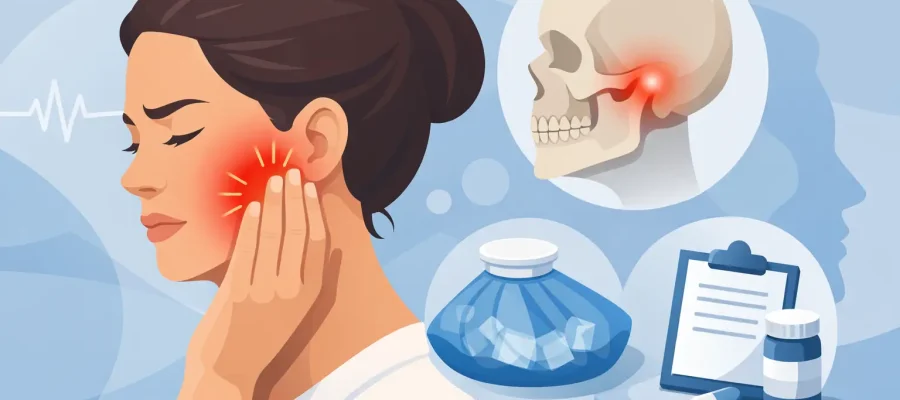
Jaw pain rarely picks a convenient moment. It shows up while you are eating, speaking, boarding a flight, or getting ready for a major event. If you are searching for how to stop jaw pain immediately, the first move is not guessing – it is calming the joint and the surrounding muscles fast enough to prevent the pain from escalating.
Immediate relief is possible in many cases, especially when the pain is coming from clenching, grinding, muscle tension, minor TMJ irritation, or recent overuse. But not every jaw pain is the same. A sore masseter muscle after stress needs a different response than a cracked tooth, a dental infection, or a jaw that suddenly will not open properly.
How to stop jaw pain immediately at home
Start by stopping whatever is triggering the strain. If you are chewing gum, eating something hard, or forcing your mouth open wide, pause right away. The jaw joint is small, active, and easy to aggravate. Resting it early can prevent a mild flare-up from turning into a full day of pain.
Apply a warm compress if the pain feels tight, stiff, or muscular. Warmth tends to help when the issue is clenching, stress tension, or fatigue in the jaw muscles. Hold it against the side of the face for 15 to 20 minutes. If the area feels swollen, inflamed, or recently injured, a cold pack wrapped in cloth may be the better choice for short intervals.
At the same time, shift to a soft-food approach for the rest of the day. Think yogurt, eggs, soup, mashed vegetables, smoothies, pasta, or fish. Skip steak, crusty bread, nuts, popcorn, tough bagels, and anything that asks the joint to work hard. This is one of the fastest ways to reduce repeated irritation.
Pain relief can also help. Over-the-counter options such as ibuprofen or acetaminophen may reduce discomfort, assuming you normally tolerate them and your physician has not told you to avoid them. Ibuprofen may be more useful if inflammation is part of the picture. Acetaminophen may be a better fit for some people with stomach sensitivity or other medication considerations. The label directions matter.
Gentle jaw relaxation works better than stretching aggressively. Let your lips close lightly while keeping your teeth apart. Place your tongue softly on the roof of your mouth just behind your front teeth. That position can reduce clenching and unload the joint. Many people do not realize how often they press their teeth together during stress, concentration, or screen time.
What makes jaw pain worse fast
If your goal is immediate relief, a few common habits work against you. Wide yawning, singing forcefully, yelling, nail biting, chewing ice, and testing the jaw to see if it still hurts usually make things worse. So does sleeping on your stomach with pressure on the jaw.
Massage can help, but only when it is light. Use two fingers to rub the cheek muscles in small circles, then move down toward the angle of the jaw. If the pain spikes sharply, stop. Jaw muscles respond to calm pressure, not force.
Posture matters more than most people expect. If your head is pushed forward over a laptop or phone, the neck and jaw muscles often tense together. Sit upright, bring the screen higher, and relax the shoulders. It is not glamorous advice, but it can reduce strain surprisingly quickly.
When jaw pain is really a tooth problem
Some patients assume every jaw ache is TMJ-related, but the source may be a tooth. A deep cavity, a cracked tooth, an abscess, or irritation around a wisdom tooth can send pain into the jaw and even toward the ear. In that case, home relief may dull the discomfort briefly without solving the cause.
Clues that point toward a dental source include pain when biting on one tooth, sensitivity to hot or cold, gum swelling, a bad taste in the mouth, or throbbing that does not let up. If your jaw pain is paired with swelling in the face, fever, or a feeling of pressure around one specific tooth, do not wait too long to get examined. Infections do not usually improve on their own.
For image-conscious patients preparing for cosmetic work, this distinction matters. Jaw pain can interfere with smile design records, bite planning, and restorative precision. Before veneers, crowns, or implant treatment, the bite and joint should feel stable. Fast treatment is valuable, but accurate diagnosis comes first.
How to stop jaw pain immediately if you grind your teeth
Teeth grinding is one of the most common reasons for sudden jaw soreness, especially first thing in the morning. The masseter muscles can become overworked overnight, leaving your face feeling heavy, tense, or tender. You may also notice headaches at the temples or a sense that your bite feels off when you wake up.
Immediate relief starts with reducing muscle load that same day. Use warmth, avoid hard foods, and keep your teeth apart when you are not eating. If you already have a custom night guard, wear it as directed at night – not randomly during the day unless your dentist specifically recommended that.
Longer-term, grinding often needs a more precise solution. That may mean bite adjustment, a properly fitted occlusal guard, stress reduction strategies, or in some cases masseter Botox when heavy clenching is driving pain, muscle bulk, or repeated dental damage. The right choice depends on whether the problem is mainly muscular, structural, or both.
When jaw pain needs urgent care
Some situations go beyond self-care. If you cannot fully open or close your mouth, if the jaw locks, if you hear a pop followed by significant pain, or if the pain follows trauma, you need professional evaluation quickly. The same goes for visible swelling, trouble swallowing, numbness, or pain that spreads into the neck.
There is another red flag worth taking seriously. Jaw pain can occasionally be confused with cardiac pain, especially in women. If the discomfort is paired with chest pressure, shortness of breath, nausea, sweating, or pain radiating into the arm, seek emergency medical care right away. Do not assume it is dental.
If the issue is dental but urgent, speed matters. A well-equipped clinic can assess whether the source is the tooth, the bite, the joint, the muscles, or a combination of factors. In advanced aesthetic and restorative dentistry, that diagnostic discipline is what protects the final result.
What a dentist may do next
A proper exam usually starts with your bite, jaw movement, muscles, and teeth. The goal is to identify whether the pain is inflammatory, muscular, joint-related, or infection-driven. Sometimes the answer is simple. Sometimes it takes imaging and a closer look at how the teeth meet.
Treatment may include a custom night guard, anti-inflammatory guidance, treatment for an infected tooth, correction of a high filling, or planning around worn or unstable teeth. In selected cases, masseter Botox can reduce overactive jaw muscle force and create meaningful relief for chronic clenchers. For patients considering a smile makeover, this can be part of creating both a refined facial contour and a more comfortable bite.
Clinics that work with full-mouth cases and high-precision cosmetic treatment tend to look at jaw pain through a wider lens. It is not only about making pain stop today. It is about protecting function, symmetry, and long-term comfort so future treatment performs exactly as planned.
At DRGO Smile Clinic, that kind of planning is central to every transformation. A beautiful smile holds its value best when the bite, muscles, and jaw joint are working in harmony.
If your jaw pain fades with rest, soft foods, and simple care, keep protecting the area for a few days instead of testing it too soon. If it keeps returning, gets sharper, or starts interfering with eating or sleep, that is your signal to stop managing around it and get a precise answer.