


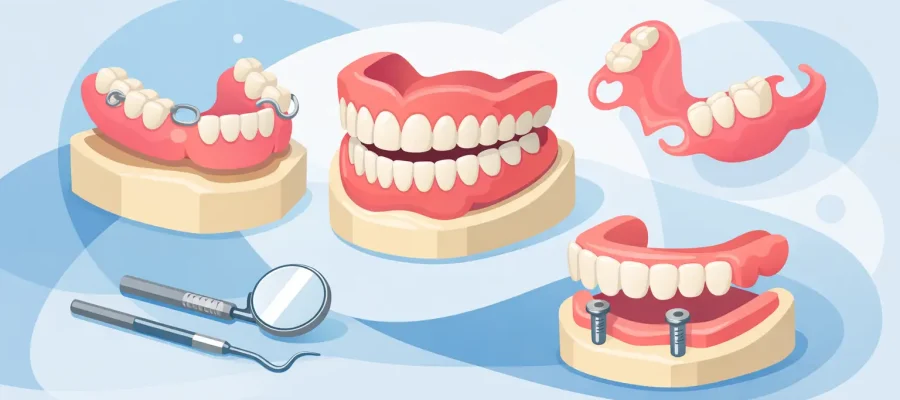
If you are comparing tooth replacement options, removable dental prosthesis types can feel simple at first and surprisingly nuanced once you look closer. A denture is not just a denture. The right choice depends on how many teeth are missing, the condition of your gums and bone, your aesthetic goals, your bite force, and how much stability you expect when speaking or eating.
For some patients, a removable prosthesis is a practical, efficient solution. For others, it is the best temporary stage before implant treatment. And for people who want the most fixed, natural-feeling result possible, removable options may be the starting point rather than the finish line. The key is understanding what each type actually does in daily life, not just how it looks in a brochure.
What removable dental prosthesis types include
A removable dental prosthesis is any custom-made appliance designed to replace missing teeth and surrounding tissue that can be taken out by the patient. The two main categories are partial dentures and complete dentures, but there are important variations within both.
A partial denture replaces several missing teeth while some natural teeth remain. A complete denture replaces all teeth in the upper arch, lower arch, or both. Within those categories, design, materials, retention, and comfort can vary significantly.
That matters because the gap between a basic removable denture and a premium, precision-made prosthesis is substantial. Fit, speech, chewing confidence, facial support, and aesthetics all change depending on the design.
Partial removable prostheses
Partial dentures are used when a patient still has healthy natural teeth that can help support the prosthesis. They are often chosen when implants are not yet planned, not medically appropriate, or not preferred from a budget or timeline standpoint.
Acrylic partial dentures
These are generally the most affordable and often the fastest to produce. They use an acrylic base that sits on the gums, with replacement teeth attached. Some versions include wire clasps that hold onto natural teeth.
The main advantage is accessibility. Acrylic partials can work well as an interim solution after extractions or during a staged treatment plan. They can also restore appearance quickly, which matters if a patient has visible gaps and wants an immediate improvement.
The trade-off is bulk. Acrylic partials tend to feel thicker, less refined, and less stable than more advanced designs. They can also place more pressure on the gums, which may affect comfort over time.
Cast metal partial dentures
A cast metal partial has a thinner metal framework with acrylic and prosthetic teeth built onto it. Because the framework is stronger and more precise, the appliance can often be made slimmer and more secure.
This option usually offers better long-term durability and a more controlled fit than a simple acrylic partial. Many patients find it easier to tolerate because it feels less bulky in the mouth.
The trade-off is visibility and complexity. Depending on the design, metal clasps may show when smiling. It also requires carefully planned support from the remaining teeth, so not every mouth is a good candidate.
Flexible partial dentures
Flexible partials use a softer nylon-like material instead of a rigid acrylic or metal base. They are often marketed for comfort and aesthetics because the gum-colored base and clasps can blend more naturally.
For the right patient, they can be a useful short- to medium-term option, especially when appearance is a priority. They tend to feel less rigid and can be a good answer for certain anatomical challenges.
But flexible does not always mean better. These prostheses can be harder to adjust, harder to repair, and less ideal when a very stable bite is needed. If function and precision matter more than softness, another design may perform better.
Complete removable prostheses
Complete dentures are used when all teeth in an arch are missing or need to be replaced. They restore the smile, support the lips and cheeks, and allow basic chewing and speech function.
Conventional full dentures
A conventional full denture is fabricated after the gums have healed from extractions. It is designed to sit directly on the gum tissue and underlying bone.
When well made, this can create a major aesthetic change. Patients often regain facial support, clearer speech, and the ability to smile confidently again. For many, it is the most direct route to replacing a full arch without surgery.
Still, stability can be a challenge, especially in the lower jaw. As bone changes over time, the fit can loosen. Adhesives may help, but they do not replace true retention. That is why some patients are happy with a traditional upper denture yet frustrated by a lower one.
Immediate dentures
An immediate denture is placed right after teeth are removed, so the patient does not spend time without teeth. For image-conscious patients or anyone traveling for treatment, that can be a major advantage.
The benefit is speed. You leave with teeth the same day, which softens the transition both socially and emotionally. In a high-visibility lifestyle, that matters.
The trade-off is that the gums and bone will change as healing progresses. That means immediate dentures often need relines, adjustments, or replacement after the tissues settle. They are excellent for maintaining appearance during healing, but they are not always the final version.
Implant-retained removable options
Some of the most effective removable dental prosthesis types combine a denture with dental implants. These options stay removable for cleaning, but they gain more retention from implant attachments.
Overdentures
An overdenture is a removable denture that connects to implants, usually through snaps, bars, or similar attachment systems. It can be used for the upper or lower arch.
This option can dramatically improve stability compared with a traditional denture. Patients often notice less movement, better chewing confidence, and less worry about the denture slipping during conversation.
For many people, this is the middle ground that makes sense. You get a major upgrade in function without moving to a fully fixed full-arch restoration. It is especially valuable in the lower arch, where conventional dentures are more likely to feel unstable.
The trade-off is maintenance. Attachments wear over time and may need replacement. The prosthesis still comes out at night or for cleaning, so it does not deliver the same feel as fixed implant teeth.
How to choose between removable prosthesis types
The best choice is not just about replacing teeth. It is about matching the prosthesis to your expectations.
If your priority is a fast, cost-conscious solution, an acrylic partial or conventional denture may be appropriate. If you want a more refined fit and better long-term wear, a cast partial may be worth the upgrade. If you want more retention but are not ready for a fully fixed implant bridge, an implant-retained overdenture can be an excellent balance.
This is also where aesthetics and lifestyle matter. A patient preparing for a wedding, media appearance, or business-facing role may care less about the technical category and more about whether the teeth look natural on camera, support the lips properly, and stay reliable through long days.
That is why planning matters more than labels. A prosthesis should be designed around your smile line, face shape, bite, speech patterns, and long-term goals. In a premium treatment setting, removable solutions are not treated as generic appliances. They are engineered as part of a broader transformation plan.
When removable is the right choice – and when it is not
A removable prosthesis can be the right final solution for many patients. It can also be the smartest temporary stage before implants, bone grafting, or a fixed smile makeover. Age alone does not determine suitability. Anatomy, health, budget, travel schedule, and expectations all matter.
If you want the highest level of bite force, the closest feel to natural teeth, and the most stable full-arch result, fixed implant options are usually stronger performers. If you need flexibility, lower surgical commitment, or a faster initial transition, removable options often make more sense.
At a clinic like DRGO Smile, that distinction is important because treatment planning is not just about what can be done. It is about what will actually satisfy the patient after the photos, after the trip, and months into daily life.
What patients often underestimate
Patients often focus on the number of missing teeth and underestimate tissue support, bite balance, and jawbone shape. These details affect whether a removable prosthesis feels secure or frustrating.
They also underestimate adaptation time. Even a beautifully made denture can feel unusual at first. Speech may need practice. Eating usually starts with softer foods. Minor pressure points may require adjustment. None of that means the prosthesis is failing. It means the mouth is adapting.
What separates a disappointing result from a successful one is precision in planning and follow-up. The best removable prostheses are not chosen casually. They are selected with clear expectations and designed around how the patient wants to live.
If you are weighing your options, the most useful question is not, Which denture is best? It is, Which solution gives me the right balance of aesthetics, stability, comfort, and future flexibility for my life right now?