


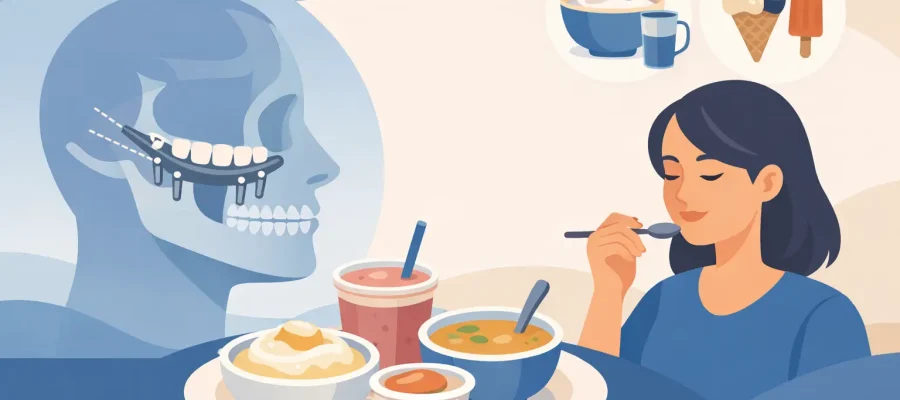
The first meal after zygomatic implant surgery matters more than most patients expect. If you are asking what can I eat after zygomatic implants, the short answer is this: soft, cool, easy-to-chew foods at first, followed by a gradual return to more texture as healing becomes stable.
Zygomatic implants are not routine implants. They are longer, anchored in the cheekbone, and often used when upper jaw bone volume is limited. Because the treatment is more advanced, your diet after surgery needs to support healing without putting pressure on the surgical area, temporary teeth, or sutures. The goal is simple – protect the result, stay comfortable, and avoid setbacks during the most important early days.
What can I eat after zygomatic implants in the first 24 hours?
The first day is about calm, not variety. Your mouth may feel tender, swollen, or numb in places, and that changes how safely you can eat. Foods should be cool or room temperature, very soft, and gentle enough that they do not require real chewing.
Good choices include yogurt, kefir, smoothies eaten with a spoon, lukewarm soup with no chunks, mashed potatoes, applesauce, pudding, and protein shakes. Scrambled eggs can also work if they are soft and not too hot. If you have immediate temporary teeth, that does not mean your mouth is ready for normal eating. Those teeth are there for appearance and function, but they still need protection while the implants begin to stabilize.
Hot food and hot drinks are usually a bad idea on day one because heat can increase bleeding and irritation. Crunchy foods are out. So are anything spicy, acidic, or seeded that could sting or get trapped near the surgical site.
Take small bites, eat slowly, and do not test your limits. This is not the stage to see what you can get away with.
The best diet for days 2 to 7
This is when many patients feel a little better and get overconfident. Swelling may peak around this period, and the implants are still in a very protected phase. You want foods that are soft enough to swallow easily but substantial enough to keep your energy up.
Think creamy oatmeal, soft pasta, cottage cheese, blended soups, avocado, hummus, soft fish, mashed sweet potatoes, soft rice, and well-cooked vegetables. Shredded chicken can work for some patients later in the week if it is moist and very tender, but it depends on your comfort and your surgeon’s instructions.
Protein matters here. Healing tissue needs it. If eating feels like effort, prioritize easy protein sources such as Greek yogurt, eggs, soft tofu, smoothies with protein powder, or blended soups with added soft lentils. Hydration also matters more than people realize. A dry mouth can make eating harder and may leave you more uncomfortable overall.
What you should avoid is just as important. Chips, toast, nuts, raw vegetables, steak, crusty bread, popcorn, and sticky foods can all create unnecessary force. Alcohol is also best avoided during early healing, especially if you are taking antibiotics or pain medication.
What can I eat after zygomatic implants in week 2?
By the second week, many patients want a more normal routine. That is reasonable, but this is still a controlled recovery period. You can usually expand your menu, but not jump straight back into full chewing.
Soft, fork-tender meals are usually the sweet spot. Good options include flaky fish, meatballs with sauce, soft casseroles, tender noodles, pancakes, soft fruits like banana, and steamed vegetables cooked until very soft. Rice dishes can be fine if they are moist and not heavily textured. If you had significant swelling, sinus-related pressure, or a more complex surgery, your progress may be slower. That is normal.
A useful rule is this: if the food needs force, crunch, tearing, or repeated chewing, it is probably too early. Even if you feel fine, overloading the area too soon can irritate healing tissue or put pressure on temporary restorations.
Foods to avoid while zygomatic implants heal
There is no luxury in rushing recovery. The best cosmetic and functional outcome depends on respecting the biology.
For the first several weeks, avoid hard foods like nuts, ice, hard candy, crusty bread, and raw carrots. Avoid crunchy foods such as chips and popcorn. Skip sticky foods like chewing gum, caramel, and dense candy that can pull on temporary teeth. Very spicy foods can irritate sensitive tissue, while acidic foods may sting if there are healing incisions.
You should also be careful with foods that break into small fragments, such as seeded crackers or crumbly snacks. Tiny particles can collect in uncomfortable places and make oral hygiene harder.
If you have been given a temporary full-arch bridge, the caution level is even higher. Temporary teeth are designed to look good and function in a controlled way, but they are not built for aggressive chewing. That distinction matters.
Why chewing too soon can cause problems
Patients often assume the main risk is pain. In reality, pain is only one signal. Excess chewing pressure can disturb healing around the implants, strain the surgical area, and create complications with a temporary prosthesis. With zygomatic implants, your treatment is engineered for stability, but healing still follows a biological timeline.
That is why surgeons usually recommend a soft diet for an extended period, often longer than patients expect. The exact length depends on your case, whether additional implants were placed, whether you received immediate temporary teeth, and how your bite was designed.
It is also why follow-up instructions should override any general article, including this one. Two patients can have the same procedure name and very different recovery plans.
Sample meal ideas that feel easy but satisfying
A smart recovery diet does not have to feel clinical. Breakfast can be Greek yogurt with mashed banana, soft scrambled eggs, or oatmeal thinned with milk. Lunch can be blended lentil soup, mashed avocado with soft eggs, or soft pasta with a mild sauce. Dinner can be flaky salmon, mashed potatoes, and overcooked vegetables, or a soft rice bowl with shredded tender chicken if your surgeon has cleared that texture.
Snacks are where many people slip into the wrong choices. Instead of crackers or granola, choose pudding, cottage cheese, applesauce, smoothies, or a protein shake. If you are traveling for treatment, it helps to plan this before surgery so you are not making decisions while tired, swollen, or medicated.
How to eat comfortably after surgery
Texture matters, but technique matters too. Take smaller bites than usual. Chew slowly and on the side your surgeon recommends, if you have been given that instruction. Do not use straws unless your clinic says they are fine, since suction may be discouraged in the very early stage for some patients.
Keep food lukewarm rather than hot. Rinse only as directed. And do not skip meals just because eating feels inconvenient. Stable nutrition supports better healing, better energy, and usually a smoother recovery overall.
If you notice increasing pain while chewing, bleeding that restarts, a change in how your temporary teeth feel, or a sense that something is moving, stop testing foods and contact your clinic promptly.
When can I eat normally again?
This is the question behind what can I eat after zygomatic implants, and the honest answer is: it depends on your treatment plan. Some patients move through soft foods quickly. Others need a strict soft diet for several weeks or longer, especially with immediate loading protocols or full-arch temporary restorations.
Your surgeon is balancing two priorities at once – giving you fixed teeth fast and protecting the long-term success of the implants. That is why the food timeline can feel conservative. It is not about limiting you. It is about protecting a high-value result.
At DRGO Smile Clinic, recovery guidance is designed around the same principle as the treatment itself: precision first, shortcuts never. A beautiful smile is not only about how your teeth look on day one. It is about how well everything heals, integrates, and performs after you leave.
The best food after zygomatic implants is the food that lets healing stay quiet. If a meal feels gentle, nourishing, and easy on your mouth, you are usually on the right track.