


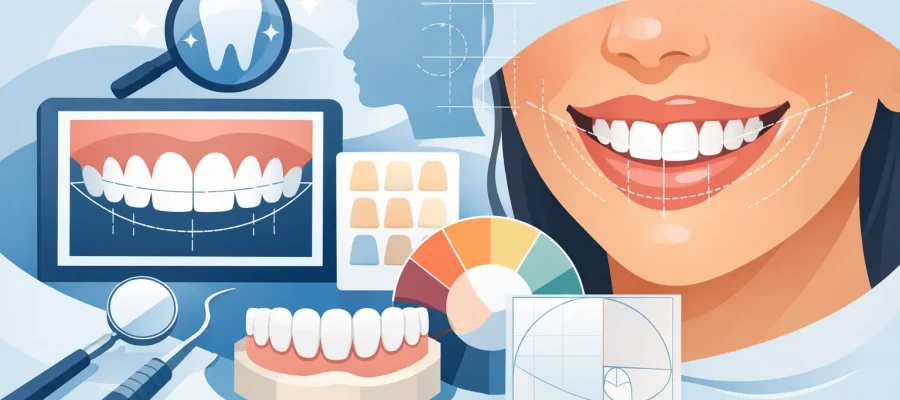
A great smile makeover is rarely about teeth alone. The art and science of smile design is the process of shaping teeth, gums, bite, and facial harmony into one result that looks striking in photos, feels natural in person, and functions well every day.
For patients flying in for veneers, crowns, implants, or a full Hollywood Smile, that distinction matters. You are not buying a set of white teeth. You are investing in a signature look that has to match your face, your age, your personality, and your timeline. When smile design is done well, beauty and biomechanics work together. When it is rushed or copied from a trend, the result can look flat, bulky, or unnatural.
What the art and science of smile design really means
Smile design sits at the intersection of aesthetics and clinical dentistry. The artistic side is what people notice first – tooth shape, brightness, symmetry, lip support, and the way the smile frames the face. The scientific side is what protects the result – bite balance, jaw movement, gum health, material choice, and the structural condition of the natural teeth or implants underneath.
That balance is what separates a luxury result from a cosmetic shortcut. A smile may look impressive in a close-up before-and-after, but if the length is wrong for the face, the edges are too uniform, or the bite is overloaded, problems tend to show up later. Chips, tension, speech changes, gum irritation, and an overly artificial appearance are often signs that the design focused on surface beauty without enough clinical discipline.
Smile design starts with the face, not the teeth
The best smile planning begins by reading the full face. Dentists assess facial proportions, lip mobility, smile line, gum display, skin tone, and even how the teeth appear while speaking. A smile that looks perfect on a model with a broad lip line may not suit someone with a narrower smile or a more mature facial structure.
This is where customization becomes everything. Some patients want a bright, camera-ready Hollywood Smile with high impact and crisp definition. Others want a softer, more natural finish that simply looks like an exceptional version of their original teeth. Both can be beautiful. The right direction depends on goals, lifestyle, and how visible the treatment should be.
Tooth shape is one of the biggest design decisions. Rounded edges often feel softer and more youthful. More squared teeth can create a bold, polished look. Length also changes perception. Slightly longer central incisors can make the smile look younger and more dynamic, while shortening them too much can flatten the expression. These details sound small, but they completely change the final impression.
Why digital planning changed smile design
One reason modern cosmetic dentistry feels more predictable is digital planning. Instead of asking patients to imagine the outcome, clinics can build a visual blueprint before treatment starts. With Digital Smile Design, facial photos, videos, scans, and bite records are used to map the proportions of the future smile against real facial movement.
That matters for international patients working on a tight schedule. If you are traveling for treatment, you want fewer surprises and clearer decisions before your teeth are prepared or your restorations are made. A 3D preview helps answer the most important questions early: Will the teeth look too large? Is the shade too bright? Does the smile feel natural for your face? Can the result be delivered within the visit timeline?
Digital planning also improves communication between the dentist, lab team, and patient. Everyone works from the same target. In premium clinics, that leads to faster adjustments, cleaner workflow, and more precise final restorations, especially when CAD/CAM systems are used for same-day or accelerated treatment.
The science behind a beautiful result
Aesthetic dentistry gets attention because of appearance, but the science behind smile design is what makes the result wearable. Bite analysis is a major part of that. Teeth should not only look aligned – they need to meet correctly when you chew, speak, and move your jaw side to side.
If veneers or crowns are too thick, too long, or not properly adjusted, they can place excess force on certain teeth. That can lead to chipping, discomfort, or tension in the jaw muscles. For patients who already clench or grind, the design needs even more control. In some cases, supporting treatments such as masseter Botox or a night guard may be part of protecting the cosmetic investment.
Material selection matters too. E-Max veneers are often chosen for their translucency and refined esthetics, especially in the front of the smile. Zirconium crowns may be more suitable where extra strength is needed. Implant-supported restorations require a different planning logic because gum support, bone level, and prosthetic structure all affect how natural the final teeth will look. There is no single best material for every patient. The right choice depends on anatomy, habits, expectations, and timeline.
Gum design is part of smile design
Patients often focus on tooth color and shape, but gums are just as important. Uneven gum levels can make teeth appear short, slanted, or mismatched even when the restorations themselves are technically good. Excess gum display can also affect how balanced the smile looks.
That is why gum aesthetics are often part of advanced smile planning. Small refinements to the gum line can create cleaner symmetry and better proportions. In some cases, this is the difference between a smile that looks improved and one that looks fully finished.
The same principle applies to implant cases. Replacing missing teeth is not just about filling a gap. The emergence profile, gum contour, and support of the lips all shape whether the result reads as natural or obviously dental.
Fast treatment only works when the planning is exact
Speed is attractive, especially for patients combining dentistry with travel. Same-day crowns, immediate implants, and instant smile makeovers can be excellent options, but only when the workflow is built around precision. Fast dentistry is not the opposite of careful dentistry. At a high level, it depends on it.
The real advantage of an advanced clinic is not simply that treatment can happen quickly. It is that diagnostics, design, preparation, fabrication, and fit are coordinated tightly enough to make speed safe and predictable. That is a major difference for patients trying to achieve a dramatic result in one trip without sacrificing quality.
This is where a clinic like DRGO Smile has a strong edge for international patients. When digital design, restorative dentistry, implant planning, and concierge logistics are handled as one system, the process feels controlled rather than rushed. That removes a lot of the uncertainty people usually associate with getting major dental work abroad.
The trade-off between trend and timelessness
One of the biggest decisions in smile design is how far to push the aesthetic. Ultra-bright, highly uniform smiles photograph well and appeal to many patients, especially those in public-facing careers or major life moments. But there is always a line between glamorous and overdone.
That line moves depending on the person. A creator or media-facing entrepreneur may want higher brightness and more definition because their smile is part of their brand. A professional who wants confidence without obvious dental work may prefer a more natural texture, softer translucency, and less aggressive whitening. Neither approach is wrong. The mistake is treating every face with the same formula.
The best smile design respects both aspiration and realism. It gives patients a transformed look without stripping away individuality.
What patients should expect from a proper smile design process
A premium smile design journey should feel highly managed from the start. First comes consultation and records – photos, scans, X-rays, and a discussion of goals. Then the design phase begins, where shape, shade, alignment, and function are planned together. After that, the preparation and mock-up stage allows the team to test the design before final fabrication. Finally, the restorations are placed, refined, and checked for comfort, esthetics, and bite harmony.
The strongest clinics do more than produce attractive teeth. They explain why a certain shape fits your face, why one material is better than another, and what can realistically be achieved within your visit. That level of clarity builds trust because it replaces sales pressure with engineered certainty.
The most impressive smile is not always the whitest or the most dramatic. It is the one that feels like it belongs to you, only elevated – cleaner, sharper, more confident, and built to last. That is the real standard behind the art and science of smile design, and it is why the best results never happen by accident.