


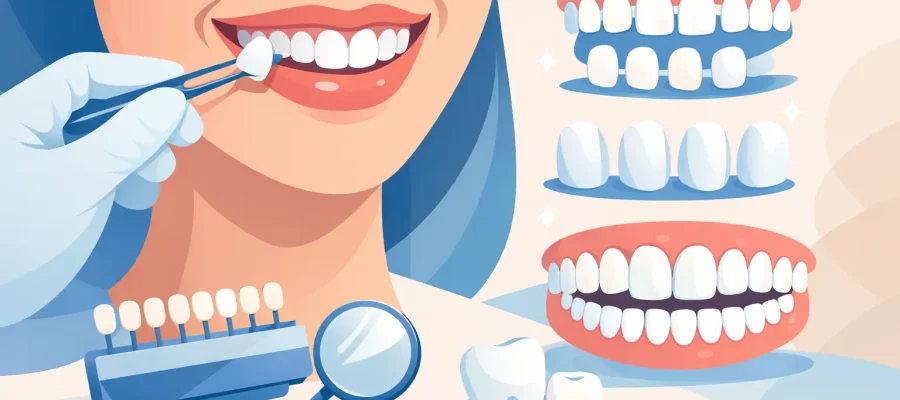
You do not need 20 veneers to get a high-impact smile. In most cases, the real question behind how many veneers do you actually need? is much more specific: how many teeth show when you smile, how visible are the flaws, and what result are you trying to create?
That number can be surprisingly small for some patients and much larger for others. A subtle refresh might require only four to six veneers. A full smile makeover might call for eight to ten, and sometimes more if the smile is wide, the bite needs balancing, or the patient wants a brighter, more uniform Hollywood Smile. The right answer is never based on a package first. It should be based on facial proportions, lip movement, tooth display, and symmetry.
How many veneers do you actually need for a balanced smile?
The most common veneer count is not one universal number. It depends on how many upper teeth are visible in your natural smile zone. For many adults, that visible zone includes the front six to eight upper teeth. Those are the teeth that carry the visual weight of the smile and attract attention in photos, conversation, and video.
If only the central teeth are treated while the adjacent teeth remain darker, shorter, or differently shaped, the result can look segmented instead of refined. That is why cosmetic planning usually focuses on creating continuity rather than fixing a single tooth in isolation.
In practical terms, four veneers may work if the concern is limited to the front teeth and the neighboring teeth already have good color and shape. Six veneers often cover the most visible teeth in a moderate smile. Eight veneers are a common choice for patients who want fuller smile coverage and stronger symmetry. Ten may be recommended for broad smiles, high lip lines, or patients seeking a more dramatic, camera-ready finish.
The factors that decide veneer count
The first factor is smile width. Some people show only six upper teeth when they smile. Others show eight, ten, or even more. If your smile extends widely and the untreated teeth are visible at the corners, stopping too early can make the transition obvious.
The second factor is color. If you want a noticeably brighter shade, your dentist has to think beyond the front two or four teeth. Veneers that are significantly whiter than neighboring natural teeth can look artificial unless the visible smile zone is treated consistently. This is one reason patients asking for a bright Hollywood Smile often need more veneers than they expected.
The third factor is shape correction. Veneers are not only about whiteness. They also correct worn edges, small gaps, uneven lengths, narrow teeth, and minor alignment issues. If those issues affect several visible teeth, the veneer count rises because harmony matters more than any single tooth.
The fourth factor is your bite and tooth position. If one canine sits outward, if premolars show prominently, or if there is asymmetry from one side to the other, the treatment plan may need to extend farther back. This is where digital planning becomes valuable. A veneer plan should be engineered around the full smile, not guessed from a close-up photo.
When 4 to 6 veneers can be enough
A lower veneer count works best when the patient already has a strong foundation. The side teeth may have a good natural shade, healthy enamel, and acceptable shape, while the main concerns are concentrated in the center of the smile.
This approach can be ideal for patients who want refinement rather than full transformation. Small spacing, slight edge wear, or minor irregularity in the front teeth can often be corrected beautifully with four or six veneers. The result is elegant and conservative.
The trade-off is that lower counts leave more natural tooth structure untouched, but they also limit how much the smile can be changed. If you want a brighter, more sculpted, celebrity-style finish, four veneers usually will not create enough visual continuity.
When 8 to 10 veneers make more sense
Eight to ten veneers are common in premium smile makeover cases because they give the dentist room to control the entire visible upper smile. This is often the sweet spot for patients who want a polished, balanced, high-aesthetic result without visible color breaks at the sides.
This range is especially useful if your goals include a whiter smile, improved tooth proportions, broader smile design, or correction of multiple cosmetic issues at once. Instead of chasing one flaw at a time, the treatment redesigns the smile as a complete composition.
For many international patients, this is the category that delivers the best visual payoff. It creates the kind of before-and-after difference people notice immediately, while still looking proportionate to the face when planned correctly.
Do you need veneers on the bottom teeth too?
Usually, not at first. Most cosmetic veneer plans focus on the upper teeth because they dominate the smile. The lower teeth are less visible in everyday speech and photos, so treating them is often optional.
That said, lower veneers or whitening may be recommended if the lower teeth are highly visible, very dark compared with the upper arch, or noticeably worn. A premium result should look coordinated from every angle. If the top teeth are dramatically improved but the lower teeth distract from the final look, your dentist may suggest adding treatment below.
This is another place where realistic planning matters. Not every smile needs full top-and-bottom veneers. Many do not. The goal is visual balance, not overtreatment.
Veneers vs crowns – why the number can change
Some patients ask for veneers when crowns are actually the better choice for part of the smile. If teeth have large fillings, fractures, root canal history, or heavy structural loss, crowns may provide better long-term support than veneers alone.
That can affect the final count and the treatment mix. A smile makeover may include veneers on some teeth and crowns on others, especially when aesthetics and strength both matter. What matters most is not using one label for everything, but choosing the right restoration for each tooth while keeping the final design consistent.
How a specialist clinic plans the right number
The smartest veneer treatment starts with design, not drilling. At DRGO Smile Clinic, smile planning is built around digital analysis, facial proportions, and 3D previewing so the patient can see the direction before final treatment begins.
This step is where the veneer count becomes clear. The dentist studies lip line, smile width, tooth display at rest and in motion, midline, gum architecture, and shade goals. Then the case is mapped for both beauty and function. That matters because the best smile is not just white and straight. It needs to fit your face, age well, and feel natural when you speak and bite.
For international patients, this level of planning also protects the timeline. If you are flying in for treatment, you want decisions made with precision before the final restorations are produced. Predictability is luxury in cosmetic dentistry.
How many veneers do you actually need if you want a Hollywood Smile?
If your goal is a true Hollywood Smile, the answer is usually more than the minimum. Most patients seeking that level of transformation need enough veneers to cover the full visible upper smile, often eight to ten teeth and sometimes more.
That is because the Hollywood Smile look depends on consistency. The teeth need to match in brightness, contour, surface texture, and line of the smile. If the makeover stops too early, the illusion breaks.
Still, bigger is not automatically better. A high-end result should look intentional, not bulky or overbuilt. The right plan gives you presence on camera and in person without making the teeth look oversized for your face.
The best question to ask at your consultation
Instead of asking only, “How many veneers do I need?” ask, “How many teeth are visible in my smile, and how will you keep the result balanced from edge to edge?”
That question shifts the focus from price per unit to outcome quality. It also helps you understand whether the clinic is planning your case aesthetically or simply selling a number.
A confident dentist should be able to show you why they recommend four, six, eight, or ten veneers, what would happen if you did fewer, and where the visual compromises begin. That is the difference between a quick cosmetic fix and a signature smile designed with clinical discipline.
If you are considering veneers, the right number is the one that makes your smile look complete, not just improved. Done properly, you should not be counting teeth in the mirror. You should be seeing one clean, believable result that feels like the best version of you.