


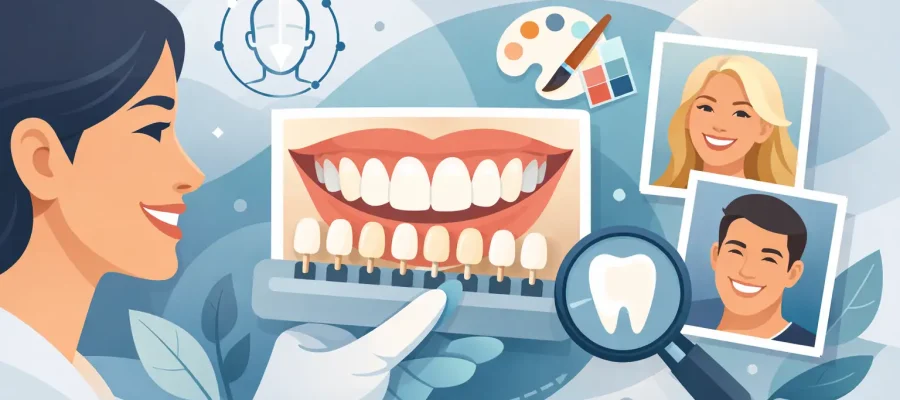
A smile can look flawless in a before-and-after photo and still feel wrong in real life. That is exactly why every smile design should be personalized. The right result is not just brighter or straighter teeth. It is a smile that fits your face, your bite, your speech, and the way you want to be seen.
For patients considering veneers, crowns, implants, or a full Hollywood Smile, this is where the difference between a generic cosmetic result and a high-end transformation becomes obvious. Two people can ask for the same reference photo and need completely different designs. The smile has to work with the person wearing it.
Why every smile design should be personalized, not copied
The biggest mistake in cosmetic dentistry is treating smile design like a template. Social media has made certain looks popular – ultra-white shades, very straight incisal edges, broad smiles, uniform tooth shapes. Those features can look stunning on the right face. On the wrong face, they can look artificial, bulky, too dominant, or simply out of character.
A personalized smile design starts with proportion. Tooth width, length, translucency, and edge shape should relate to your facial structure, lip movement, gum display, age, and skin tone. A patient with a strong jawline and low lip line may suit a bolder, more structured design. Someone with softer features may look better with more delicate contours and natural texture. Neither is better. The point is fit.
This matters even more for international patients flying in for high-value treatment. If you are investing in veneers, zirconium crowns, E-Max restorations, or full-arch implants, you do not want a smile that looks generic by day three. You want one that still feels right six months later, in meetings, photos, weddings, and everyday conversation.
A beautiful smile is more than tooth color and shape
Patients often arrive focused on visible details first. They ask for whiter teeth, longer front teeth, or a more even smile line. Those goals matter, but appearance alone is never the whole case.
A real smile design also has to respect function. How your upper and lower teeth meet affects comfort, durability, and even speech. If restorations are designed only for looks, they may chip more easily, feel heavy, interfere with pronunciation, or create tension in the jaw. A smile that photographs well but feels unnatural is not a premium result.
This is why planning should include facial analysis, bite evaluation, gum levels, midline, tooth display at rest, and dynamic movement when you speak and smile. In many cases, the final design is a balance between what looks ideal on screen and what performs best in the mouth. That balance is where clinical discipline matters.
The face sets the rules
Teeth do not exist in isolation. The lips frame them, the cheeks support them, and the jawline changes how strong or soft they appear. Even the same tooth shape can read differently depending on face width and lip mobility.
That is why high-level smile design starts from the face and moves inward. The goal is not to make the teeth the only thing people notice. The goal is to create harmony, so the entire face looks more refined, more rested, and more confident.
The bite sets the limits
There is also a practical side patients do not always see at first. If you grind, clench, have worn enamel, missing teeth, gum asymmetry, or an uneven bite, the design process has to account for those realities. Otherwise, cosmetic work can become maintenance-heavy or short-lived.
Sometimes the most attractive design on a mock-up needs to be adjusted for strength, material thickness, implant position, or long-term stability. Personalization is not about saying yes to every aesthetic request. It is about building the best version of that request around your anatomy.
Why personalization matters even more in full smile makeovers
The larger the treatment, the more customization matters. A single veneer can be blended into surrounding teeth. A full smile makeover changes the visual identity of the lower face. That kind of transformation needs precision.
In veneer and crown cases, small changes in edge length or tooth volume can dramatically affect how youthful or natural the smile looks. In implant cases, the stakes are even higher because bone support, gum architecture, lip support, and phonetics all come into play. For All-on-4 or All-on-6 patients, a beautiful result is not just about fixed teeth immediately. It is about designing a smile that restores facial support and looks believable from every angle.
For event-driven patients, timing adds another layer. If you are planning treatment ahead of a wedding, launch, public appearance, or major life milestone, there is little room for guesswork. You need a result that is predictable, fast, and designed around how you actually present yourself.
Digital planning makes personalization more precise
This is where modern workflow changes everything. Digital Smile Design, facial scanning, photography protocols, and 3D previews allow the smile to be tested before final placement. Instead of choosing a treatment blindly, patients can see how proportions, contours, and smile line interact with their own face.
That preview does not replace clinical judgment, but it strengthens it. It helps align expectations early, reduce surprises, and create a result that feels intentional rather than improvised. For international patients on a tighter timeline, this matters. Efficient treatment should never mean rushed design.
At DRGO Smile Clinic, this kind of planning is part of what makes same-visit and accelerated treatments more reliable. Speed works best when the design phase is disciplined. Technology is not there for show. It is there to make the final outcome more accurate.
What a personalized workflow usually includes
A proper case review looks at more than the teeth alone. It may include high-resolution photos, smile videos, digital measurements, shade planning, gum evaluation, and mock-up previews. If the case includes implants or restorative correction, bone levels and occlusion also shape the design.
That level of planning creates two benefits patients care about most: confidence before treatment and fewer compromises after it.
Why some smiles look expensive and others look obvious
Most patients can spot the difference, even if they cannot name it. Some cosmetic dentistry looks polished, balanced, and naturally high-end. Other work looks too flat, too opaque, too square, or too identical.
The difference usually comes down to customization. Natural teeth are not perfectly uniform. They have micro-texture, slight variation, depth, and light behavior. A personalized smile design controls those details so the result looks elevated rather than manufactured.
There is also an emotional layer. A smile should still feel like you, just upgraded. If the design changes your expression too aggressively or gives you a look that does not match your personality, confidence can actually drop. The best cosmetic result does not create a mask. It creates alignment between appearance and identity.
The best smile design is personal, not trendy
Trends move fast. Your smile should last. That is another reason why every smile design should be personalized. A style that dominates social media this year may feel dated later, but facial harmony rarely goes out of style.
This does not mean the result has to be ultra-natural or conservative. Some patients want a brighter, camera-ready, high-glam finish, and that can be the right choice. The key is designing that look with intention. A bold smile can still be personalized. Luxury in dentistry is not about copying the most dramatic result. It is about getting the exact level of refinement that suits you.
If you are investing in cosmetic or restorative treatment, ask a simple question before you commit: is this design built around my face and function, or around a standard formula? The answer often predicts whether the final result will feel merely new or genuinely right.
A signature smile should never look borrowed. It should look like the best version of your own.