


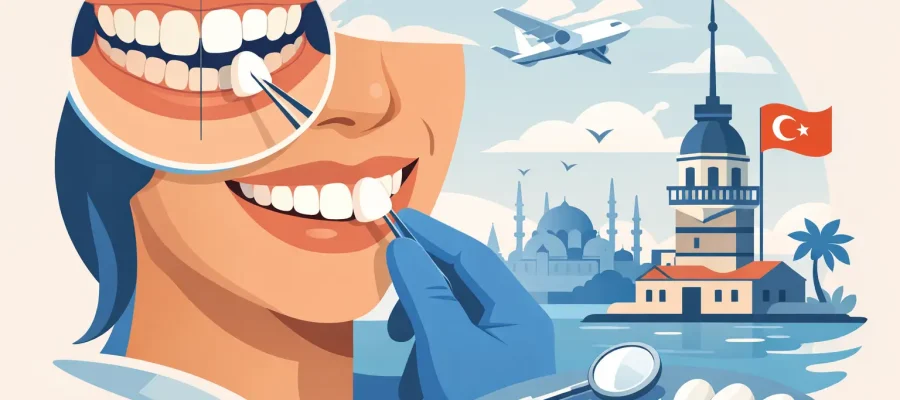
A new smile should not begin with a filtered before-and-after photo. It should begin with a clear diagnosis, a plan you can see, and a treatment timeline that respects both your teeth and your travel schedule. This dental veneers in Turkey: complete patient guide is designed for U.S. patients considering a premium smile makeover abroad and wanting to know exactly what happens before they commit.
Veneers can create a brighter, more balanced, camera-ready smile with remarkable precision. But the best result is not simply the whitest or biggest set of teeth. It is a smile engineered around your facial proportions, bite, gum line, speech, and long-term dental health.
What Dental Veneers Actually Change
Dental veneers are thin, custom-made shells bonded to the front surface of natural teeth. They are commonly used to improve color, shape, size, symmetry, minor spacing, and worn or chipped edges. For patients who have healthy teeth but dislike how their smile appears, veneers can deliver a dramatic change without replacing every tooth with a full crown.
The word “veneers” is often used loosely in cosmetic dentistry, especially in treatment packages. That is why you should ask a direct question during your consultation: are you being recommended true veneers, crowns, or a combination of both? A veneer covers the visible front of a tooth. A crown surrounds the entire tooth and may be appropriate when there is significant decay, a large old filling, a root canal, fracture risk, or substantial loss of tooth structure.
A full Hollywood Smile may include veneers on some teeth, zirconium crowns on others, gum contouring, whitening, or implant treatment. There is nothing wrong with a mixed plan when it is clinically justified. The concern is being offered one treatment for every tooth without a proper examination.
Dental Veneers in Turkey: A Complete Patient Guide to Materials
Material affects the look, preparation requirements, durability, and price of your smile makeover. The right choice depends on your existing teeth, bite forces, aesthetic goals, and how many teeth are being restored.
E-Max porcelain veneers
E-Max is a lithium disilicate ceramic valued for its lifelike translucency. It can mimic the way natural enamel reflects light, making it a strong choice for visible front teeth and patients seeking a refined, natural-looking transformation. With thoughtful shade selection and high-quality bonding, E-Max veneers can create a polished result without an opaque appearance.
They are not automatically the answer for every case. Patients with very dark underlying teeth, intense grinding habits, or complex bite issues may need a different approach or additional protection, such as a night guard.
Zirconium restorations
Zirconium is exceptionally strong and is often selected for crowns, bridges, and teeth exposed to heavy chewing pressure. Modern multilayer zirconium can look highly aesthetic, but it generally has a different optical character than E-Max. It may be more suitable where strength is the first clinical priority.
If a clinic proposes zirconium for a front-tooth smile makeover, ask why. The answer should relate to your tooth condition and bite, not simply to a standard package.
Composite bonding
Composite is a tooth-colored resin applied directly to the tooth. It can be a conservative option for small corrections, edge repairs, and limited budget goals. It is usually less expensive than porcelain but can stain, chip, and require maintenance sooner. For a major, long-lasting smile redesign, custom ceramic restorations are often the more predictable aesthetic investment.
Are You a Good Candidate?
The ideal veneer patient has stable oral health, realistic expectations, and enough healthy tooth structure to support conservative treatment. Mild crowding, small gaps, discoloration that does not respond well to whitening, uneven edges, and proportion concerns can all be suitable indications.
Veneers should not be used to hide untreated disease. Active gum inflammation, untreated cavities, unstable bite problems, severe enamel loss, and uncontrolled teeth grinding need attention first. In some cases, orthodontics, gum treatment, implants, or restorative work should come before cosmetic veneers.
A responsible clinic does not begin by choosing a shade. It begins by assessing X-rays, photographs, gum health, bite, and the condition of each individual tooth. For international patients, this planning may start remotely with clear photos and dental records, then be confirmed in person before any irreversible preparation occurs.
The Treatment Journey in Istanbul
A well-managed veneer trip is structured around planning, precision, and enough time for clinical checks. Many cosmetic veneer cases can be completed in roughly five to seven days, though the exact schedule depends on the number of teeth, laboratory workflow, gum treatment needs, and whether other procedures are included.
1. Remote consultation and treatment preview
Before travel, you share photos, goals, and relevant dental history. This is the point to explain what you want to change: a brighter shade, a less gummy smile, more symmetry, closed spaces, or a stronger appearance on camera.
Digital Smile Design can turn these conversations into a visual direction. With digital scans, facial analysis, and 3D planning, your dentist can assess proportions before final restorations are created. A preview is a planning tool, not a promise that every screen image will translate identically in the mouth, but it makes the process far more intentional.
2. Clinical examination and smile design confirmation
Once in Istanbul, the team completes an in-person examination, diagnostic imaging where needed, and digital scans. Your dentist confirms whether veneers are appropriate, identifies any teeth that need crowns or other treatment, and refines the color, shape, and length of the proposed smile.
This is your moment to be precise. Bring reference images if useful, but describe what you like about them. “Natural but brighter,” “more even without looking oversized,” and “less visible gum when I smile” are more useful than asking for someone else’s exact teeth.
3. Preparation and temporary smile
For conventional veneers, a small amount of enamel may be shaped to create room for the ceramic. The amount should be dictated by the planned design and tooth position. Some patients qualify for minimal-prep or no-prep options, but these are not universally better. Adding ceramic without creating enough space can produce teeth that look bulky.
After preparation, digital impressions are captured and temporary restorations may be placed. Temporaries let you experience the proposed length and contour while the final ceramics are being made. You may notice temporary sensitivity, especially with hot or cold drinks, but persistent pain should always be reported.
4. Try-in, bonding, and final checks
Before final bonding, the dentist checks fit, shade, contacts, bite, and overall harmony with your face. This stage should never feel rushed. Once porcelain is bonded, alterations are limited compared with a temporary mock-up.
After placement, your bite is adjusted so the veneers function comfortably in speech and chewing. You should leave with clear aftercare instructions and a plan for what to do if you have questions after returning home.
What a Transparent Quote Should Include
Turkey can offer significant value compared with cosmetic dentistry in the United States, particularly when treatment volume, in-house digital workflows, and coordinated travel support reduce overhead. Still, the lowest advertised price is not necessarily the best value. A smile makeover is a long-term restoration, not a vacation purchase.
Request a written plan that specifies the number of teeth, material proposed, whether each restoration is a veneer or crown, diagnostic imaging, temporaries, gum treatment, sedation if applicable, hotel and transfer details, and follow-up arrangements. Ask what could change the quote after the in-person exam. If additional decay, root canal treatment, or gum care is found, you deserve to understand the clinical reason and cost before proceeding.
At DRGO Smile Clinic, international smile makeover planning can combine digital treatment design with concierge coordination, including airport transfers, accommodation support, and multilingual guidance. The advantage is not just convenience. It is having a defined patient pathway from arrival through final smile checks.
Safety Questions Worth Asking Before You Fly
Look beyond social media transformations. Ask who will perform your treatment, what qualifications and specialties are involved, and whether the clinic can show cases similar to yours. Request unedited examples where possible, including smiles shown from multiple angles rather than only heavily lit front-facing images.
You should also ask how infection control is managed, what technology is used for scans and imaging, how the clinic handles complications, and what support is available once you return to the U.S. A trusted provider welcomes these questions. Confidence should come from clarity, not pressure.
If you grind your teeth, have jaw discomfort, or play contact sports, discuss protection before treatment. A custom night guard may protect your investment. Veneers are durable, but they are not indestructible, and using teeth to open packages or bite hard objects can chip even excellent ceramic work.
Life After Veneers
Porcelain veneers do not decay, but the teeth and gums around them still require daily care. Brush twice daily with a nonabrasive toothpaste, floss carefully, keep regular hygiene visits, and avoid aggressively abrasive whitening products. Whitening gel will not change the color of porcelain, so shade planning matters before final placement.
With quality materials, precise bonding, healthy gums, and good habits, veneers can remain beautiful for many years. Their lifespan varies by bite, hygiene, diet, grinding, and maintenance. The goal is not a smile that looks perfect for a week. It is a signature smile that still feels like you when you see it in the mirror, speak in a meeting, and smile without thinking twice.