


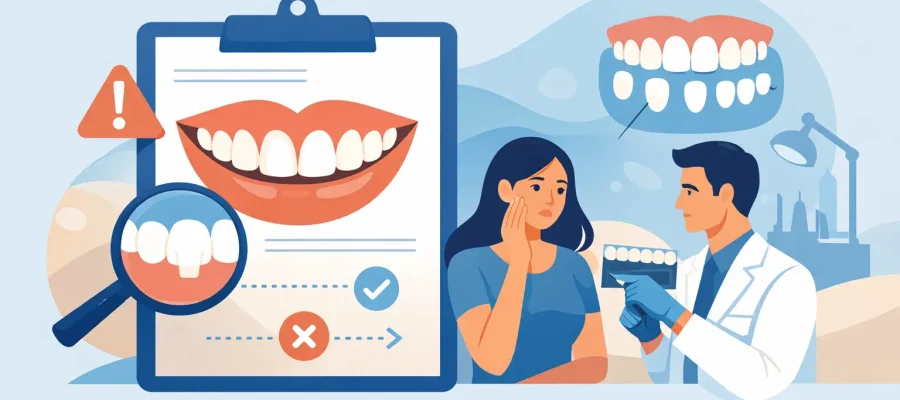
A smile makeover can look extraordinary in a preview and still disappoint in real life if the planning stops at bright, straight teeth. The most common smile design mistakes to avoid happen before a veneer, crown, or implant is placed: proportions are guessed, bite forces are overlooked, or a patient chooses a look that does not belong naturally to their face. Premium results are engineered, not selected from a catalog.
For international patients, the stakes are higher. You may be investing in travel, a concentrated treatment timeline, and a transformation that will appear in every meeting, photo, and video. The right clinic should make the process feel efficient without making the clinical decisions feel rushed.
1. Choosing a Copy-Paste Hollywood Smile
A celebrity-inspired reference can be useful, but it should be a starting point, not a prescription. Teeth that look refined on one person can look too wide, too long, too opaque, or overly square on another. Facial shape, lip movement, skin tone, age, and the amount of tooth visible at rest all influence what looks believable.
A strong smile design studies facial midline, eye line, lip contour, and the natural rhythm of the teeth. It also considers personality. Some patients want a bold, camera-ready Hollywood Smile; others want a polished result that friends notice only after they notice the new confidence. Neither is more correct. The mistake is choosing a style without translating it to your own features.
Digital Smile Design and 3D previews make this conversation more precise. They allow you to evaluate tooth length, edge shape, and overall brightness before irreversible preparation begins. Ask to see the design from more than one angle and with your lips at rest, not only in a full smile.
2. Treating Shade as the Whole Transformation
Very white teeth can be striking, but color alone does not create luxury aesthetics. When the shade is too bright for the complexion, the restorations are too opaque, or the gums are not considered, the result may look artificial rather than elevated.
Natural enamel has depth. It reflects and transmits light differently from a flat, solid surface. High-quality ceramic planning accounts for translucency, surface texture, and subtle color variation, especially near the edges of front teeth. E-Max veneers are often chosen for their lifelike optical qualities, while zirconium crowns can be the better choice when strength and broader reconstruction needs take priority. The best material depends on the tooth, bite, and treatment plan, not a trend.
Shade should also be coordinated with any natural teeth that will remain visible. Whitening may need to happen before final ceramic color is selected. Otherwise, a future whitening session can make natural teeth look mismatched beside new restorations.
3. Ignoring Gum Symmetry and Tooth Proportions
Even beautifully made veneers can look wrong when the gumline is uneven or the teeth are proportioned poorly. A single tooth that appears too short, a gumline that rises too high on one side, or front teeth that are oversized can pull attention away from the entire smile.
This is why smile design cannot be separated from gum aesthetics. In some cases, minor contouring creates a more balanced frame for the teeth. In others, gum recession, inflammation, or a gummy smile should be addressed before veneers or crowns are finalized. The goal is not identical gums and identical teeth. Natural smiles have subtle asymmetry. The goal is harmony that reads as intentional.
Proportions matter just as much. Central incisors usually lead the composition, but their width-to-length ratio must suit the face and lip line. A design that looks impressive on a digital close-up can feel bulky in conversation. A mock-up or try-in gives you a chance to assess the smile at real speaking distance.
4. Preparing Healthy Teeth More Than Necessary
One of the most serious common smile design mistakes to avoid is accepting aggressive tooth reduction when a more conservative approach may be possible. Every case is different. Teeth that are severely discolored, rotated, damaged, or previously restored may require crowns for predictable coverage and strength. But healthy enamel is valuable, and preserving it should always be part of the clinical discussion.
Veneers can often be a conservative solution when the underlying teeth are structurally sound and the desired changes are appropriate for thin ceramic restorations. No-prep or minimal-prep options may be possible in selected cases, although they are not automatically better. If teeth already project forward, adding material without preparation can create a bulky appearance.
The right question is not whether veneers are better than crowns. Ask why a specific restoration is recommended for each tooth, how much preparation is anticipated, and what the long-term maintenance plan looks like. A premium plan is individualized tooth by tooth.
5. Designing for Photos but Not for Function
A smile must work when you chew, speak, laugh, and sleep. If bite relationships are ignored, new veneers or crowns can chip, loosen, feel uncomfortable, or create tension in the jaw. This risk increases for patients who grind their teeth, clench under stress, have worn enamel, or have an unstable bite.
Before final placement, the clinic should evaluate how upper and lower teeth meet, how the jaw moves, and whether there are signs of bruxism. Sometimes the solution includes adjusting the design, strengthening selected teeth with crowns rather than veneers, or recommending a protective night guard after treatment. For patients with pronounced clenching, masseter Botox may be considered as part of a broader plan, but it does not replace bite assessment or protective care.
Speed is valuable only when it is supported by diagnostics. Same-day CAD/CAM crowns and immediate smile workflows can be excellent options when the case is suitable, records are complete, and the design has been verified. They should never mean skipping the functional checks that protect your investment.
6. Skipping the Trial Smile and Clear Approval Point
Many patients know they want a brighter, straighter smile but struggle to describe details such as incisal edge shape, tooth dominance, or how youthful they want the result to look. That is normal. The mistake is moving forward without a clear approval moment.
A digital plan, wax-up, or temporary mock-up turns vague preferences into decisions you can see. You can determine whether the teeth should be slightly shorter, whether the canines should look softer, or whether the shade needs more warmth. Once final ceramics are made, changes can be more complicated and may affect timing.
Be direct about what you do not want. If you are concerned about a too-white result, a bulky look, or perfectly uniform teeth, say so early. Reference images help, but explain what you like in each image. You may like the shape in one and the brightness in another.
7. Underestimating the Importance of Existing Dental Health
Cosmetic dentistry is not a cover for untreated disease. Gum inflammation, active decay, infection, cracked roots, and failing restorations can compromise an otherwise beautiful makeover. For patients considering implants, bone levels and sinus anatomy may also determine whether grafting or a sinus lift is required before a final restoration can be placed.
A proper diagnostic phase may include digital scans, X-rays, photographs, and a review of your dental history. It can reveal that a tooth planned for a veneer needs a crown, or that an implant-supported solution will offer a more reliable outcome than repeatedly repairing a weakened tooth. This is not a setback. It is the difference between a short-term cosmetic fix and a smile built to last.
8. Booking a Trip Without a Realistic Treatment Timeline
International dentistry should feel organized, not compressed. Some treatments can be completed rapidly, while others require healing time, laboratory stages, or follow-up visits. Implant treatment is the clearest example: immediate implants and fixed temporary teeth may be possible for suitable candidates, but final restorations often follow a healing period. Promising every patient one identical timeline is a warning sign.
Send clear photos, X-rays if available, and your medical and dental history before travel. Then ask what can be completed in one visit, what requires a second visit, how many clinic appointments are expected, and what aftercare support is included. A concierge experience with airport transfers, hotel coordination, and interpreters removes logistical pressure, but clinical timing should remain the priority.
At DRGO Smile Clinic, a well-planned digital workflow helps patients arrive with a clearer roadmap, from 3D smile preview to final placement. The value is not simply moving faster. It is reducing surprises while protecting the standard of the final result.
Your signature smile should feel like it has always belonged to you, only more polished, balanced, and confident. Choose the team that is willing to slow down for the decisions that matter, so you can move forward with certainty.