


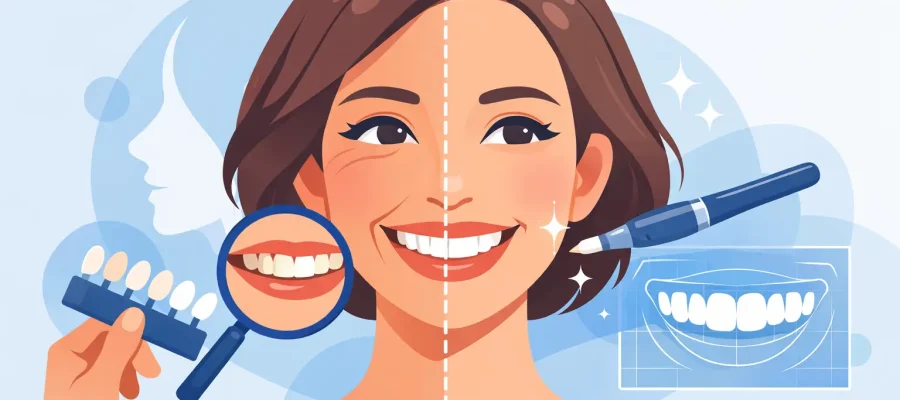
A tired-looking smile is not always about age. Worn tooth edges, darkened enamel, uneven gums, and lost dental support can make the lower face appear shorter, flatter, or less defined. That is how smile design can make you look younger: not by creating an artificial, overly white result, but by restoring the proportions that help your face look rested, balanced, and naturally confident.
For many patients, the goal is not to look like someone else. It is to look like themselves on their best day – refreshed in photos, more confident in meetings, and comfortable smiling without thinking about their teeth.
How Smile Design Can Make You Look Younger
A youthful smile usually has a few visual qualities in common: healthy-looking enamel, gently rounded tooth edges, harmonious proportions, and a smile line that follows the contour of the lower lip. Over time, teeth can chip, shorten, stain, shift, or become uneven. Gum recession and missing teeth can also change the way the lips and cheeks are supported.
Smile design addresses these details as one coordinated aesthetic plan. Rather than treating one tooth in isolation, your dentist evaluates the relationship between your teeth, gums, lips, facial shape, and bite. The aim is precision: a smile that looks brighter and more refined while still fitting your age, personality, and facial features.
The right design can create the impression of better facial balance. Longer or more proportioned front teeth may help restore a smile that has looked worn down. Improved tooth color can reduce the contrast between the teeth and skin. Correcting uneven gum display can make the smile appear more open and polished. These changes are subtle individually, but powerful when planned together.
The Features That Can Age a Smile
Short, worn, or chipped teeth
Natural teeth gradually lose length through wear, grinding, acidic foods, or small fractures. When the front teeth become shorter, the smile can appear older because youthful teeth tend to have more visible length and softly defined contours.
Depending on your clinical needs, porcelain veneers, E-Max restorations, or zirconium crowns can rebuild worn teeth with carefully planned length and shape. The decision depends on how much natural tooth structure remains, the condition of the bite, and whether there are large existing fillings or cracks. Veneers can be an excellent conservative choice in suitable cases, while crowns may offer stronger coverage for significantly damaged teeth.
Dark or uneven tooth color
Yellowing is not the only concern. Teeth can develop gray tones, patchy discoloration, or a dull surface texture that absorbs light rather than reflecting it. A brighter smile can look fresher, but the brightest shade is not always the most youthful or believable choice.
Professional whitening may be enough for healthy teeth with mild staining. If you are planning veneers or crowns, shade selection becomes part of the larger smile design process. A premium result considers skin tone, eye color, lip color, and the color of adjacent natural teeth. The objective is a clean, luminous finish – not a flat, opaque white that draws attention for the wrong reasons.
Uneven gums and a gummy smile
Gums frame every tooth. If the gumline is asymmetrical, covers too much of the teeth, or has receded unevenly, even beautiful restorations can look unbalanced. Gum aesthetics can reshape the visible frame of the smile and create a more even tooth-to-gum ratio.
A gummy smile may also be influenced by upper-lip movement. In selected cases, masseter Botox or other facial aesthetic approaches may be considered as part of a broader treatment conversation, though they are not substitutes for dental correction when tooth or gum issues are the main cause. The right approach depends on anatomy, muscle activity, and your desired outcome.
Missing teeth and reduced facial support
Missing teeth can affect much more than the gap in a smile. Over time, tooth loss may contribute to bone loss and changes in lip or cheek support. This can create a sunken appearance around the mouth and make the face look more fatigued.
Dental implants replace missing tooth roots and support restorations that look and function like teeth. For patients with multiple missing teeth or unstable dentures, full-arch options such as All-on-4 or All-on-6 can provide fixed teeth immediately in appropriate cases. These treatments are restorative first, but the aesthetic benefit can be dramatic because the smile and lower-face support are planned together.
Smile Design Is More Than Veneers
Hollywood Smile treatment is often associated with veneers, but a complete smile design may include several procedures. Some patients need whitening and minor bonding. Others need gum contouring, crowns, orthodontic correction, implant treatment, or bite rehabilitation before cosmetic work can begin.
This is why copying a celebrity smile or choosing a specific number of veneers before a proper examination can lead to disappointment. What looks natural on one face may look too broad, too bright, or too bulky on another. Your ideal smile is determined by your facial proportions, lip movement, tooth position, gum health, and long-term function.
At DRGO Smile Clinic, Digital Smile Design can help make these decisions more predictable before treatment starts. Digital photographs, scans, and facial analysis are used to create a visual plan, often with a 3D preview. You can see the direction of the proposed transformation and discuss details such as tooth length, shape, brightness, and symmetry before final restorations are made.
What the Treatment Journey Looks Like
The process begins with an assessment of your oral health, bite, existing dental work, gum condition, and aesthetic goals. This stage matters because cosmetic dentistry should never hide untreated decay, inflammation, infection, or severe grinding. A beautiful smile needs a stable foundation.
Next comes digital planning. Your dentist evaluates how much tooth is visible when you speak and smile, where the midline sits, how the teeth relate to your lips, and whether the gumline needs attention. This is also the stage where you can be specific about the look you want: natural and understated, camera-ready and bright, or a more defined Hollywood Smile.
If restorations are needed, teeth may be prepared conservatively and temporary teeth can be used to test the planned look. This try-in period is valuable. It allows adjustments to length, shape, and bite before final placement. With modern CAD/CAM workflows, certain crown cases may be completed in one visit, while more complex smile makeovers often require a carefully scheduled treatment plan.
For international patients, timing depends on the procedures involved. Whitening or selected CAD/CAM restorations may suit a shorter stay. Veneers, implant treatment, gum procedures, and full-mouth rehabilitation may require more time or a second visit to allow for healing and final precision. Fast treatment should never mean rushed treatment.
The Trade-Offs Behind a Natural Result
A younger-looking smile should still look like it belongs to you. That means resisting a one-size-fits-all formula. Teeth that are too long can look unnatural. Teeth that are too white can emphasize facial lines rather than soften them. Aggressive preparation is not appropriate when a conservative option can achieve the goal.
There are practical considerations, too. Veneers and crowns require excellent hygiene and regular dental care. If you grind your teeth, a protective nightguard may be necessary to protect the investment. Gum health must be maintained, and implant treatment requires careful planning around bone volume and healing. The best cosmetic result is one that is designed for long-term function, not just an immediate photo.
Age is also not a reason to avoid smile design. Mature patients often benefit greatly from restoring tooth length, replacing missing teeth, and improving enamel color. The design simply needs to respect the face. A refined, healthy-looking smile can be more rejuvenating than a dramatic change that feels out of character.
Start With the Face, Not the Procedure
If you are considering a smile makeover for a wedding, a career milestone, a media appearance, or simply because you want to feel more like yourself, start with a consultation that looks beyond a single treatment. Ask to see a digital preview. Discuss the health of your gums and bite. Be clear about whether you want a subtle refresh or a complete transformation.
The most convincing younger-looking smile is rarely the one that looks the most expensive. It is the one with the right balance of color, shape, support, and function – planned around the face you already have, and built to let your confidence show naturally.