


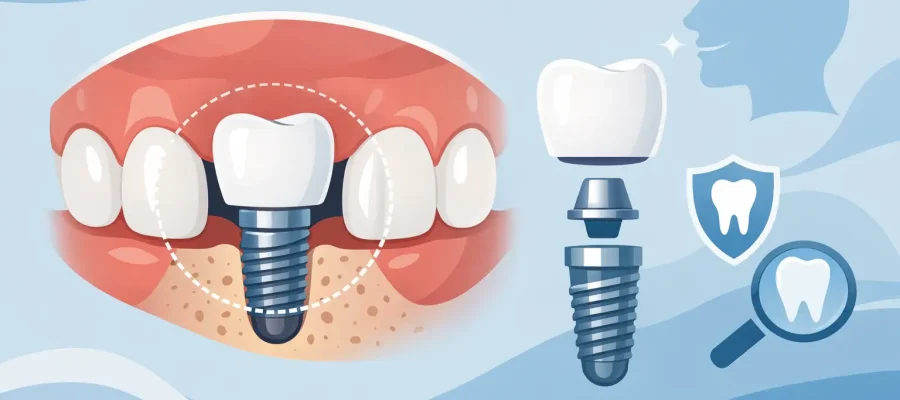
Losing a front tooth changes more than a photograph. It can affect how you speak, bite into food, and smile in meetings or on camera. So, can an implant replace a front tooth? In many cases, yes – and when it is planned precisely, a single implant can create a fixed replacement that looks exceptionally close to a natural tooth.
The key word is precisely. Front-tooth implant treatment is not simply about filling a gap. It is about rebuilding the tooth, the gum line, and the support beneath it in a way that protects the balance of your smile.
Can an Implant Replace a Front Tooth Naturally?
A dental implant is a small titanium post placed in the jawbone to replace a missing tooth root. Once it has healed and integrated with the bone, it supports a custom abutment and a final crown. Unlike a removable partial denture, the result is fixed. Unlike a traditional bridge, an implant usually does not require neighboring healthy teeth to be filed down.
For a front tooth, the final crown is designed around details that make a major visual difference: shape, length, translucency, surface texture, and color. The dentist also considers the angle of the implant and the contour of the gum around the crown. A beautiful ceramic crown cannot compensate for an implant positioned too far forward, too deep, or at the wrong angle.
That is why a front implant is both a restorative and an aesthetic procedure. The goal is not merely a tooth that stays in place. The goal is a tooth that belongs in your smile.
Why Front-Tooth Implants Need More Planning
Back teeth carry most of the chewing force, but front teeth sit in the most visible part of the smile. Even a small mismatch in gum height or crown color can be noticeable. Patients with a high smile line, where a larger amount of gum shows when they smile, need especially detailed planning.
The jawbone and gum tissue often change after a tooth is removed. Bone can shrink, and the gum may recede or flatten. If this happens in the front of the mouth, the implant crown can look longer than the neighboring tooth or appear to sit in shadow. This does not mean an implant is not possible. It means the site may need preservation, grafting, or soft-tissue enhancement before the final crown is placed.
At DRGO Smile Clinic, planning begins with digital imaging and smile analysis rather than a guess based on the empty space. A 3D scan helps assess bone volume and implant position. Digital Smile Design helps align the new tooth with the proportions of the lips, face, and adjacent teeth before treatment moves forward.
The Esthetic Zone: Where Millimeters Matter
Dentists refer to the front teeth as the esthetic zone. In this area, millimeters matter. The implant must have enough bone around it, adequate spacing from adjacent roots, and a position that allows the crown to emerge naturally from the gum.
The gum papillae – the small triangles of gum between teeth – are another important detail. They frame the crown and prevent dark spaces, sometimes called black triangles, from appearing beside the new tooth. Their final appearance depends on the original gum architecture, bone level, tooth positions, and the precision of the temporary and final restorations.
No ethical clinic should promise that every front implant will be visually indistinguishable from a natural tooth. Biology, prior trauma, gum recession, and bone loss all influence the outcome. But with proper diagnosis, modern materials, and experienced implant planning, a front implant can be an outstanding long-term solution.
When Can a Front Tooth Implant Be Placed?
The timing depends on the condition of the tooth being removed and the health of the surrounding tissue. Some patients are candidates for immediate implant placement, where the damaged tooth is removed and the implant is placed during the same appointment. Others benefit from a staged approach that allows the socket, bone graft, or gum tissue to heal first.
Immediate placement can be appealing because it reduces the number of surgical stages and may help preserve the contour of the tissues. In selected cases, a temporary tooth can also be fitted quickly, so you do not leave with a visible gap. However, immediate treatment is not automatically the best choice. Active infection, insufficient bone, thin gum tissue, or an unstable implant position may make delayed placement safer and more predictable.
A staged plan can take longer, but it may deliver a better foundation for the final result. For a highly visible front tooth, choosing the right timeline is often more valuable than rushing the wrong one.
Will You Leave With a Gap?
Usually, no. A temporary solution can be planned while the implant heals. Depending on your case, this may be a temporary crown attached to the implant, a discreet removable temporary tooth, or a bonded temporary restoration supported by neighboring teeth.
The temporary phase is not just cosmetic. It helps guide the gum tissue into a natural-looking shape and gives the clinical team information about speech, bite, and tooth proportions before the final crown is made. It is a rehearsal for the final smile.
What Happens During Front-Tooth Implant Treatment?
The process begins with a consultation, digital X-rays or a CBCT scan, photographs, and an evaluation of your bite and gum line. Your dentist will also assess why the tooth was lost. Trauma, a fractured root, failed root canal treatment, gum disease, and decay can each affect the treatment plan differently.
If the tooth must be removed, the extraction is performed as gently as possible to preserve the surrounding bone and tissue. The implant may be placed immediately, or the site may receive bone graft material and heal before implant surgery. When an implant is placed, a healing period follows while the bone integrates with the titanium surface.
After integration, the dentist takes a digital scan or impression to create the custom crown. For a front tooth, material selection matters. High-quality ceramic can replicate the light-reflecting qualities of enamel more convincingly than a flat, opaque restoration. The crown is then adjusted for color, edge position, bite, and comfort before final placement.
Treatment time varies. An immediate implant with a temporary tooth can transform the visible gap quickly, while the final crown commonly requires additional healing and refinement. If grafting is needed, the timeline may extend over several months. Your plan should be built around the biology of your mouth, not a one-size-fits-all calendar.
Is a Front Tooth Implant Better Than a Bridge?
An implant and a bridge can both replace a missing front tooth, but they work differently. A bridge uses the teeth next to the gap as supports. It can be a practical option when those teeth already need crowns, when implant surgery is not suitable, or when a patient wants a faster non-surgical route.
An implant replaces the missing root independently. This can help maintain bone stimulation in the area and preserves adjacent tooth structure. It is often the preferred choice when neighboring teeth are healthy and there is sufficient bone and gum support.
The trade-off is that implants require surgery and healing time. They are also dependent on excellent planning, ongoing hygiene, and a stable bite. A bridge may be completed faster, but it does not prevent bone changes under the missing tooth area. The right choice comes from your anatomy, dental history, aesthetic expectations, and timeline.
How Long Does a Front Tooth Implant Last?
Dental implants are designed as long-term restorations, and many last for decades with appropriate care. The crown on top may need replacement eventually because ceramic, like a natural tooth, is exposed to daily wear. Your individual outcome depends on oral hygiene, gum health, smoking or vaping habits, teeth grinding, medical factors, and regular professional maintenance.
Brush twice daily, clean around the implant with the tools recommended by your dentist, and keep regular hygiene visits. If you clench or grind your teeth, a custom night guard can protect both the implant crown and your natural teeth. Front teeth are also vulnerable to trauma, so avoid using them to open packaging or bite hard objects.
Questions to Ask Before Choosing Treatment
Before committing to a front implant, ask whether you need bone or gum grafting, whether immediate placement is genuinely appropriate, and what temporary tooth option will be used. Ask to see how the crown shade and gum contour will be planned, particularly if you are replacing one highly visible tooth rather than several teeth at once.
For international patients, treatment coordination matters too. You need a plan that accounts for travel dates, healing intervals, follow-up needs, and the point at which your final crown can safely be fitted. A premium result should feel organized from the first 3D preview through the final bite check.
A front-tooth implant can restore the confidence to smile without covering your mouth or thinking twice before a close-up photo. The best next step is a detailed digital assessment that respects both your schedule and the small clinical details that make a replacement tooth look like it was always yours.