


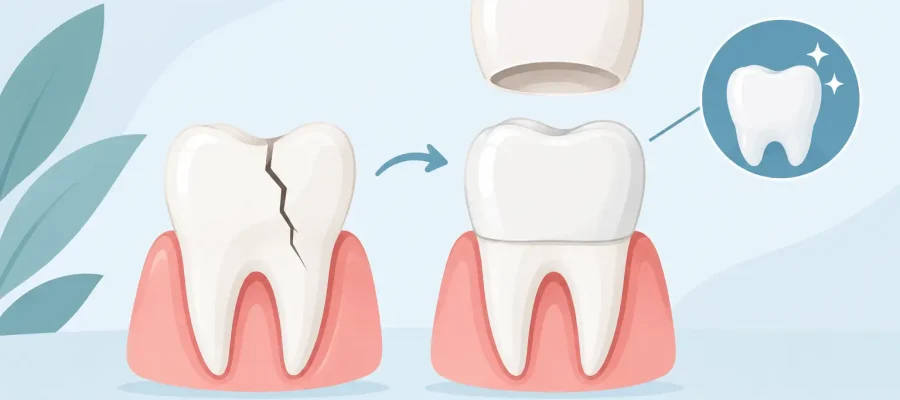
A sharp pain when you release a bite, sensitivity that appears without warning, or a visible line in a tooth can change the way you smile and eat. So, can crowns protect cracked teeth? In many cases, yes. A precisely designed crown can wrap the remaining tooth structure, prevent a crack from spreading, and restore a natural-looking, confident bite. But timing matters. A crack that reaches the pulp or extends below the gumline may require more than a crown.
For patients who want a high-performance aesthetic result, the goal is not simply to cover a damaged tooth. It is to diagnose the crack accurately, preserve healthy structure where possible, and create a restoration that looks convincing under close conversation, photographs, and everyday light.
Can Crowns Protect Cracked Teeth Before They Worsen?
A crown works like a custom protective shell. It covers the visible portion of a weakened tooth and redistributes biting forces across its surface. Instead of allowing the two sides of a cracked tooth to flex apart each time you chew, the crown holds them together more securely.
That protection can be especially valuable when a tooth has a large old filling, a chipped cusp, heavy wear, or a history of root canal treatment. These teeth often have less internal support and are more vulnerable to fracture under pressure from chewing or clenching.
A crown does not “heal” a crack in the same way a broken bone heals. The existing crack remains in the tooth. What a well-fitted crown can do is reduce movement around it, limit stress on fragile areas, and lower the risk of a more serious break. When placed at the right stage, it may help preserve a natural tooth that could otherwise become unrestorable.
The word “may” matters. No restoration can guarantee that every cracked tooth will survive indefinitely. The long-term outlook depends on where the crack is, how deep it is, the health of the nerve, the strength of the remaining tooth, and whether you grind or clench.
Not Every Crack Needs a Crown
Teeth develop different types of cracks, and treatment should match the diagnosis rather than follow a one-size-fits-all cosmetic plan.
Fine surface lines in enamel, often called craze lines, are common. They may be visible in bright light but usually do not cause pain or threaten the tooth. If appearance is the concern, aesthetic options can be discussed, but a crown is not automatically necessary.
A fractured cusp occurs when a piece of tooth breaks away, often around a large filling. If the fracture is limited and enough strong enamel remains, a bonded restoration or onlay may be more conservative. If the tooth has lost substantial structure, a crown is often the more protective choice.
A cracked tooth typically starts at the chewing surface and travels downward. It may cause pain when biting, especially when releasing the bite, or intermittent sensitivity to cold. If the crack has not reached the pulp or root, crowning the tooth promptly can be an excellent solution.
A split tooth is more serious. The crack has progressed far enough to separate the tooth into distinct segments. In many cases, the tooth cannot be saved as one unit. Depending on the location, part of the tooth may sometimes be retained, but extraction and an implant may be the more predictable option.
Vertical root fractures are particularly challenging because they begin in or extend down the root. A crown cannot seal or stabilize this type of fracture reliably. Extraction is frequently recommended, followed by a carefully planned replacement option.
Signs You Should Not Ignore
Cracked teeth can be frustrating because symptoms often come and go. You may chew comfortably one day and feel a sudden electric pain the next. That inconsistency does not mean the issue is minor.
Arrange a dental assessment promptly if you notice pain on biting, sensitivity to cold or heat that lingers, swelling around the gum, a tooth that feels different when you close your teeth together, or a visible chip or crack. If there is facial swelling, fever, severe throbbing pain, trauma, or difficulty swallowing, seek urgent dental or medical care.
Until you are examined, avoid chewing on the affected side. Choose softer foods, avoid ice and hard candy, and do not test the tooth repeatedly by biting down. Repeated pressure can turn a treatable crack into a deeper fracture.
How a Crown Is Planned for a Cracked Tooth
A premium crown begins with diagnosis, not shade selection. Your dentist will review symptoms, examine the bite, take digital X-rays, and use clinical tests to identify whether the pulp is involved. Some cracks are difficult to see directly, so bite tests, magnification, and removing an existing restoration may be needed to understand the true extent of damage.
If the tooth is stable enough to restore, the treatment follows a focused sequence.
1. Stabilize and prepare the tooth
The dentist removes decay, failing filling material, and unsupported tooth structure. If a crack reaches the nerve and the pulp is inflamed or infected, root canal treatment may be needed before the final crown. This is not a failure of crown treatment. It is a way to eliminate infection and create a stable foundation.
2. Create the right shape and fit
The tooth is carefully shaped to make room for the crown while preserving as much healthy enamel and dentin as possible. Digital scanning captures the prepared tooth, neighboring teeth, and bite relationship with high precision.
For patients with visible-tooth concerns, this is also where facial proportions, smile line, tooth texture, and color are considered. A protective crown should never look bulky, opaque, or disconnected from the rest of your smile.
3. Design the crown around function and aesthetics
Material selection depends on the tooth position, your bite, and the look you want. Zirconium crowns are known for strength and are often chosen for back teeth or patients with heavy bite forces. Layered zirconium can offer a more natural appearance in visible areas. E-Max ceramic crowns are highly valued for lifelike translucency and can be an excellent choice when aesthetics are the priority and the clinical case is suitable.
The best material is not always the strongest one on paper. A back molar for a patient who grinds needs a different strategy than a front tooth in a camera-facing smile makeover. The restoration must be engineered for the way you use your teeth.
4. Check the bite before final placement
A crown that is even slightly high can create discomfort and overload the tooth. Before final bonding, the fit, contact points, bite, shade, and overall symmetry should be checked carefully. Modern CAD/CAM workflows can make this process faster, and select cases can be completed in one visit, but speed should never replace proper diagnosis or quality control.
At DRGO Smile Clinic, digital planning and CAD/CAM workflows support highly precise crown treatment for suitable cases, including international patients working within a defined travel schedule. The clinical team still needs to confirm that the crack is restorable before promising a same-day result.
What a Crown Cannot Fix
A crown is a powerful protective restoration, but it has limits. It cannot repair a root fracture, remove an untreated infection, or save a tooth with too little healthy structure above the gumline to hold a restoration securely. It also cannot fully protect a tooth from extreme grinding without additional support.
If you clench or grind, a custom night guard may be recommended after your crown is placed. This simple step can reduce repeated nighttime force on both your new crown and your natural teeth. If the crack is associated with an uneven bite, correcting the bite may also be part of long-term protection.
In some cases, an implant-supported crown is the more reliable path. This may be recommended when the natural tooth is non-restorable, repeatedly infected, or split. An implant replaces the missing root, while the visible crown restores the shape and appearance of the tooth. It is a different treatment route, not a second-best aesthetic outcome.
Protecting Your Crown and the Tooth Beneath It
A high-quality crown can last many years, but it still needs care. Brush twice daily with a fluoride toothpaste, clean between teeth every day, and keep regular professional checkups. The edge where the crown meets the natural tooth remains vulnerable to plaque buildup and decay if hygiene is neglected.
Avoid using teeth as tools to open packages, and be cautious with hard foods such as ice, unpopped popcorn kernels, and hard candy. If a crown feels loose, painful, or high when you bite, have it assessed early rather than waiting for discomfort to become severe.
A cracked tooth rarely improves by being ignored. The most helpful next step is a clear diagnosis and a treatment plan built around what the tooth needs now, so you can protect both your bite and the smile you want to show without hesitation.