


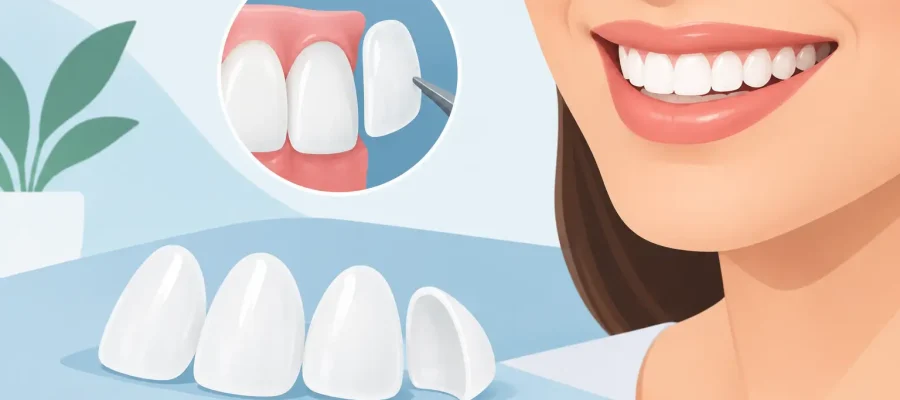
A camera-ready smile should still look like your smile – not a flat, overly white set of teeth. That is why patients comparing cosmetic options often ask, what are E-Max veneers and why are they used for cosmetic dentistry? E-Max veneers are ultra-thin, high-strength ceramic shells designed to refine the visible front surface of teeth with a natural balance of brightness, translucency, and shape.
For image-conscious professionals, creators, and anyone preparing for a wedding, milestone, or major confidence reset, the appeal is clear: E-Max can create a polished, high-end result while preserving more natural tooth structure than a full-coverage crown in suitable cases. The right result, however, depends on precise planning, healthy teeth and gums, and a design that respects your facial features rather than following a one-size-fits-all trend.
What are E-Max veneers?
E-Max is a premium glass-ceramic material, commonly made from lithium disilicate. It is valued in cosmetic dentistry because it combines strength with light transmission. Natural enamel does not reflect light like a solid white block. It has depth, subtle variation, and translucency near the edges. A well-designed E-Max veneer can replicate those qualities more convincingly than many older veneer materials.
A veneer covers the front and, in some cases, a small portion of the edge of a tooth. It is bonded permanently using advanced dental adhesives. Unlike a crown, it does not typically wrap around the entire tooth. This makes veneers a conservative option when the tooth is fundamentally healthy but its appearance needs correction.
E-Max veneers are custom-made for each patient. The dentist determines the shade, length, width, surface texture, and edge shape based on the smile line, lips, facial proportions, and bite. The goal is not simply whiter teeth. It is a smile that looks intentional, balanced, and believable at close range.
Why are E-Max veneers used for cosmetic dentistry?
E-Max veneers are used because they can address several visible concerns in a single treatment plan. They are especially effective for teeth that are permanently stained, unevenly shaped, slightly chipped, worn, small, or separated by minor gaps. They can also improve mild alignment concerns when orthodontic movement is not necessary or preferred.
Their optical quality is a major reason patients choose them for a Hollywood Smile design. The material can be layered and shaded to avoid the opaque, artificial appearance that some people associate with cosmetic dentistry. A natural-looking smile does not have to be dull. It can be bright and refined while still showing the depth expected of real enamel.
E-Max is also prized for precision. With digital scanning, CAD/CAM technology, and Digital Smile Design, the treatment can be planned around the patient’s individual facial harmony. Before final placement, patients can review proposed proportions and, where appropriate, try a temporary mock-up of the new smile. This replaces guesswork with a clear visual direction.
That planning matters. A square, bold tooth design may suit one person and overpower another. A highly white shade can look striking on camera but may require careful consideration of skin tone, neighboring teeth, and the patient’s expectations in everyday light. Cosmetic dentistry is most successful when it is engineered around the person, not copied from a generic before-and-after photo.
The E-Max veneer treatment process
A premium veneer journey begins long before the ceramic is bonded. At DRGO Smile Clinic, cosmetic planning centers on the relationship between teeth, gums, lips, and facial expression so the final smile looks cohesive rather than simply corrected.
1. Digital assessment and smile planning
The dentist examines the teeth, gums, bite, and any existing restorations. Photos, digital scans, and X-rays may be used to identify issues that could affect the longevity of the result, such as decay, gum inflammation, grinding, or bite imbalance.
Next comes smile design. The clinical team discusses the look you want – natural refinement, a brighter celebrity-style smile, softer edges, stronger symmetry, or a more youthful tooth length. Digital previews help translate subjective terms such as “natural” or “white but not too white” into a treatment plan you can understand.
2. Minimal tooth preparation
For many E-Max veneer cases, a very small amount of enamel is shaped to create space for the ceramic. The amount varies. Some patients may be candidates for minimal-prep or no-prep veneers, while others need more preparation to avoid bulky results or to correct significant discoloration and shape differences.
Conservative preparation is not the same as no preparation. The best choice depends on the starting position of the teeth, the desired final shape, and the thickness needed to mask underlying color. A responsible dentist will not promise a no-prep approach when it would compromise the result.
3. Temporary preview and laboratory fabrication
After preparation, temporary veneers may be placed while the final restorations are created. This stage lets patients experience the proposed length and overall smile character. It is also an opportunity to refine details before the final ceramic is made.
E-Max veneers may be produced with digital milling, artistic ceramic layering, or a combination of both. The fabrication approach depends on the case. Fine details such as translucency, incisal edge texture, and subtle shade transitions are what separate a merely white smile from a premium cosmetic result.
4. Final bonding and bite refinement
At the final appointment, each veneer is checked for fit, color, shape, and harmony with the surrounding teeth. Once approved, the veneers are bonded to the enamel. The dentist then checks the bite carefully, particularly for patients who clench or grind.
Bonding is a critical stage. Even a beautifully made veneer needs accurate isolation, adhesive technique, and bite adjustment to perform as intended. A rushed final placement can undermine an otherwise excellent design.
E-Max veneers versus zirconium crowns
E-Max veneers and zirconium crowns can both produce exceptional cosmetic results, but they solve different problems. E-Max veneers are generally best when a tooth is healthy enough to retain most of its natural structure and the primary goal is aesthetic enhancement.
Zirconium crowns cover the entire tooth and may be the better choice when there is extensive decay, a large old filling, a root canal-treated tooth, significant fracture, or a need for greater structural coverage. Modern zirconium can look highly aesthetic, especially in full-smile rehabilitations, but it is not automatically the right option for every front tooth.
The key question is not which material is “better.” It is which restoration protects your teeth while delivering the visual outcome you want. Some smile makeovers use E-Max on visible front teeth and crowns or other restorations where stronger coverage is clinically necessary.
Who is a good candidate for E-Max veneers?
Strong candidates usually have healthy gums, stable oral hygiene habits, and enough enamel for reliable bonding. They may be unhappy with the color, shape, spacing, or proportion of their front teeth and want a durable cosmetic solution beyond whitening or bonding.
Veneers may need to wait if there is untreated gum disease, active decay, severe tooth grinding, or a major bite problem. Grinding does not always rule out veneers, but it can require bite management and a protective night guard. Patients with very dark underlying teeth may also need a different material strategy or a slightly thicker design to achieve the desired shade.
Patients should also understand that veneers are irreversible when enamel preparation is involved. They are long-term restorations, not a temporary beauty treatment. With careful home care, routine professional checkups, and protection from grinding or trauma, they can remain beautiful for many years, but they may eventually need repair or replacement.
Caring for an E-Max smile
E-Max ceramic resists stains well, but the teeth and gums around it still need daily care. Brush twice daily with a non-abrasive toothpaste, floss consistently, and attend routine hygiene visits. Avoid using teeth to open packaging or bite hard objects, since porcelain can chip under concentrated force.
Coffee, red wine, and richly colored foods are less likely to stain the ceramic itself than natural enamel, though they can affect the bonding edges over time if hygiene is poor. If you grind your teeth, wearing the recommended night guard is one of the simplest ways to protect your investment.
The most compelling E-Max smile is not the brightest possible smile. It is the one that fits your face, photographs beautifully, feels comfortable when you speak, and gives you the confidence to stop hiding your teeth. A detailed consultation and a digital preview can help you choose that result with clarity before treatment begins.