


A veneers vs crowns smile makeover is not simply a choice between two ways to make teeth look whiter. It is a decision about how much of each tooth needs to be protected, how dramatically the smile needs to change, and what will create a result that still feels natural when the camera is close. The right treatment can deliver a refined Hollywood Smile. The wrong one can mean treating healthy tooth structure more aggressively than necessary – or choosing a cosmetic solution for a tooth that needs real structural support.
For international patients planning a high-impact transformation around a wedding, media appearance, career milestone, or personal reset, the goal is clear: a signature smile that looks flawless and functions confidently. The path to that result begins with precise diagnosis, not a one-size-fits-all package.
Veneers vs Crowns Smile Makeover: The Core Difference
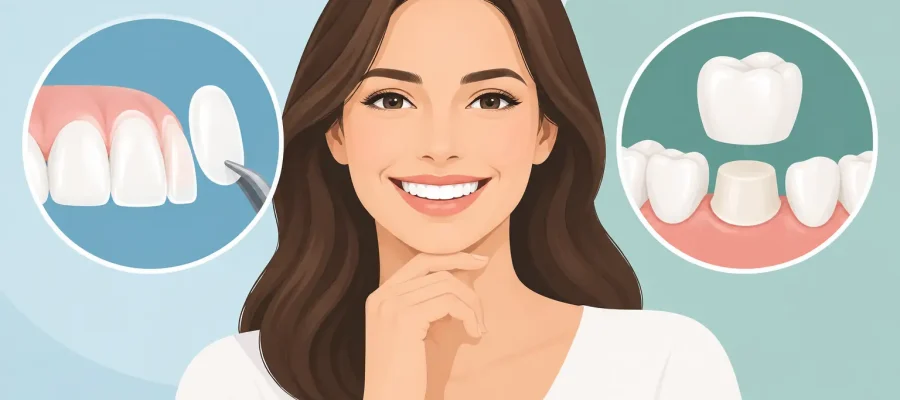
Veneers are thin, custom-made shells bonded to the front surface of teeth. They are designed primarily to improve visible aesthetics: color, shape, length, symmetry, small gaps, minor crowding, and worn edges. Premium ceramic options such as E-Max can create a highly translucent, light-reflecting finish that closely resembles natural enamel.
Crowns cover the entire tooth. They are used when a tooth needs both an aesthetic upgrade and stronger protection. A crown may be recommended for a tooth with extensive decay, a large old filling, a crack, significant wear, prior root canal treatment, or a shape that cannot be predictably corrected with a veneer alone. Zirconium crowns are a popular choice for their strength and refined appearance, especially when a tooth has greater functional demands.
The simplest distinction is this: veneers enhance the face of a relatively healthy tooth; crowns rebuild and protect a tooth that has lost too much structure. Both can be part of the same smile makeover when your smile needs a combination of cosmetic refinement and restorative dentistry.
When Veneers Create the Best Smile Upgrade
Veneers are often the ideal choice when the underlying teeth are healthy and the main concern is what shows when you smile. They can correct persistent discoloration that whitening cannot lift, close small spaces, soften uneven edges, and create a more balanced tooth proportion without fully covering every tooth.
A veneer-led makeover is especially effective for patients whose teeth are structurally sound but visually inconsistent. Perhaps the front teeth are short from grinding, one lateral incisor is smaller than the other, or years of coffee, wine, and aging have made whitening alone feel underwhelming. With thoughtful smile design, veneers can bring these details into harmony.
The advantage is conservative treatment. Because a veneer typically requires preparation only on the visible surface and edge of the tooth, more natural tooth structure can often be preserved than with a full crown. That said, “minimal preparation” does not mean “no planning.” The amount of enamel available, bite forces, tooth position, gum line, and desired shade all influence whether veneers are appropriate.
Veneers may not be the best standalone answer if teeth are heavily restored, severely rotated, weakened, or exposed to intense grinding. In those cases, a beautiful result must also be a stable result.
What Veneers Can Correct
Veneers are highly versatile within the right clinical limits. They can improve moderate discoloration, minor chips, uneven spacing, small shape differences, worn incisal edges, and mild alignment irregularities. They cannot replace missing teeth, stabilize advanced gum disease, or reliably reinforce teeth with major internal damage.
A premium smile makeover should never use veneers to hide a problem that needs treatment first. Healthy gums, controlled bite forces, and a solid foundation are what allow cosmetic ceramics to look exceptional for years.
When Crowns Are the Smarter Investment
Crowns become the stronger choice when aesthetics and protection must work together. If a tooth is cracked, deeply filled, root canal treated, or significantly weakened, placing a veneer on the front may improve its appearance without addressing its vulnerability. A crown surrounds the tooth and redistributes biting forces more comprehensively.
For patients with extensive wear from clenching or grinding, crowns can also restore lost height and create a more stable bite. This matters because a smile makeover is not just viewed from the front. Your teeth must meet comfortably, support speech, and handle daily meals without feeling fragile.
Modern zirconium crowns are not the opaque, artificial-looking restorations many patients remember from older dentistry. With the right material selection and skilled layering or finishing, they can deliver natural color transitions and lifelike surface texture while offering excellent durability. In high-pressure areas, that balance can be the difference between a smile that photographs beautifully and one that continues to perform.
Crowns do require more tooth preparation than veneers because they cover all sides of the tooth. That is why a crown should be chosen for a clinical reason, not simply because it is a familiar cosmetic option. When it is indicated, however, it can be the most protective and predictable route.
Why Many Hollywood Smile Plans Use Both
The best veneers vs crowns smile makeover is often not an either-or decision. It is a tailored composition. Front teeth with healthy enamel may be ideal for E-Max veneers, while a darkened root canal tooth, heavily filled premolar, or cracked tooth may need a zirconium crown for long-term security.
This combination approach avoids forcing every tooth into the same treatment. Instead, each tooth receives the level of restoration it actually needs. The final smile can still look completely unified because color, translucency, shape, and surface texture are designed as one system.
For example, a patient may receive veneers across the visible upper front teeth to create brightness and symmetry, with crowns on two back teeth that need reinforcement. Another patient may need a full crown-based makeover because old restorations, widespread wear, and weak tooth structure make veneers too limited. The correct answer depends on clinical findings, not on a trend or a single before-and-after photo.
The Smile Makeover Planning Process
A premium result begins before any tooth preparation. At DRGO Smile Clinic, Digital Smile Design can be used to analyze facial proportions, lip movement, tooth display, gum contours, and the relationship between your smile and your overall appearance. This is where a generic white smile becomes a smile designed specifically for you.
The planning stage typically includes digital imaging, scans, bite assessment, and a conversation about your goals. Do you want a very bright celebrity finish or a softer, natural-looking shade? Do you want longer teeth, a broader smile, or more symmetry? Are you concerned about old crowns, gum asymmetry, or visible dark spaces near the gums? These answers shape the treatment plan.
A 3D preview or smile mock-up can help you see the proposed direction before the final ceramic work is completed. It also allows refinements early, when changes are easiest to make. For international patients, this level of visual planning creates greater confidence before travel and reduces uncertainty once treatment begins.
Preparation, Try-In, and Final Placement
Once the design is approved, teeth are prepared only as needed for the selected restorations. Temporary restorations may be used to protect prepared teeth and allow you to experience the proposed shape and length. At the try-in stage, the dental team checks fit, color, bite, speech, and visual harmony in different lighting.
Final placement is a precision step. Veneers are bonded with specialized adhesive protocols, while crowns are secured with materials selected for the restoration and tooth condition. The final bite is adjusted so your new smile feels as good as it looks.
CAD/CAM workflows can streamline certain crown cases, including one-visit crown options when clinically suitable. However, speed should never replace careful planning. A fast treatment timeline is valuable only when every stage remains controlled, comfortable, and exact.
Questions to Ask Before Choosing
Before committing to veneers or crowns, ask your dentist how much healthy enamel remains, whether any teeth have cracks or large fillings, how your bite affects the restorations, and what material is recommended for each area of the mouth. You should also ask to see the proposed tooth shapes before final placement and understand whether gum contouring, whitening, or bite protection is part of the plan.
If you grind your teeth, a night guard may be recommended after treatment. This is not an optional extra for many patients. It is part of protecting the investment, particularly when ceramic restorations are placed across multiple front teeth.
Your Best Smile Is the One Built for Your Teeth
The most convincing smile makeovers do not announce whether they are veneers or crowns. They simply look balanced, bright, and completely at home on your face. When cosmetic ambition is matched with restorative discipline, you do not have to choose between a dramatic transformation and a responsible treatment plan.
Bring your smile goals, your timeline, and your questions to a detailed consultation. The right design will make the decision feel less like a gamble and more like a carefully engineered next step toward the way you want to be seen.