


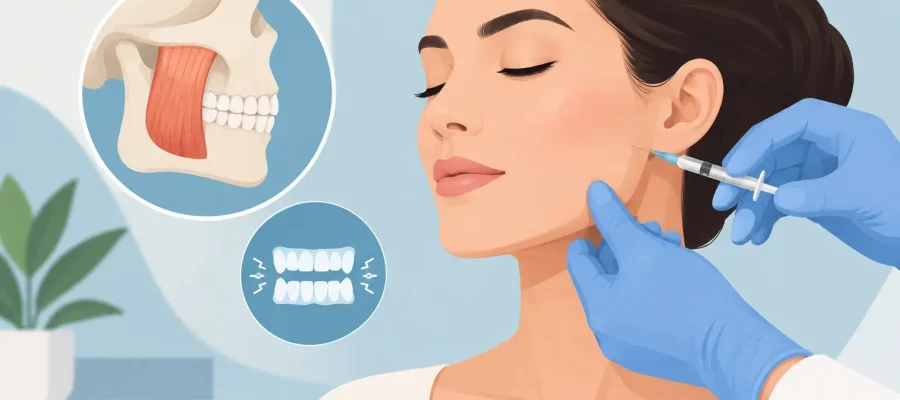
Waking with tight temples, a sore jaw, or teeth that feel tender is not simply an inconvenience. For many people, it is the visible and physical cost of bruxism – clenching or grinding that can wear down enamel, crack restorations, trigger headaches, and make the lower face look wider over time. Masseter Botox for teeth grinding can reduce the force generated by overactive jaw muscles, offering meaningful relief for the right patient. It is not a replacement for a diagnosis, a night guard, or restorative care when teeth have already been damaged.
What Masseter Botox Does for Teeth Grinding
The masseter is the powerful muscle at the back of the jaw used for chewing. When it remains overactive, particularly during sleep or periods of stress, it can produce intense clenching forces without you realizing it. Over time, this may lead to flat or chipped teeth, broken fillings or crowns, jaw fatigue, and tension around the face and neck.
Masseter Botox works by placing carefully measured injections into the muscle. The neuromodulator temporarily reduces the muscle’s ability to contract at full strength. You can still eat, speak, smile, and use your jaw normally, but the excessive force behind clenching is softened.
That distinction matters. Treatment does not necessarily eliminate the underlying urge to grind, and it does not repair enamel already lost to bruxism. Instead, it helps lower the pressure that reaches your teeth, jaw joints, and dental work. For patients who have invested in veneers, crowns, implants, or a complete smile makeover, controlling that force can be an essential part of protecting the result.
Who Is a Good Candidate?
The strongest candidates have signs of muscle-driven clenching: morning jaw soreness, frequent tension headaches, a visibly bulky masseter muscle, tooth wear, or repeated damage to restorations. Some patients also notice facial slimming as the muscle gradually relaxes and reduces in volume. While that aesthetic change can be welcome, the treatment plan should begin with function and facial balance, not a one-size-fits-all slimming goal.
A detailed dental assessment comes first. A clinician should examine your bite, signs of enamel wear, existing veneers or crowns, gum health, and the jaw joint. Bruxism can be connected to stress, sleep disruption, bite interference, medications, or sleep-disordered breathing. If sleep apnea is suspected, it deserves medical evaluation rather than being masked with cosmetic treatment.
Masseter treatment may not be appropriate for people who are pregnant or breastfeeding, have certain neuromuscular conditions, have an active infection at the injection site, or have known sensitivity to the product. It also requires extra caution when there is significant jaw-joint dysfunction, facial asymmetry, or difficulty chewing. The safest outcome comes from individualized dosing by an experienced dental or medical professional who understands facial anatomy and occlusion.
Botox Is One Part of a Protective Plan
For teeth grinding, the best approach is often layered. Botox can reduce muscular force while a custom night guard helps create a physical barrier between the teeth. If grinding has changed the bite or damaged old dental work, restorations may need attention before a guard is finalized.
A properly designed guard is especially valuable for patients with porcelain veneers, zirconium crowns, or implant-supported teeth. It protects the surfaces from direct contact. Botox lowers the intensity of the muscle load. Used together, they address two different parts of the problem.
What the Treatment Appointment Looks Like
A precision-led appointment is brief, but it should never feel rushed. The process begins by asking you to clench so the clinician can assess the size, position, and symmetry of each masseter muscle. Injection points are mapped to place the product within the muscle while respecting surrounding facial structures.
After the skin is cleaned, a series of small injections is performed on each side of the face. Most patients describe the sensation as quick pinches. There is typically no downtime, making this an easy treatment to schedule around travel, work, or a smile-design appointment.
You can usually return to normal activity immediately. Your provider may ask you to avoid rubbing or massaging the treatment area, strenuous exercise, or prolonged heat exposure for the remainder of the day. Individual aftercare instructions should always take priority.
At DRGO Smile Clinic, masseter treatment can be planned alongside a complete aesthetic and restorative assessment. This matters for international patients because a new smile should be engineered for more than the before-and-after photo. The bite, the strength of the jaw muscles, and the protection plan all influence how well premium dental work performs over time.
When Will You Feel a Difference?
The first changes are usually gradual. Many patients notice less tightness or fewer morning headaches within several days to two weeks. The full muscular effect is commonly assessed around two weeks after treatment, when a clinician can determine whether the dose and balance are appropriate.
For facial contouring, visible slimming takes longer because the muscle changes size gradually. Results often become more noticeable over several weeks. The timeline varies with muscle strength, metabolism, dose, and how consistently you clench.
The effects are temporary. Many people return for maintenance approximately every three to six months, although there is no universal schedule. Some patients find they can extend the interval after several treatments as the masseter becomes less dominant. Others need more regular maintenance because their clenching pattern is intense.
Benefits and Trade-Offs to Understand
The appeal is clear: less jaw tension, lower clenching force, potential relief from tension-related discomfort, and possible refinement of a square or heavy lower-face contour. For a patient preparing for a wedding, media appearance, or a high-visibility professional milestone, it can complement a planned smile transformation beautifully.
Still, results should be realistic. Masseter Botox is not an instant cure for every headache or every form of jaw pain. Headaches can have many causes. Jaw clicking, locking, ear symptoms, or pain directly in the jaw joint may need a more specific TMJ evaluation. If a tooth is cracked, infected, or severely worn, injections will not solve the dental issue.
Potential side effects are usually temporary and may include tenderness, bruising, swelling, a mild headache, or unevenness between the sides while the muscles settle. Excessive dosing or inaccurate placement can lead to chewing fatigue, an altered smile, or unwanted changes in facial contour. This is why low-price, dose-only offers can be a false economy. Clinical judgment, anatomy, and a conservative approach matter more than simply using more units.
Questions to Ask Before You Commit
Ask who will perform the injections, how they assess your bite and jaw function, and whether they recommend a custom night guard. You should also ask how your existing veneers, crowns, implants, or orthodontic history will influence the plan. A credible provider will explain what treatment can achieve, what it cannot, and when another specialist should be involved.
If you are traveling for care, timing deserves special attention. Schedule an assessment early enough to allow for follow-up if needed, particularly if your masseter Botox is part of a larger smile makeover. The goal is not to fit every procedure into the fastest possible schedule. It is to coordinate treatment so your bite, appearance, comfort, and long-term protection are working together.
Teeth grinding does not have to dictate the lifespan of your smile. Start with a precise evaluation, protect your teeth with the right appliances and restorations, and consider masseter treatment when muscle force is truly part of the problem. The most confident result is a smile that looks exceptional and is designed to withstand real life.